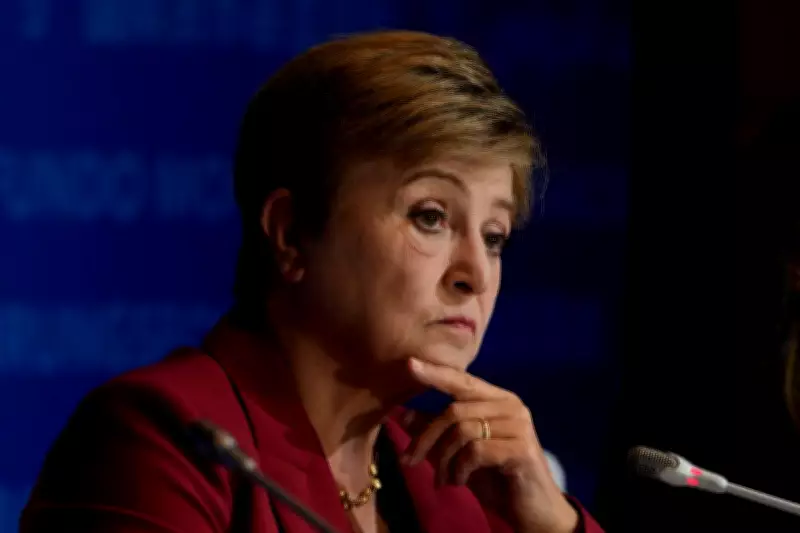
IMF Chief Warns Iran War Will Slow Global Economic Growth Significantly
International Monetary Fund Managing Director Kristalina Georgieva issued a stark warning on Thursday, stating that the ongoing conflict in Iran is significantly darkening the outlook for the global economy. This assessment holds true regardless of whether a fragile ceasefire, recently announced, manages to endure. Georgieva emphasized that the fund will be forced to downgrade its forecast for world economic growth in its upcoming report next week.
Growth Forecast Downgrade Amid Conflict
"Had it not been for this shock, we would have been upgrading global growth," Georgieva declared in remarks prepared for the forthcoming IMF-World Bank spring meetings. "But now, even our most hopeful scenario involves a growth downgrade." This marks a sharp reversal from earlier this year. In January, the IMF had upgraded its global growth outlook to 3.3%, buoyed by the world economy's resilience in the face of former President Donald Trump's sweeping import taxes imposed last year. The institution was poised to issue another upgrade in its new forecasts scheduled for release next Tuesday.
However, the war, which commenced on February 28, has fundamentally altered the economic landscape. The conflict has triggered a series of damaging consequences: it has driven up the prices of oil and natural gas; inflicted damage on critical energy infrastructure such as oil refineries and tanker terminals; severely disrupted global shipments of fertilizer essential for farmers worldwide; and eroded the confidence of both businesses and consumers.

Ceasefire Offers Limited Economic Relief
Despite the United States and Iran announcing a ceasefire on Tuesday—following a dire warning from Trump that "a whole civilization will die tonight"—the economic damage appears entrenched. Georgieva cautioned that "growth will be slower—even if the new peace is durable." She highlighted that Sub-Saharan Africa and small island nations are particularly vulnerable to the ongoing energy price shock resulting from the conflict.
Compounding the issue, Georgieva pointed out that governments around the world have limited fiscal capacity to cushion their economies. With public debts already at elevated levels, the scope for implementing supportive spending increases or tax cuts is severely constrained.
Policy Warnings and Mitigation Efforts
In response to the crisis, many nations have adopted measures to mitigate the impact of the energy shock. These include urging or mandating remote work for employees, encouraging greater use of public transportation, and restricting non-essential travel by public officials. Georgieva, however, issued a strong plea to policymakers, urging them to "be careful not to make things worse" by resorting to "go-it-alone" actions such as imposing export restrictions or price controls. "Don’t pour gasoline on the fire," she warned, stressing the need for coordinated, prudent economic management during this period of heightened uncertainty.