IMF Sounds Alarm on Global Recession Amid Iran Conflict
The International Monetary Fund has delivered a profoundly gloomy assessment of the world's economic prospects for this year. With the stark headline "War Darkens Global Economic Outlook," the fund's latest report suggests a recession is increasingly likely, as price rises accelerate and output growth falters even under its more optimistic scenarios.
The Spectre of Stagflation Looms Large
While the term "stagflation" remains cautiously unspoken in official circles, the phenomenon threatens to become a grim reality in the coming months. The duration of the Iran war and the responses of central banks and national treasuries will be critical factors. As the IMF's major shareholder, the United States and its president, Donald Trump, were not explicitly named in the report, but the implication is clear: the blame for this economic catastrophe lies squarely with the Trump administration's illegal, unplanned, and unnecessary military conflict.
Global Economic Casualties Mount
The IMF outlines a lengthy list of industrial casualties from the war. The Gulf economies, which had emerged as new hubs for global growth in recent decades, are suffering the most severe impacts for obvious geographical reasons. Although their vast financial reserves and natural resources provide some buffer, the broader consequences are devastating.

Much like the commodity price spikes following Russia's 2022 invasion of Ukraine, the poorest populations in Africa and Asia will face intensified struggles for survival. East Asia's emerging economies, heavily dependent on Middle Eastern oil, gas, and raw materials, are also experiencing a significant slowdown, having already endured the brunt of President Trump's tariff wars.
China's Growth Slumps to Historic Lows
China, in particular, is projected to see its growth rate drop to approximately 4.5 percent, the lowest in three decades. While this figure might seem enviable by European standards, it is insufficient to sustain job creation for the country's rising generation, posing serious social and economic challenges.
Advanced Economies and the UK's Vulnerability
Advanced economies are not immune, facing disruptions to trade and investment alongside a renewed cost-of-living crisis, including within the United States itself. President Trump's proclaimed "hottest nation in the world" is cooling economically, despite potential windfalls for its fossil-fuel providers.
Critically, the UK is forecast to be the most exposed to the oil shock and the hardest hit among the G7 economies. The IMF wisely concludes that the solution does not lie in gambling with the planet's future through increased hydrocarbon drilling, but rather in enhancing energy security via renewable green technologies. Consequently, the Labour Party's manifesto pledge to make Britain the fastest-growing G7 economy appears entirely unattainable under current conditions.
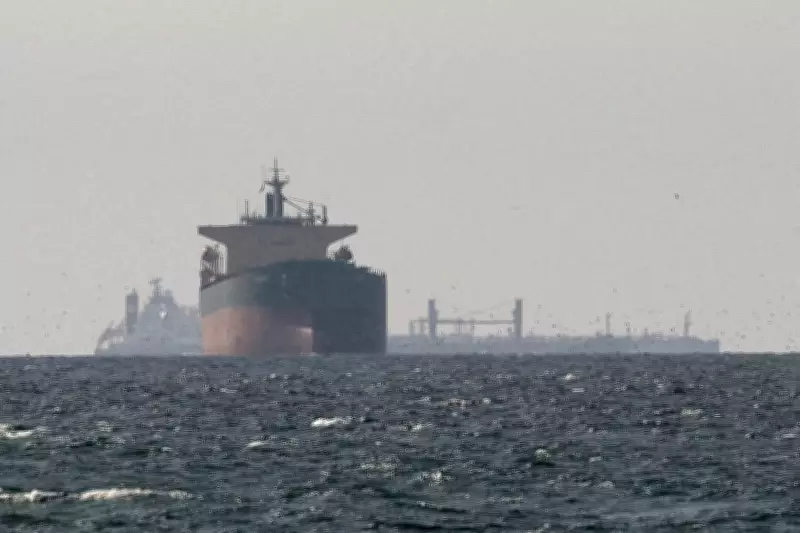
The Strait of Hormuz as Economic Hostage
Examining the IMF's declining graphs and deflating bar charts reveals a stark reality: the world economy is effectively held to ransom by Iran, with the Strait of Hormuz serving as a metaphorical hostage. The World Economic Outlook functions as a ransom note from Tehran to the global community—cease hostilities, or economic growth will remain elusive.
The Urgent Need for Diplomatic Resolution
The imperative to end the Iran war is unmistakable. A swift de-escalation, let alone a crisis resolution, cannot be achieved through military means, and certainly not via President Trump's perilous blockade of Iranian ports. Even if successful in halting Iran's shipping, such actions would further restrict oil, gas, and other supplies, driving prices higher and potentially provoking desperate retaliatory strikes against Gulf neighbours, perpetuating a cycle of violence.
An even more hazardous scenario would involve a clash between a Chinese vessel and the US Navy, risking direct confrontation between Beijing and Washington with dire global consequences.

Critical Talks and Presidential Responsibility
Preventing an already volatile situation from deteriorating further hinges on the outcomes of two key diplomatic efforts: talks in Washington between Israeli and Lebanese officials addressing Hezbollah and the occupation of Lebanon, and the next round of US-Iran discussions in Islamabad. Ultimately, it falls to President Trump to extricate the world from the chaos he has instigated and to forge peace with Tehran. The president, who fancies himself a master dealmaker, must now prove his prowess in the art of the deal to avert economic disaster.