Iran's Drone Assaults Unleash Economic Turmoil Across Middle East
The global economy has been jolted by Iran's deployment of so-called 'suicide drones', which have struck at the heart of Middle Eastern financial hubs with terrifying immediacy. The conflict has rapidly escalated, bringing warfare directly to glittering cities that once marketed themselves as bastions of security and luxury.
Dubai and Bahrain Attacks Shatter Illusions of Safety
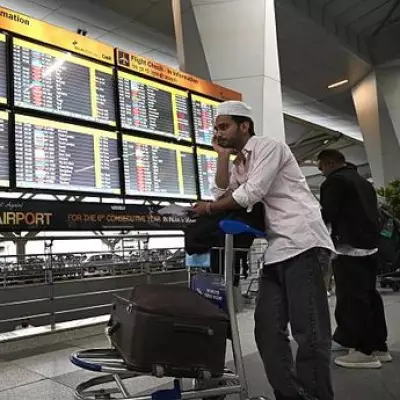
One of the most profound shocks has been witnessing luxury hotels and residential towers in Dubai and Bahrain engulfed in flames. We inhabit an era where drone warfare has fundamentally altered combat, and Iran's capability to target locations renowned for both their opulence and security has profoundly rattled the entire region. While retaliatory strikes on US military bases and energy infrastructure were anticipated, the sight of passengers and staff fleeing for cover at Dubai International Airport, with explosions echoing and iconic skyscrapers ablaze, was not.
Even advanced air defence systems failed to intercept all the incoming drones. The area's inherent instability was widely acknowledged, yet these cities had built their reputations on safety. That facade has now been graphically exposed as dangerously fragile. Flights are grounded, tourists are stranded, and expatriates who relocated for careers in finance, professional services, and other sectors are urgently seeking sanctuary. They came for tax shelters, not bomb shelters.

Strait of Hormuz: The World's Economic Chokepoint
Iran fully understands the strategic value of the Strait of Hormuz, treating it as both a jewel and a bargaining chip. Conversely, US military planners are acutely aware of this vital chokepoint's significance. Following news of US-Israel missile strikes, insurers acted with unprecedented speed, cancelling policies for ships transiting the vulnerable waterway by invoking war risk exclusions—doing so instantly on a Saturday without waiting for Monday's market opening.
Consequently, when insurance markets resume, premiums are projected to skyrocket by as much as 50%. The steepness of this increase, the availability of any cover at all, and the duration of this crisis hinge entirely on subsequent developments. The world held its breath for twelve days during last June's Israel-Iran tensions; this episode's timeline remains uncertain.
Global Markets Brace for Prolonged Uncertainty
Financial markets will reopen amidst the realisation that a long-anticipated event, repeatedly warned about by figures like Donald Trump, has now materialised. While this may offer a grim form of validation, no one is complacent. Business as usual is definitively suspended. Trading floors and offices worldwide will be characterised by anxious head-scratching and vigilant waiting.
A cascade of critical questions now looms: Will Iran's response to its leader's death be short-lived? Could a more US-amenable government emerge? Will hardliners recede? Will regional allies avoid escalation? Can oil continue flowing through an open Strait of Hormuz? Are UAE and Gulf neighbours facing repeated attacks? These are merely the initial uncertainties; many more persist. Anyone claiming definitive answers is being dishonest.
Investment Shifts and Oil Price Volatility
Investors are swiftly reassessing portfolios. Safe-haven assets like gold and silver, already ascending for months, will likely climb further. Equities may tumble, while defence stocks appear a relatively secure bet. Any investments linked to the Middle East face intense scrutiny. Broader geopolitical ramifications are also in play, including whether China might feel emboldened regarding Taiwan. Major commitment decisions globally will probably be postponed until clarity emerges.

Oil prices are poised for significant increases, directly impacting petrol costs. Having already risen by $10 per barrel since January in anticipation of such events, further jumps are anticipated. This previous increase underscored how seriously the industry viewed the potential for this exact scenario. Despite Iran holding the world's fourth-largest crude reserves, international sanctions have crippled its industry through capital shortages and inefficiencies. Iranian oil constitutes less than 3% of global supply, with China as its primary client via illicit 'dark' tanker transfers accounting for about 13% of Chinese seaborne imports.
Catastrophic Risk: Closure of the Strait of Hormuz
The paramount concern remains the potential closure of the Strait of Hormuz due to the US-Israel strikes and the ensuing chaos following the Ayatollah's death. Should this critical shipping lane for tankers be blocked, oil exports from Iraq, Kuwait, Saudi Arabia, and the UAE would be severed. The impact would be catastrophic, triggering a spike in global energy prices and potentially provoking rapid, hyperinflation. Authorities will need to aggressively reassure markets that stability can be restored and further attacks prevented.
A world already reeling from trade tariffs, rapid AI advancement, and climate change has now been sent spinning into even greater uncertainty. The fallout from Iran's drone warfare has introduced a new, immediate layer of economic peril, demonstrating how swiftly regional conflict can translate into global financial shockwaves.