Kevin Warsh: Trump's Ideal Fed Chair to Drive Interest Rate Cuts
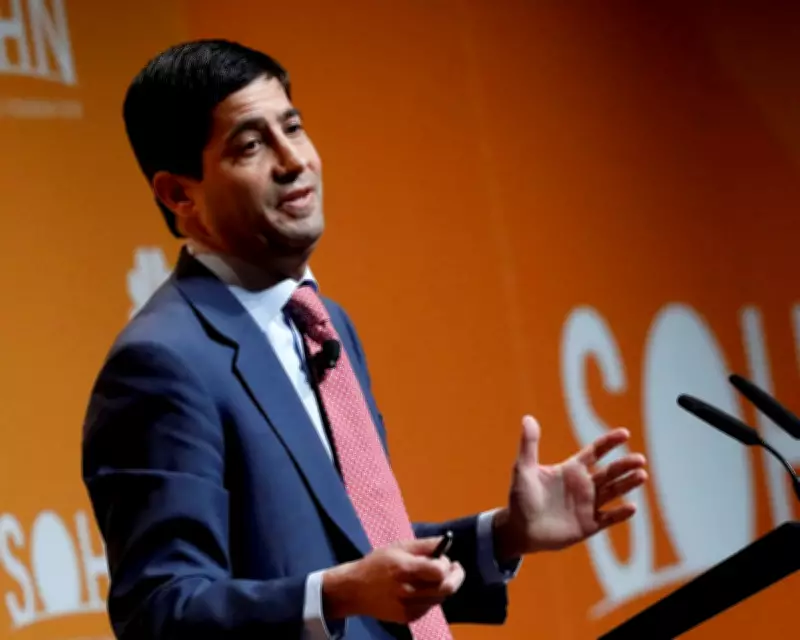
Kevin Warsh appears, on the surface, to be a perfect candidate for the role of Federal Reserve chair, the most influential central banking position globally. At 56 years old, this Ivy League economist, former Wall Street banker, and presidential adviser seems to meet all the necessary criteria. However, as he prepares for a potentially turbulent nomination hearing, his strongest supporter also represents his most significant vulnerability.
Trump's Unprecedented Pressure on the Fed
During his second term, Donald Trump has launched attacks on the Federal Reserve that are both unprecedented and inappropriate. He has labeled current chair Jerome Powell—whom he originally appointed—as a "jerk" and "a stubborn MORON," while repeatedly threatening to dismiss him. This tension stems from Trump's desire for lower interest rates, a policy area where the president lacks direct authority.
Trump believes he has found a solution in Kevin Warsh. Warsh is scheduled to appear before the Senate's banking committee for his nomination hearing on Tuesday morning, where he is expected to face rigorous questioning from both Democrats and Republicans. This hearing occurs during a chaotic period for the central bank, as Trump's campaign against Powell has triggered a criminal investigation into Powell's management of renovations at the Fed's headquarters. At least one Republican senator has vowed to block Warsh's nomination until this investigation is concluded.

Warsh's Background and Economic Philosophy
Warsh's career in economics began during his undergraduate studies at Stanford, where he was taught by Milton Friedman, the economist renowned for laying the intellectual groundwork for the free-market shareholder capitalism that emerged in the 1970s. "He had a huge effect on not just me, but generations of students that followed," Warsh remarked in an interview, describing himself as "blessed" to have studied under Friedman.
After earning a law degree from Harvard, Warsh embarked on a career in financial services, specializing in mergers and acquisitions at Morgan Stanley. In 2002, he transitioned to public service, becoming an economic policy adviser under George W. Bush and serving as the executive secretary of the National Economic Council. That same year, he married Jane Lauder, granddaughter of Estée Lauder, whose cosmetics empire has generated billions for the family.
Bush appointed the 35-year-old Warsh to the Federal Reserve's board of governors in 2006. During the 2008 financial crisis, Warsh played a key role in brokering the sale of Bear Stearns to JPMorgan Chase. He also gained a reputation as an "inflation hawk," a term for economists who advocate raising interest rates to combat high inflation, even if it risks increasing unemployment.
As a Fed governor, Warsh emphasized that the central bank should focus solely on monetary policy, warning against encroaching on fiscal matters like tax and spending decisions. "The Fed, as a first-responder, must strongly resist the temptation to be the ultimate rescuer. No matter the congressional calendar or the pleadings of the elected," he stated in a 2010 speech. Despite being appointed for a 14-year term, Warsh resigned in 2011, partly due to disagreements over the Fed's post-crisis stimulus measures. Since then, he has lectured at Stanford Graduate School of Business Hoover Institution and advised billionaire investor Stanley Druckenmiller.
Trump's Endorsement and Warsh's Stance on Rates
Economists widely agree that an independent central bank is crucial for economic stability. While previous presidents avoided public criticism of the Fed to preserve its political independence, Trump has treated it as a political adversary, openly stating his preferred policy decisions. Trump has praised Warsh since his appointment in January, asserting that Warsh will implement the interest rate cuts he has sought throughout his second term.
In a recent interview with Fox Business's Maria Bartiromo, Trump expressed confidence that rates would decrease once Warsh assumes the role. He also admitted that appointing Powell in 2018 instead of Warsh was a "really big mistake." Trump described Warsh as "central casting" and predicted he would be remembered as one of the greatest Fed chairs.

Prior to his nomination, Warsh advocated for lower interest rates, arguing in a Wall Street Journal op-ed that the Fed's leadership was failing to adapt to economic growth driven by artificial intelligence. "The world is moving faster, yet the Fed’s leaders are moving slower," he wrote, criticizing what Milton Friedman termed "the tyranny of the status quo."
Political Hurdles and Transparency Concerns
Despite Trump's unwavering support, Warsh's nomination is entangled in the conflict between Trump and the Federal Reserve. Republican Senator Thom Tillis of North Carolina has stated he supports Warsh but will block the nomination until the Justice Department drops its criminal investigation into Powell. This blockade could aid Democrats, who are united in opposing Warsh. With Republicans holding a narrow 13-11 majority on the Senate banking committee, Tillis's opposition could prevent the nomination from advancing to a full Senate vote.
Democrats have also raised issues regarding Warsh's financial disclosures, claiming they do not meet the transparency standards set by other Fed nominees. Documents released ahead of the hearing reveal that Warsh possesses assets worth at least $100 million, potentially making him one of the wealthiest Fed chairs in recent history. While he disclosed the value of his assets, he did not detail the holdings in his largest investments, citing confidentiality agreements.
Trump has threatened to fire Powell if the Senate does not confirm Warsh by May 15, the end of Powell's term. However, it remains uncertain whether Trump has the authority to do so, as the Supreme Court has yet to rule on a related case involving the firing of Fed governor Lisa Cook. Even if confirmed, Warsh cannot unilaterally deliver the rate cuts Trump desires; he must persuade the other 11 board members, a challenging task amid economic turmoil caused by the Iran war.