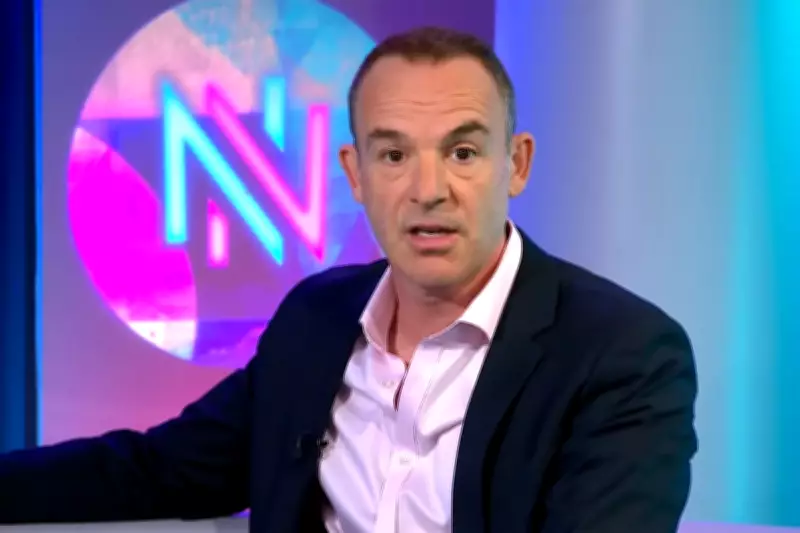
Martin Lewis's April Financial Resolutions: Key Tax Year Tips for Households
As the 2026/27 tax year commences, households across the UK have a prime opportunity to conduct a thorough financial wellness check. Money expert Martin Lewis has issued his 'new year resolutions' with practical advice to enhance savings and incomes, applicable to individuals at every income level. He emphasises that the start of the tax year on 6 April is more significant for personal finances than 1 January, as it triggers tax code adjustments, ISA allowance resets, and benefit updates.
Maximise ISA Power with Strategic Savings
With the new financial year, each individual's ISA allowance resets, allowing up to £20,000 to be deposited tax-free. This year is particularly notable as it marks the final opportunity for savers to allocate this full allowance into a cash ISA, before the limit reduces to £12,000 for those under 65 from April 2027, following changes announced by Chancellor Rachel Reeves. Martin Lewis advises that cash ISAs remain advantageous, especially for taxpayers, and currently offer higher rates than standard savings accounts. He highlights top offers, including Trading 212 at 4.61% for new customers, Virgin Money at 4.15% for transferred accounts, and Plum at 4.08%. Fixed-rate options like Tandem Bank at 4.51%, HSBC at 4.5%, and Nationwide at 4.35% are also recommended for stability.
Ensure Tax Accuracy Amid Threshold Freezes
Millions of workers face continued higher tax burdens due to the extended freeze on income tax thresholds, a policy that creates 'fiscal drag' by pulling more earners into higher brackets as wages rise. By 2029/30, this is projected to add 780,000 basic-rate, 920,000 higher-rate, and 4,000 additional-rate taxpayers. Lewis stresses the importance of using free online tax calculators to understand monthly deductions and verifying the 2026/27 tax code on payslips, noting that millions of codes are incorrect annually. He reminds individuals that this responsibility lies with them, not employers or HMRC.

Double-Check Payslips for Minimum Wage Increases
From 6 April, minimum wage hikes took effect, requiring workers to confirm their payslips reflect the new rates. Workers aged 18 to 20 see an 85p increase to £10.85 per hour (8.5% rise), while under-18s and apprentices receive a 45p boost to £8 per hour (6% increase). The national living wage for those over 21 rises by 4.1% from £12.21 to £12.71 per hour. Lewis warns that hundreds of thousands are underpaid yearly, often due to unpaid overtime or costs for uniforms and tools, and urges vigilance in the first full pay cycle after the change.
Top Up Income with Benefit Claims
The new tax year is an ideal time for low-income households to review eligibility for support, as key benefit changes take effect. The removal of the two-child benefit cap allows parents with more than two children to claim universal credit for all, benefiting 560,000 families by an average of £5,310 annually. Most means-tested benefits increased by 3.8% from 6 April, with the universal credit standard allowance rising by 6.2%. With wage growth at 3.8%, many may now qualify for benefits if their income has stagnated. Despite 24 million people claiming DWP benefits, £24 billion in support goes unclaimed yearly; tools like Policy in Practice's calculator can help assess entitlement.