Middle East Conflict Fuels UK Inflation and Household Financial Strain
An uneasy and incomplete peace has emerged across much of the Middle East, with hostilities between Iran, Israel, and the United States temporarily paused as negotiations for a permanent ceasefire continue. However, the economic fallout from the recent conflict is already being felt acutely in the United Kingdom, where rising oil prices are pushing up petrol costs and adding significant pressure to household budgets.
Economic Consequences of Global Tensions
The human toll of the conflict has been devastating, with thousands dead and millions enduring weeks of constant bombardment. In Lebanon, Israeli attacks persist, while the broader economic repercussions are spreading misery far beyond the region. In the UK, inflation has resurfaced, driven by a global surge in energy prices that began with the onset of the Middle East hostilities.
Just six weeks ago, there was a sense of cautious optimism about the UK economy after years of disappointment. Markets anticipated interest rate cuts from the Bank of England, which would have made mortgages more affordable and encouraged business investment. Energy prices had decreased from the spikes following Russia's invasion of Ukraine, and growth, though modest, showed potential to exceed expectations.

Drastic Changes in a Short Timeframe
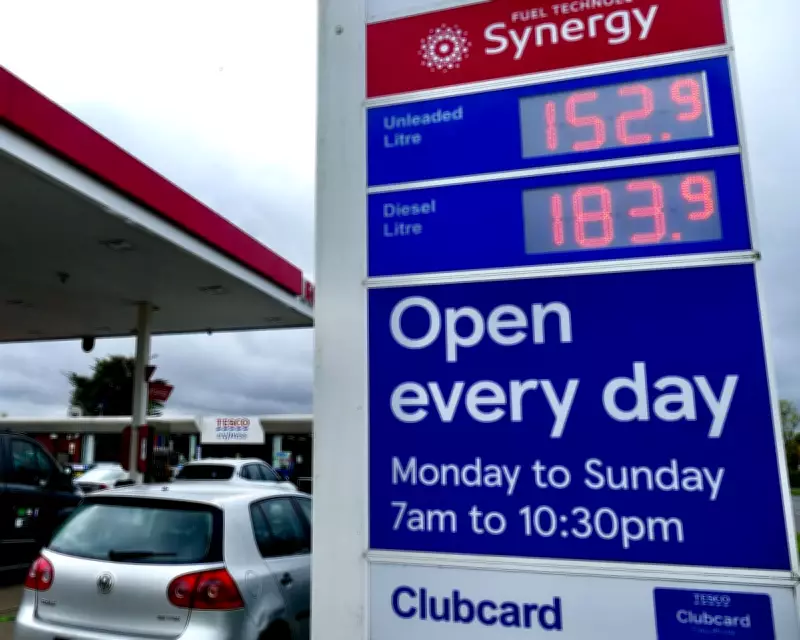
The situation changed rapidly when the US and Israel attacked Iran. Oil prices surged after Tehran closed the Strait of Hormuz, cutting off 20% of the world's oil supply. This led to an almost instantaneous jump in petrol prices at the pump, with knock-on costs filtering through to UK consumers. As a result, the country's growth prospects have been downgraded, and markets now expect interest rates to rise slightly instead of fall, partly due to economic pressures dubbed "Trumpflation."
Richard Partington, a senior economics correspondent, highlights the severe impact: "The price of petrol has rocketed. Mortgage costs have risen pretty dramatically. Some people's house purchases have fallen through because some banks have pulled deals." He warns that more bad news is likely on the horizon, as businesses like supermarkets pass on increased diesel costs to consumers through higher prices.
Deepening Cost of Living Crisis
This economic fallout spells financial hardship for many in the UK, with the poorest households bearing the brunt. The cost of living crisis, which began in 2022, has only deepened. Official data indicates that four in ten adults are struggling to pay their energy bills, and the Joseph Rowntree Foundation reports that 3.8 million people in the UK are experiencing destitution, meaning they cannot afford basic necessities like warmth, food, and clothing.
The government's finances are also under strain. Debt has climbed to nearly 100% of GDP following successive economic shocks, including the pandemic. Currently, about one in every £100 of government spending goes toward debt interest, amounting to approximately £100 billion annually—nearly 90% of the Department for Education's entire budget. With the government spending more than it collects in taxes, borrowing has become more expensive since the conflict began.
Government Response and Future Outlook
Rachel Reeves has hinted at providing limited, targeted support to vulnerable groups in the autumn, but has ruled out a universal programme similar to Liz Truss's initiative, which many economists blame for a previous inflation spike. Richard Partington notes the challenge: "Where you draw the cutoff line is difficult, but in 2022, you had households on the poverty line getting the same amount of money as a billionaire with a Mayfair penthouse. That doesn't feel fair, that's why they want targeted support."
Despite the ceasefire, economic optimism remains scarce. Oil prices climbed again recently as doubts about the durability of the peace deal grew. Oil tankers are moving through the Strait of Hormuz at an even slower rate than during the fighting, amid new taxes imposed by Iran for safe passage. Richard cautions that a breakdown in the peace agreement could bring further bad news for the UK, but also presents an opportunity to reduce dependence on fossil fuels and enhance economic stability.

He explains: "A reignition of this war could have consequences similar to the Covid-19 pandemic. We are hugely reliant on fossil fuels, particularly from the Middle East. It highlights the fragility, and we need to try to reduce that dependence to bring back stability. It's going to be costly and will take time, but it is now seen as increasingly necessary."