Middle East Conflict Threatens to Deepen Australia's Cost-of-Living Crisis
Australians have been issued a stark warning that the escalating conflict in the Middle East could exacerbate the nation's cost-of-living crisis, leading to increased mortgage pain and higher prices at petrol stations and supermarkets. AMP chief economist Shane Oliver has highlighted that recent US-Israeli strikes on Iran will have significant knock-on effects impacting multiple facets of everyday life in Australia.
Immediate Impact on Fuel Prices
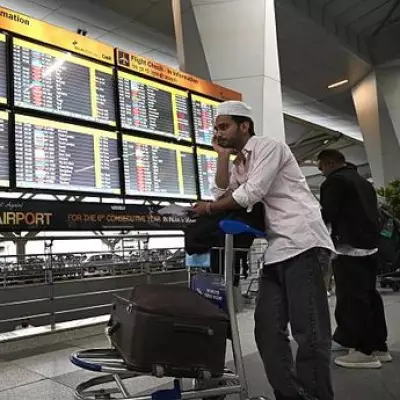
Pump prices are already forecast to surge by as much as 40 cents per litre within days, as fears grow that Iran may completely shut down the Strait of Hormuz. Iran controls the world's third-largest oil reserves, making any disruption to its exports a critical concern for global energy markets. Dr Oliver explained that higher fuel prices flow directly into Australia's inflation figures, with petrol being one of the most volatile and closely monitored components of the consumer price index (CPI).
He estimates that a 40-cent-per-litre rise would add approximately 0.8 percentage points to headline inflation and around $14 per week to the average household fuel bill. This additional financial pressure would inevitably squeeze spending in other areas, further straining household budgets already grappling with high living costs.

Inflation and Interest Rate Risks
Dr Oliver noted that while the Reserve Bank of Australia (RBA) will likely overlook short-term, oil-driven inflation in its immediate assessments, a sustained oil shock could significantly slow disinflation. Higher fuel costs have a cascading effect, lifting transport, freight, grocery, and goods prices across the economy. 'The fear that this is yet another shock, and we spend more time above 3 per cent, adds to the risk of another interest rate rise,' he cautioned. 'For the RBA the implications are ambiguous – a boost to inflation but a hit to growth.'
Inflation remains uncomfortably high at 3.8 per cent, well above the RBA's target range of 2-3 per cent. Dr Oliver anticipates that the RBA will leave interest rates on hold this month, but he warns of a high risk of another hike later in the year if inflationary pressures persist.
Historical Parallels and Broader Economic Threats
Labour economist Jim Stanford pointed to the 2022 Russian invasion of Ukraine as a sobering reminder of how volatile global oil prices can wreak havoc on inflation, even for countries like Australia that do not heavily depend on imported oil. 'World prices jumped 65 per cent in a matter of weeks and was the biggest single cause of the surge in inflation that was felt around the world including Australia, where inflation peaked later that year at almost 8 per cent,' he told the Daily Mail.
Stanford explained that consumer energy prices for petrol, gas, and electricity surged in Australia, contributing directly to inflation. 'But the indirect effects also were significant. Companies that faced higher energy costs in their own operations passed those costs on to consumers in the form of higher prices for food, transportation, services, and more.' He warned that the RBA may view the current oil price spike as temporary, but after its recent hawkish hike, it might still move quickly—especially if rising oil prices spread to broader goods and services, which he described as inevitable.
'It’s likely to be a case of déjà vu all over again,' Stanford said. 'The RBA’s strategy is too dependent on one big hammer called the interest rate. And when all you have is a hammer, everything looks like a nail.'
Potential for Major Disruption and Market Impacts
Dr Oliver assessed that there is about a 40 per cent chance of a major oil-supply disruption, which would not only drive inflation higher but also drag down share prices. A hit to share prices would flow through to superannuation funds, adversely affecting older Australians, including many baby boomers who are heavily exposed to equity markets.

'Trump may lose the gamble with Iran fighting on for longer, forcing the US to stay involved longer,' he speculated. 'This could mean a bigger and much longer disruption to oil supplies, conceivably resulting in a doubling in oil prices to around $US150/barrel, which could drive a sharp fall in shares.' He noted that past oil price surges have played a role in US and global economic downturns, including in the mid-1970s, early 1980s, early 1990s, early 2000s, and even during the Global Financial Crisis.
Energy analyst Saul Kavonic added a grave warning: 'If things go badly in the Middle East, we could see our worst oil shock since the 1970s.' He emphasised, 'This is particularly so given the broad nature of the US and Israeli attack - including talk of regime change - and Iran's broad-based retaliation so far. The key issue is how long it lasts.'
Market Watch and Policy Outlook
All eyes will be on RBA Governor Michele Bullock’s upcoming speech at the AFR Business Summit, with financial markets closely monitoring for any shift in policy tone. Stubborn inflation and a resilient labour market have already led most economists to fully price in two interest rate hikes by September, underscoring the heightened economic uncertainty facing Australia.