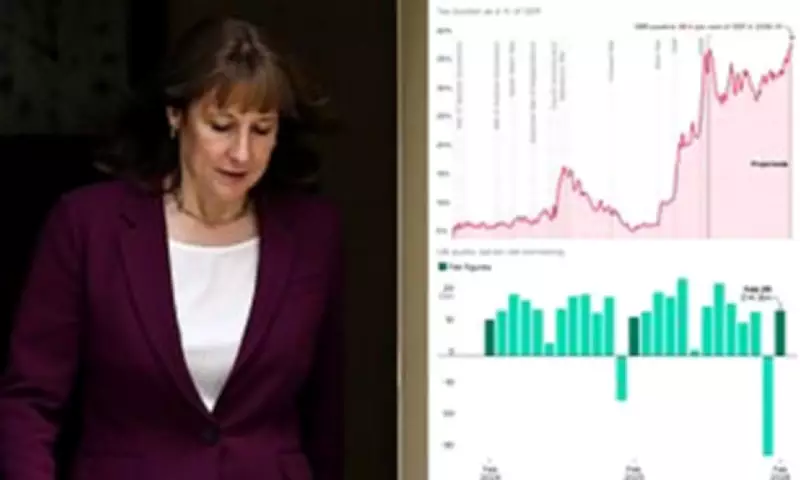
Middle East Conflict Pushes UK Towards £20bn Fiscal Black Hole
British households face the prospect of additional tax burdens as the escalating crisis in the Middle East severely disrupts Chancellor Rachel Reeves' economic strategy. Economists have calculated that the 'Trumpflation' shock resulting from the Iran conflict could leave the Treasury scrambling to address a staggering £20billion shortfall in public finances.
Inflationary Pressures Mount on Public Spending
Soaring oil and gas prices triggered by the conflict are driving higher inflation, which in turn necessitates larger public sector pay settlements, increased welfare spending, and elevated government borrowing costs. With the crucial Strait of Hormuz remaining closed and hostilities showing no signs of abating, Chancellor Reeves faces mounting pressure to assemble an energy bills support package for struggling households when the price cap adjusts in July.
However, significant doubts have emerged regarding how the Chancellor can source the necessary funds to assist families with their escalating living expenses. Despite having already pushed the UK's tax burden toward record levels since taking office at Number 11, official figures released last week revealed that the public sector recorded its highest February borrowing outside of the COVID-19 pandemic period—substantially exceeding analysts' expectations.

Institute for Fiscal Studies Warns of Spending Squeeze
The Institute for Fiscal Studies (IFS) think-tank has warned that elevated inflation will substantially impact public sector pay, potentially increasing government expenditure by approximately £4billion. Nick Ridpath of the IFS stated: 'Public sector pay constitutes a large and crucial component of government spending. Even relatively modest variations in pay settlements would create significant differences in the total cost of public sector employment.'
Ridpath further cautioned that 'higher than anticipated pay settlements would compel the government to either supplement departmental budgets or necessitate reductions in other departmental spending areas.' He suggested that an additional £3billion top-up for Whitehall budgets would likely be required in the 2026-27 fiscal year to maintain previously promised real-terms growth.
Comprehensive Financial Impact Assessment
The IFS estimates that increased benefits uprating would add £2.5billion to government costs, while debt servicing expenses could rise by £10billion. Although higher revenues from income tax and VAT would partially offset these additional expenditures, the overall financial impact remains substantial.
Conservative critics have accused Chancellor Reeves of 'maxing out the nation's credit card,' highlighting that the UK economy was already facing challenges before the Middle East crisis intensified. Motorists are already experiencing financial strain at fuel pumps, while projections indicate that energy bills could surge by more than twenty percent when the price cap changes in July.
Monetary Policy and Fiscal Uncertainty
Financial markets now anticipate that the Bank of England may implement interest rate increases in the coming months, rather than the previously expected cuts. Economic experts have expressed growing concerns that Chancellor Reeves may need to implement additional tax increases to stabilize public finances.
Following Friday's concerning borrowing figures, Susannah Streeter of Wealth Club commented: 'Fresh tax rises appear increasingly plausible given the Treasury finds itself in an increasingly constrained financial position.' The combination of geopolitical instability, inflationary pressures, and mounting public spending commitments creates a perfect storm for UK fiscal policy, with households potentially bearing the brunt through both direct taxation and reduced public services.