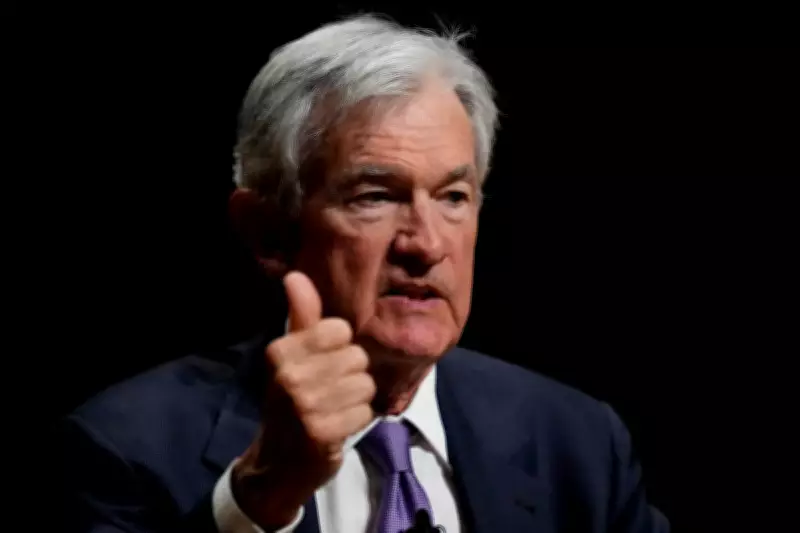
Federal Reserve Chair Jerome Powell Highlights Inflation Monitoring Amid Energy Price Surge
Federal Reserve Chair Jerome Powell emphasised the critical need to closely monitor inflation as energy prices spike due to the ongoing conflict in Iran. Speaking to nearly 400 students at Harvard University on Monday, Powell noted that the average price for gasoline in the United States is approaching $4 per gallon, a significant increase driven by geopolitical tensions.
Limited Federal Reserve Policy Options on Energy Shocks
Powell acknowledged that Federal Reserve policymakers have limited tools to address such energy price spikes directly. He explained that energy shocks "tend to come and go pretty quickly," while monetary policy measures typically operate over longer timeframes. However, he warned that a series of consecutive energy shocks could pose serious concerns by potentially altering inflation expectations among the public, businesses, and households.
"You have to carefully monitor inflation expectations because you could have a series of big supply shocks and that can lead, you know, the public generally, businesses, price setters, households ... to start expecting higher inflation over time. Why wouldn’t it?" Powell stated during his address.

Challenging Job Market for Young Graduates
In his wide-ranging remarks, Powell also addressed the difficult employment landscape facing young graduates. He highlighted several headwinds, including the growing role of artificial intelligence, a persistently low unemployment rate, and sluggish job creation. The U.S. job market has shown lacklustre performance over the past year, with employers adding fewer than 10,000 jobs per month in 2025—the weakest hiring outside a recession since 2002.
Although January 2026 started with a decent gain of 126,000 new jobs, February saw a loss of 92,000 positions. Despite this sluggish hiring, the unemployment rate has remained low at 4.4%, reflecting a "low-hire, low-fire" environment where companies are hesitant to add staff but equally reluctant to let go of existing workers.
This dynamic has made it particularly challenging for young people to secure employment, with concerns that artificial intelligence is displacing entry-level roles traditionally filled by new jobseekers. Companies may also be delaying hiring decisions until they better understand how to integrate AI into their operations.
Long-Term Optimism on Technological Innovation
Despite these immediate challenges, Powell expressed optimism for the medium to long term. He pointed to historical precedents where technological innovations have consistently raised living standards and boosted productivity. Large-language models, he noted, enhance productivity for individuals, including himself.
"You’re in a situation where you need to really invest the time to master the use of these new technologies," Powell advised. "There’s no denying it’s a challenging time to enter the labor market. It may take some patience and all that, but in the longer term, this economy is going to give you great opportunities. Just be a little optimistic."
Federal Reserve Independence and Political Pressures
While neither Powell nor the students mentioned former President Donald Trump directly, Powell stressed the paramount importance of the Federal Reserve's independence. "It’s very hard to build great democratic institutions and much easier to bring them down," he remarked, underscoring the institution's need to operate free from political interference.
Trump has repeatedly criticised Powell and urged the Fed to cut interest rates to lower borrowing costs for households, businesses, and the U.S. government. Powell's cautious approach has drawn Trump's ire, with the former president demanding aggressive rate cuts to stimulate economic growth. Some economic policies under the Trump administration, including new tariffs on trading partners and the Iran war's impact on energy prices, have complicated the Fed's dual mandate of price stability and maximum employment.

The average gallon of gasoline in the U.S. rose to $3.99 overnight, according to AAA, exacerbating inflationary pressures. Trump escalated his attacks on the Fed in January 2026 when the Department of Justice served subpoenas and threatened criminal indictment over Powell's testimony regarding the Fed's building renovations in Washington, D.C.
Controversy Over Fed Building Renovations
The Federal Reserve has been renovating its headquarters and a neighbouring building, with construction costs soaring due to post-pandemic inflation spikes in 2021 and 2022. Recent estimates place the current cost at $2.5 billion, approximately $600 million higher than the 2022 estimate of $1.9 billion.
Trump has alleged that mismanagement of this renovation project could justify firing Powell. However, such a move would threaten the Fed's long-cherished independence, a principle widely supported by economists and Wall Street investors as essential for effective monetary policy.