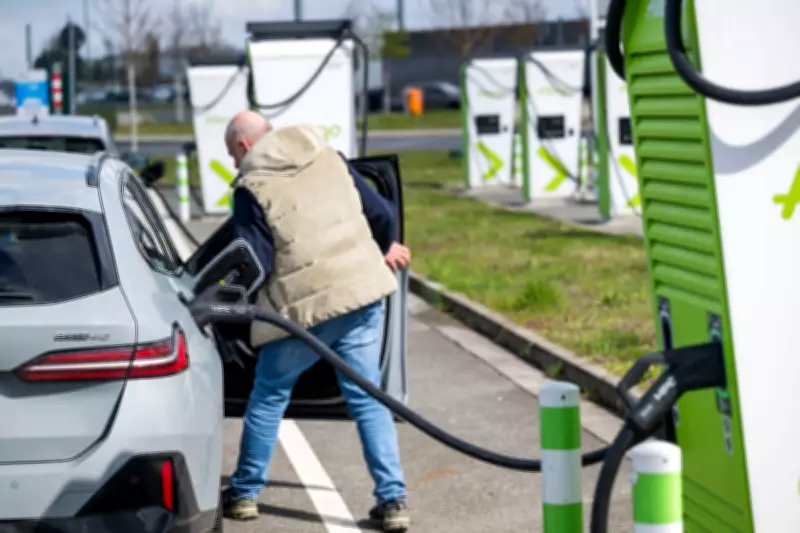
The cost of charging an electric vehicle (EV) at a public charger has fallen below the cost of petrol or diesel for the first time in over a year, according to new data. The shift is largely due to steep increases in petrol and diesel prices since the outbreak of war in Iran.
Charging Costs Per Mile
Industry body Charge UK, using figures from RAC Fuel Watch and Zapmap, reports that using a standard public charger (e.g., on-street or in a car park) at the national average cost of 54p per kWh translates to around 15p per mile. In contrast, a typical petrol car costs 17p per mile, and diesel costs 17.5p per mile.
EV drivers who use an 80/20 mix of standard and rapid public charging will pay about 16p per mile. Only those who exclusively use ultra-rapid chargers will still face higher costs than liquid fuel.

Home Charging Even Cheaper
Home charging remains the most affordable option, costing as little as 2p per mile. Public chargers are more expensive partly due to a higher VAT rate: 5% for domestic electricity versus 20% at public charging points.
Melanie Shufflebotham, co-founder of Zapmap, said: “For EV drivers with a typical 80/20 split between home and public charging, the cost saving compared to petrol or diesel is at its highest since May 2024. However, the UK still has the highest public charging costs in Europe, and we welcome measures to address this to support the transition to sustainable transport.”
Growing Affordability of EVs
Ian Plummer, chief customer officer at Autotrader, noted: “Cheaper running costs have long been a key incentive to switch to electric. We’ve seen a significant uptick in consumers looking at EVs following recent petrol price hikes. Our analysis also shows the average price of a new EV, including discounts and government grants, has fallen below petrol for the first time ever.”
Autotrader’s separate analysis found that new electric cars are now cheaper to buy than petrol models. The average price of a new EV listed on its site is £42,620, compared to £43,405 for a new petrol car—a difference of £785. This is attributed to government grants and sustained manufacturer discounting.
The Labour government has pledged to ban sales of new fully petrol or diesel cars and vans from 2030, with only zero-emission models allowed from 2035.