Reeves Stands Firm on Economic Strategy Amid Revised Forecasts
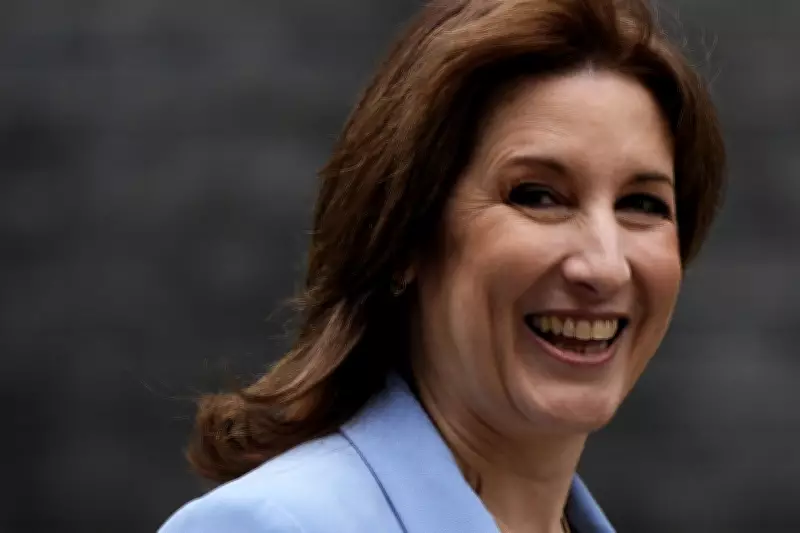
Chancellor of the Exchequer Rachel Reeves has emphatically defended her government's economic plan, despite newly released forecasts from the Office for Budget Responsibility indicating weaker growth and higher unemployment than previously anticipated. In a highly political spring statement delivered to Parliament, Reeves argued that her strategy is "more necessary than ever before in a world of uncertainty," particularly referencing the ongoing conflict in Iran as a threat to economic stability.
Revised Economic Projections Paint Challenging Picture
The independent Office for Budget Responsibility has significantly revised its economic forecasts, presenting a more challenging outlook for the United Kingdom. The watchdog now predicts that gross domestic product will increase by just 1.1% in 2026, a notable reduction from the 1.4% growth forecast made in November of the previous year.
While the OBR did upgrade its projections for 2027 and 2028 from 1.5% to 1.6%, the immediate forecast presents difficulties. More concerning is the unemployment forecast, which is now expected to reach 5.3% this year, up substantially from the 4.9% predicted in autumn. The rates for 2027 and 2028 are also likely to be higher than previously anticipated.

The OBR specifically noted that new entrants into the labour force are "struggling to find work amid subdued hiring demand," highlighting structural challenges in the employment market.
Chancellor's Defiant Response to Critics
Against this backdrop of revised economic projections, Chancellor Reeves delivered a defiant message to both opposition parties and critics within her own Labour Party. She cautioned strongly against any "change of course" and explicitly rejected what she called "the temptation of easy answers and reckless borrowing."
"This Government has the right economic plan for our country," Reeves asserted. "A plan that is even more important in a world that in the last few days has become yet more uncertain." She added that "the new forecasts from the Office for Budget Responsibility confirm that our plan is the right one – inflation is down, borrowing is down, living standards are up and the economy is growing."
Despite this confidence, Reeves acknowledged that "the economy is not yet working for everyone" and expressed that she is "not yet satisfied with these forecasts." She maintained that she has "confidence" the government can outperform the economic projections.
Political Positioning and Future Plans
The Chancellor's statement took clear aim at political opponents, stating that progress on key initiatives was "opposed by the Conservatives, opposed by Reform, opposed by the Liberal Democrats, and opposed by the Green Party too – because it is Labour, and only Labour, that has the right plan for our country."
This positioning comes in the wake of Labour's by-election difficulties in Gorton and Denton, which had increased pressure on both Reeves and Prime Minister Sir Keir Starmer to shift policy direction. Reeves firmly rejected such calls, insisting "we must stay the course."
Notably, the spring statement included no immediate tax or spending changes, consistent with Reeves' commitment to deliver just one budget annually. However, she indicated plans for a more substantial speech later this month in the City of London, where she will outline goals for "breaking down trade barriers and deepening alliances with our European partners for a more secure and connected economy."
In a pointed reference to Brexit, Reeves remarked that it "cut us off from our closest trading partners," signaling a potential shift toward closer European relations.
Additional Economic Indicators and Responses
The Chancellor provided further economic context during her statement, noting that slower wage growth contributes to lower inflation forecasts. The consumer prices index is expected to fall from 3.4% in 2025 to 2.3% this year, eventually hitting the Bank of England's 2% target from 2027 onward.

On public finances, borrowing is projected to reduce by "nearly £18 billion compared to the autumn," with public sector net borrowing expected to decline from 4.3% this year to 3.6% next year, then further to 2.9%, 2.5% and 1.8% in 2029-30. Reeves also noted that her buffer against the fiscal rule of meeting day-to-day spending through tax receipts rather than borrowing would increase from £21.7 billion to £23.6 billion in 2029-30.
Opposition response was swift and critical. Shadow Chancellor Sir Mel Stride dismissed the statement as a "surrender statement," accusing Reeves of having "nothing to say and with no plan." Meanwhile, business voices expressed concern, with Confederation of British Industry chief economist Louise Hellem stating that while "reducing the cost of living, cutting borrowing and growing the economy are the right priorities," they "can't be achieved without clear efforts to tackle the high cost of doing business."
Despite these criticisms and the challenging economic forecasts, Chancellor Reeves remained resolute, concluding: "My plan is the right one. I am in no doubt about how great the rewards can be if we stay the course."