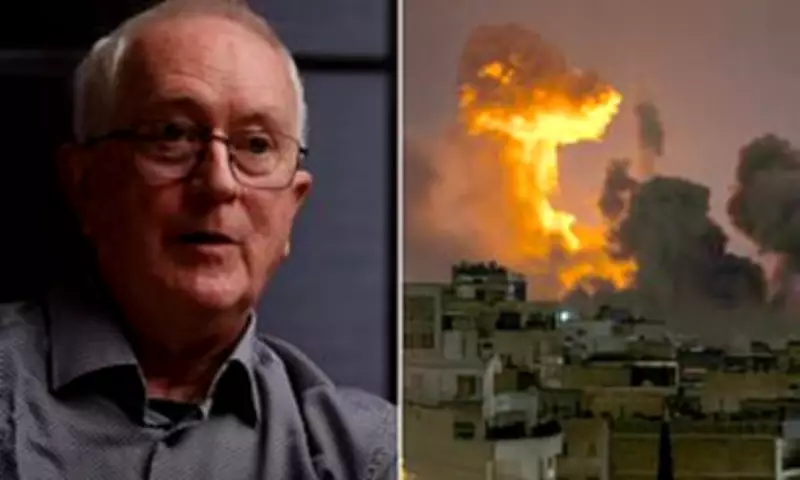
Economist Issues Dire Warning Over Strait of Hormuz Fertiliser Disruption
Australian economist Steve Keen, who accurately predicted the 2008 financial crash, has delivered a stark warning that disruptions to fertiliser shipments through the Strait of Hormuz could plunge the world into a catastrophic food crisis, endangering billions of lives. Speaking on The Diary of a CEO Podcast, Keen explained that modern agriculture's dependence on synthetic fertilisers makes global food supplies exceptionally vulnerable to geopolitical tensions in this critical shipping lane.
The Fragile Foundation of Global Food Production
Keen emphasised that synthetic fertilisers are not merely an agricultural enhancement but a fundamental pillar supporting the current global population. "Fertiliser is an essential part of growing all the food we eat," he stated. "Twenty to 30 per cent of our fertiliser comes through that region, through the Strait of Hormuz." He warned that without these chemical inputs, Earth's carrying capacity would plummet to just one to two billion people—a devastating drop from today's approximately eight billion inhabitants.
The ongoing conflict-related shutdown of shipping through this strategic chokepoint threatens to sever a significant portion of global trade in critical fertiliser components. These include ammonia, sulphur, and the natural gas required for their production. The resulting stall in fertiliser manufacturing would lead to sharply reduced crop yields and a severe contraction in worldwide food availability.

An Unprecedented Global Threat
Unlike historical famines that were typically regional, Keen cautioned that this disruption would have simultaneous global consequences. "We've never had this experience before," he said. "Food production on the planet could fall 10-25 per cent and there simply won't be enough food for everyone on the planet. Then it's a question of who's going to starve." He projected that unless hostilities cease immediately, a worldwide famine could begin within two months, with India likely facing the first severe shortages.
Wealthy nations should not assume they are insulated from this crisis. Using Australia as an example, Keen noted the country maintains only about 30 days' worth of oil reserves. Once fuel supplies are exhausted, the transportation network connecting farms to urban centres would collapse. "Australia is incredibly vulnerable. We're all far more vulnerable than we realise, and this war is threatening everybody on the planet," he asserted.
Interconnected Vulnerabilities and Regional Dependencies
Australia sources approximately two-thirds of its fertiliser and urea from Middle Eastern suppliers, primarily Saudi Arabia, Qatar, and the United Arab Emirates. While Indonesia has committed to continuing fertiliser exports to Australia—a significant gesture given Australia consumes 8.7 million tonnes annually—Indonesia's available export capacity of 1.5 to 2 million tonnes falls far short of Australian needs.
Rahmad Pribadi, head of Indonesia's state-owned fertiliser producer Pupuk Indonesia, highlighted this interdependence after discussions with Australia's ambassador. "Food security is a shared responsibility because of our intertwined and interconnected value chain," Pribadi told The Australian. "It is in Indonesia's interests for Australia to remain a strong agricultural producer and exporter because Indonesia is also dependent on Australia for certain commodities. We are very connected."
Agricultural Sector Already Under Strain
Australian farmers are already battling soaring fuel and fertiliser costs. National Farmers’ Federation president Hamish McIntyre warned last month that while current supplies might secure the winter crop, insufficient fertiliser for in-crop applications and summer planting could halve Australia's winter harvest. "If we can't secure our in-crop requirements after May, Australia's winter crop could be halved," McIntyre cautioned.

The World Food Program estimates the Iran conflict could push an additional 45 million people into acute hunger by mid-2026, compounding the existing crisis where 343 million people already face severe food insecurity. Corinne Fleischer, WFP director of supply chain, expressed deep concern about vulnerable families' ability to afford basic nutrition as living costs escalate globally.
Pathways to Resilience
Keen suggested that individuals and nations could build resilience through greater self-sufficiency. "Even if it costs you more to build solar, you've got to build solar as your own alternative energy system. Because without energy, there's no civilisation," he advised. While acknowledging his own lack of gardening expertise, he urged people to develop food production capabilities where possible. "If you have some degree of self-sufficiency, you can survive. Money doesn't matter if you can't buy the product in the first instance, the product doesn't exist anymore."
This warning from a respected economist underscores how geopolitical tensions in one narrow waterway could unravel the complex systems feeding the world's population, transforming regional conflict into a planetary emergency with profound humanitarian consequences.