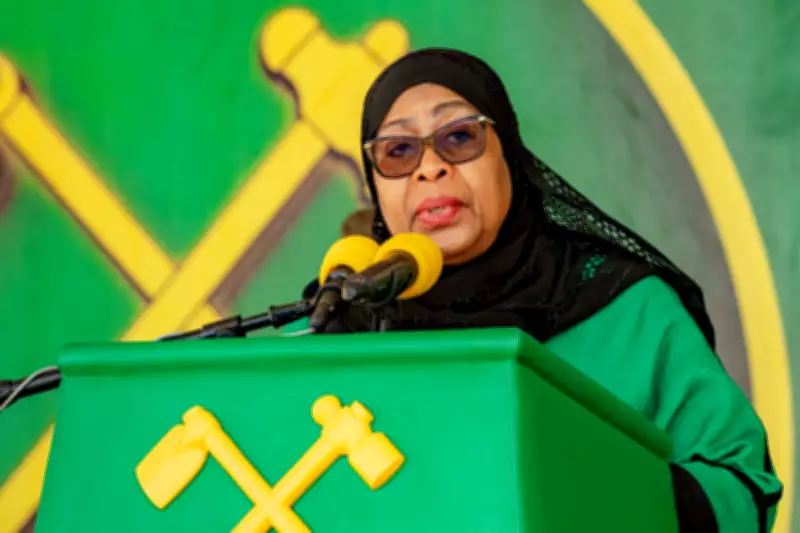
Tanzanian President Orders Drastic Cuts to Official Motorcades Amid Fuel Crisis
Tanzania's President Samia Suluhu Hassan has implemented sweeping measures to reduce fuel consumption by slashing the size of official convoys and mandating shared transport for accompanying officers. This decisive action comes as global oil prices continue to escalate, driven primarily by the ongoing conflict involving Iran and the consequential closure of the Strait of Hormuz.
Presidential Directive Targets Luxury Vehicle Usage
President Hassan, whose motorcades have historically been among the most extensive in Africa, announced on Wednesday that her travel entourage will now utilize consolidated transport in small buses. This strategic shift aims to significantly decrease both fuel consumption and operational costs during this period of economic strain.
"From today, whenever I travel, the officers accompanying me will use consolidated transport in small buses to reduce fuel consumption and operational costs during this period," Hassan declared. This marks a stark departure from previous protocols where her convoy reportedly consisted of dozens of luxury vehicles transporting government officials, protocol officers, and security personnel.

Regional Context: African Nations Grapple with Fuel Shortages
Tanzania's measures are part of a broader continental response to fuel shortages and price inflation. Several African governments have announced emergency steps:
- Madagascar declared a state of emergency to curtail fuel consumption.
- South Africa implemented a reduction in the national fuel levy.
- Ethiopia introduced formal rationing systems.
- Senegal banned all non-essential foreign trips for government ministers.
These coordinated efforts highlight the widespread impact of the current geopolitical tensions on African economies.
Historical Perspective and Public Scrutiny
President Hassan's motorcades have previously attracted significant public attention and commentary. A viral video showcasing her 30-car convoy once circulated online, sparking broader conversations about the scale and opulence of presidential convoys across the African continent. Her convoy has been consistently noted as one of the longest in Africa, making this recent directive particularly noteworthy.
Economic Realities and Government Response
The immediate catalyst for these austerity measures is a sharp increase in fuel prices, which have risen by approximately $0.40 per liter over the past two weeks. President Hassan confirmed that Tanzania maintains fuel reserves capable of sustaining the nation for up to three months. However, she issued a stern warning to businesses against exploiting the situation by artificially inflating prices.
The closure of the Strait of Hormuz, a critical global oil transit route, combined with the Iran conflict, has created a perfect storm for fuel markets, directly impacting economies worldwide, including Tanzania's. The government's proactive stance aims to mitigate these external pressures through internal conservation and efficiency improvements.