Tribal Gas Stations Offer Relief from High Fuel Prices Amid Iran Conflict
Gasoline prices continue to climb across the United States, driven by the ongoing Iran war, but savvy drivers are discovering a significant reprieve at tribally owned gas stations. These stations, often located on Native American reservations, are offering fuel at prices substantially lower than nearby competitors, thanks to exemptions from state fuel taxes.
Drivers Seek Savings as Prices Soar
Junelle Lewis was determined to escape the steep gas prices in the Seattle area when her phone app pointed her to the Tulalip Reservation, nearly half an hour from her home. Without hesitation, she made the drive.
"I purposely drove here just for the gas," Lewis said while filling her Chevrolet Suburban at the Tulalip Market for $4.84 per gallon—about 75 cents less than prices near her home. "Gas is ridiculous. But I have found, honestly, over the years, this gas station specifically is cheaper than a lot around here. Probably the cheapest."

Lewis is far from alone. Drivers in states like California, New Mexico, New York, Oklahoma, and Washington are increasingly turning to tribally owned stations, especially those in busy travel corridors, where savings can be substantial.
Nationwide Price Surge and Tribal Advantages
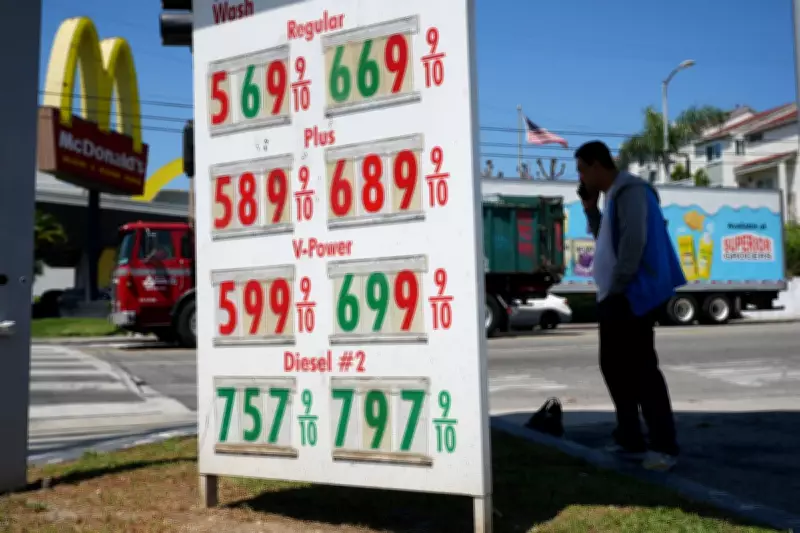
Since the Iran war began on February 28, nationwide gasoline prices have surged by well over $1, reaching an average of $4.15 per gallon according to AAA. While prices peaked above $5 in the summer of 2022, economists warn that geopolitical tensions could drive further increases, contributing to inflation in the coming weeks.
Amid this backdrop, nearly 500 tribally owned convenience stores with gas stations across the U.S. are providing much-needed deals. For example:
- In California, the Chukchansi Crossing Fuel Station & Travel Center between Fresno and Yosemite National Park offered gas at $5.09, 60 cents less than nearby stations.
- On the Mescalero Apache Reservation in New Mexico, gas was as low as $3.79 this week, as noted by resident Jamie Cross.
- In eastern New York state, on the Cattaraugus Indian Territory, the cheapest gas was about $3.65 at multiple stations—50 cents less than in surrounding towns.
Tax Exemptions: The Key to Lower Prices
The ability of tribes to offer lower prices stems from long-standing tax exemptions. While tribes must pay federal fuel taxes—18.4 cents per gallon for gasoline and 24.3 cents for diesel—state fuel taxes are a different matter. U.S. courts have consistently ruled that states lack authority to collect taxes from Native Americans on their land, a principle upheld for over a century.
Dan Lewerenz, an assistant law professor at the University of North Dakota specializing in Native American law, explained: "The Supreme Court consistently held to this view, and it’s one of the most enduring principles in federal Indian law."
However, the situation is complex, with variations based on state agreements and court rulings. For instance, a 2005 Supreme Court decision allowed off-reservation distributors in Kansas to charge state tax on sales to tribes, while a 2019 ruling upheld a treaty protecting the Yakama Nation from state fuel taxes in Washington.
Beyond Fuel: Economic and Community Impact
Gas sales are just one aspect of tribal businesses. Convenience stores often profit more from bringing customers inside for snacks, groceries, and other goods. In many remote areas, these stations serve as vital sources of affordable food and household supplies, addressing "food deserts."
Matthew Klas, a consultant with Klas Robinson Q.E.D., tracks tribal businesses and notes that as of 2025, 245 tribes operated 496 convenience stores with gas stations. States with the most include Oklahoma, California, Washington, Arizona, and New Mexico.
Some tribes, like the Choctaw Nation in Oklahoma and the Oneida Indian Nation in New York, run their own store chains. Additional revenue streams include drive-through smoke shops, car washes, truck stop amenities, and casinos—with 205 tribally owned gas stations located at or near gaming facilities.

These businesses are crucial for funding community services. Tanya Burns, CEO of the Tulalip Tribes Federal Corporation, stated that rising gas sales help cover costs for roads, police, healthcare, education, and housing. "Like any government, we provide critical services to our people," she said.
Customer Loyalty and Broader Benefits
For many drivers, the appeal extends beyond savings. Todd Hall of Paden, Oklahoma, noted that while diesel prices are "terrible," the Citizen Potawatomi Nation gas station offered better rates, charging $4.57 per gallon compared to over $5 elsewhere.
Mark Foster, another customer, saves about $5 weekly but remains loyal due to the tribe's community involvement. "I like the way the tribe operates," he said. "And the price is good too."
Even those reluctantly returning to gas-powered vehicles, like Jared Blankenship at the Tulalip Market, appreciate the value. After his electric car was totaled, he sought out affordable options, stating, "It’s either Costco or looking wherever’s cheap, like the rez. So here we are."
As the Iran war continues to impact fuel costs, tribal gas stations stand out as a beacon of relief, blending economic savvy with community support.