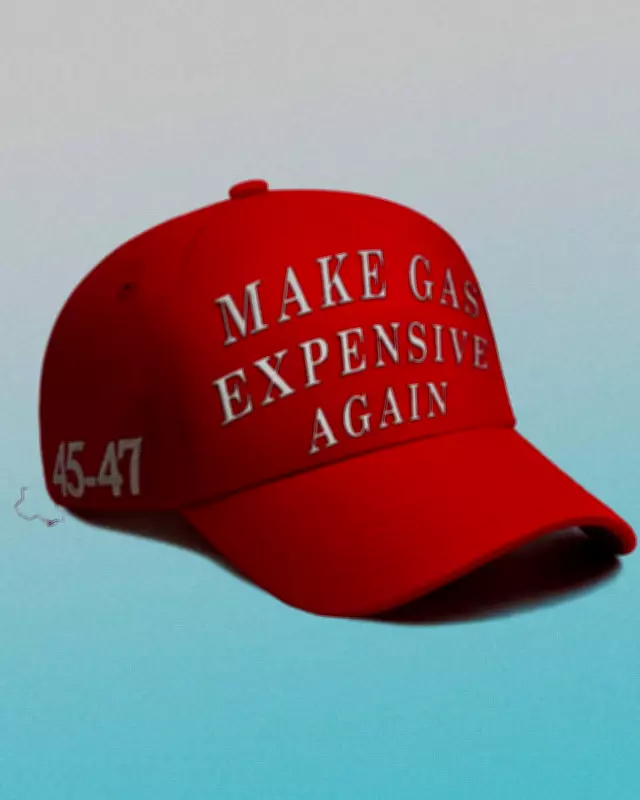
Trump's Iran War Rhetoric Creates Economic 'Fog of War'
Economists have warned that Donald Trump's comments about the ongoing conflict with Iran have induced what they describe as a dangerous 'fog of war' for global markets. The former president's mixed messaging about military objectives and duration has created unprecedented uncertainty at a time when the economic stakes continue to escalate dramatically.
Mounting Economic Fallout From Prolonged Conflict
Three weeks after initial airstrikes, what was initially dismissed as a temporary geopolitical flare-up has transformed into a mounting economic crisis with global implications. Oil prices have surged above $100 per barrel, European gas prices have doubled, and financial markets are experiencing extreme volatility. Consumers worldwide are bracing for significant increases in living costs as the conflict shows no signs of immediate resolution.
Central banks including the US Federal Reserve, Bank of England, and European Central Bank have issued warnings that the war could materially impact inflation rates and significantly dent global growth prospects. Albert Edwards, a senior analyst at Société Générale, noted that while market wisdom suggests the conflict will end quickly, "the risks are asymmetric that stagflation bursts the complacency bubble."

Supply Chain Disruptions and Energy Market Crisis
The economic consequences are rippling through multiple sectors with alarming speed. European heavy industry, still recovering from the 2022 energy price shock following Russia's invasion of Ukraine, is experiencing renewed pressure. Chemical giant BASF has announced price increases, while Huntsman has warned that its Teesside plant in northeast England is at risk.
Perhaps most concerning is the impact on global agriculture. Fertilizer costs are rising sharply worldwide as petroleum industry byproducts become scarce, threatening crop yields and setting the stage for significant food price inflation. The Gulf region, responsible for approximately half of global urea exports and critical fertilizer ingredients, has become a flashpoint in this developing crisis.
Strategic Waterway Blockade Threatens Global Trade
Iran has threatened to push oil prices to $200 per barrel through targeted attacks on shipping through the Strait of Hormuz, the narrow seaborne passage between Iran and Oman. Approximately one-fifth of global oil supplies normally transit this 126-kilometer waterway, which provides the only sea route from the Gulf to open oceans.
The situation escalated when Iranian missiles struck Ras Laffan, a crucial Qatari liquefied natural gas processing facility. Analysts now warn that energy markets are approaching what they describe as a "doomsday" scenario, with supply constraints expected to impact not only crude oil but downstream fossil fuel products worldwide.
Historical Parallels and Contemporary Vulnerabilities
Economic forecasters draw disturbing parallels with past global crises. Ian Stewart, chief economist at Deloitte UK, noted that "higher energy prices, triggered by war or revolution in the Middle East, were important factors in western recessions in 1973, 1979 and 1990." The clearest historical comparison emerges from the 1980s "tanker war" during the Iran-Iraq conflict, when Ronald Reagan dispatched the largest naval convoy since World War II to protect merchant shipping through Hormuz.
Today's global economy faces additional vulnerabilities due to increased interconnectedness. Global trade in goods and services has swelled from 42% of world GDP in 1980 to more than 60% by the mid-2000s, creating complex supply chain dependencies that amplify regional disruptions.
Potential Long-Term Consequences and Policy Responses
Barclays estimates that if oil prices average $100 through 2026, global growth would be 0.2 percentage points lower at 2.8% this year, while headline inflation would be 0.7 percentage points higher at 3.8%. Some economists warn that a prolonged conflict could drive oil prices above $170 per barrel, potentially triggering a global recession.

Governments are exploring emergency energy support for consumers already battered by cost of living crises, but rising borrowing costs may limit their capacity to respond effectively. Meanwhile, the conflict has accelerated trends toward "nearshoring" and "friendshoring" as multinational companies seek to bolster supply chain resilience by redirecting operations toward politically aligned nations.
Wei Yao, an economist at Société Générale, captured the precarious situation: "There are moments when one must come near the edge to remember why one must not go over it. We may be at one of those moments." As Trump's contradictory statements continue to cloud economic forecasting, the global economy faces one of its most significant tests in decades.