Beef and fish are rising fastest in price at Britain's supermarkets as industry experts warn the Iran war is continuing to push up production costs for suppliers.
Sharp Price Increases in Key Categories
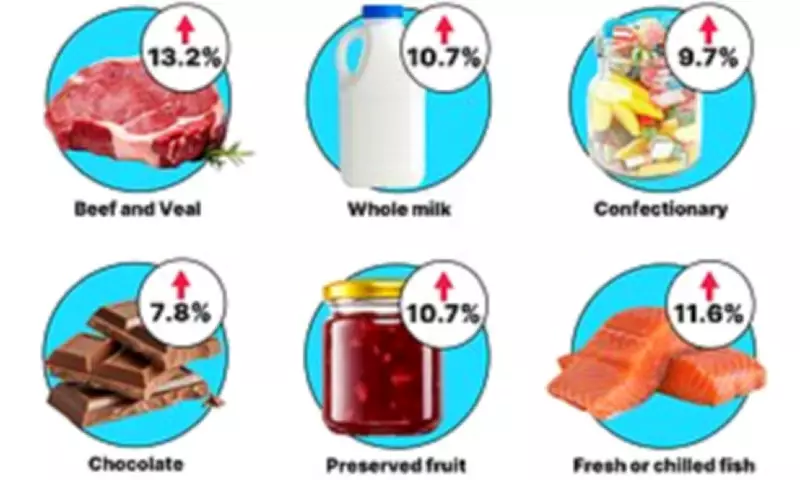
The cost of beef and veal soared by 13.2 per cent while fresh or chilled fish went up 11.6 per cent in the 12 months to April, the Office for National Statistics (ONS) said. Preserved fruit had the joint third biggest rise at 10.7 per cent along with whole milk, according to the data analysed by the Food and Drink Federation (FDF) trade body. Confectionery products were next at 9.7 per cent, followed by chocolate at 7.8 per cent, coffee and mineral or spring water at 6.3 per cent and pasta at 6.1 per cent.
Beef and Fish Under Pressure
The price of beef is still rising fast – despite falling from the March annual figure of 18.8 per cent - as the UK faces low supply, high demand and rising production costs. As for fish, cod and haddock stocks are under pressure while the cost of operating boats and transporting catches is increasing because of the spike in energy prices.

Some Items See Price Drops
But not everything went up - as prices fell for 11 categories, with the largest drops for olive oil, down 9.3 per cent; flour, down 6.1 per cent; and pizza, down 4.4 per cent.
Overall Inflation Trends
The ONS said the overall rate of food and non-alcoholic drink inflation was 3.0 per cent in the 12 months to April, down from 3.7 per cent in the 12 months to March. Food and non-alcoholic drink prices were steady on a monthly basis - while the ONS added that the overall rate of Consumer Prices Index (CPI) inflation fell to 2.8 per cent in April, down from 3.3 per cent in March - and the lowest level since March 2025.
Expert Warnings on Future Price Rises
FDF chief economist Dr Liliana Danila told the Daily Mail: 'Food inflation may have declined in April, but underlying pressures are building across the supply chain. Disruptions in the Middle East are pushing up production costs. The increases faced by manufacturers typically take between seven and 12 months to feed through into retail prices.'
'However, higher energy costs affecting fresh produce – where there is little or no manufacturing involved – are likely to be reflected more quickly.' She warned that a 'tidal wave of policy change' including the upcoming European Union trade agreement to proposed amendments to health regulations would 'add further pressure' on the industry.
Dr Danila continued: 'We need to learn from the inflationary spike we saw just last year, when a stacking of regulatory costs ended up in higher prices for shoppers. By acting now to delay regulatory burdens, Government can give food and drink manufacturers the headroom they need to deal with the impacts of the war in Iran, and minimise price rises for shoppers.'
Economists for the group are predicting that food inflation will reach 9 to 10 per cent by the end of 2026, up from the 3.2 per cent that it forecast last September.
But Harvir Dhillon, economist at the British Retail Consortium, said today: 'Shoppers will breathe a sigh of relief as both headline and food inflation eased this month. Despite the ongoing cost pressures resulting from the Iran conflict, intense competition across the retail sector has successfully helped to stem inflation in the short-term.'
Labour's Proposed Price Cap Sparks Controversy
It comes as Labour is pushing major supermarkets to limit the price of everyday essentials in return for easing regulations. The price of eggs, bread and milk would be voluntarily capped under the proposals in return for easing packaging policies and delaying rule changes around healthy food.
The Government has suggested to supermarkets that they reinvest any savings from scrapping regulations into freezing food prices. Supermarkets are said to have reacted to the proposals with fury and the British Retail Consortium (BRC) said it would 'force retailers to sell goods at a loss'.
In Scotland, supermarkets recently condemned a similar plan by the Scottish National Party (SNP) – which would not have been voluntary – as a '1970s-style' gimmick.

Chancellor Rachel Reeves is due to announce measures to help households with the cost of living tomorrow and the Treasury is said to be pushing for her to announce the price cap policy. Officials said more detail would be set out 'in due course' but people close to the talks said there was no agreement yet on whether it would be confirmed, according to the Financial Times.
This morning, Treasury minister Dan Tomlinson said 'this isn't something we're looking at' when asked if there had been conversations with supermarkets about bringing in price caps. He told Sky News: 'The Government is not looking at doing this. Instead, what we're doing is looking across the economy at what are the different ways that we can help households.'
Last month Ms Reeves met with supermarket bosses to discuss the cost of living – but the meeting initially had to be rescheduled after bosses reportedly balked at being summoned by the Treasury. When it did take place retailers are said to have asked ministers to address Labour policies they blamed for contributing to inflation.
A spokesperson for the Treasury said: 'The Chancellor has been clear we want to do more to help keep costs down for families, and will set out more detail in due course.'