The United States has expended billions of dollars' worth of its essential weapons stockpile during the conflict with Iran, according to a recent report. The war, which commenced on February 28, has seen the Pentagon deploy over 1,200 Patriot interceptor missiles, each costing more than $4 million. Additionally, the military has utilized approximately 1,100 long-range stealth cruise missiles originally stockpiled for a potential conflict with China, as per congressional officials and internal Defense Department estimates obtained by The New York Times.
More than 1,000 Tomahawk cruise missiles have also been fired, a figure roughly ten times the annual procurement by the U.S. military. Internal Pentagon estimates further indicate that around 1,100 JASSM-ER missiles, valued at approximately $1.1 million each, have been used, leaving only 1,500 in inventory. Senator Jack Reed, the top Democrat on the Armed Services Committee, stated, "At current production rates, reconstituting what we have expended could take years."
A study conducted in April by the American Enterprise Institute estimates the war has cost the United States between $25 billion and $35 billion. In the first two days alone, the military consumed roughly $5.6 billion worth of munitions, a congressional source told The Hill in March. Officials informed The NYT that the Defense Department awaits Congressional approval for additional funding to replenish drained supplies.

The Trump administration announced in January that it had secured seven-year agreements with major defense contractors to boost production capacity. These agreements would see manufacturers fund factory expansions in exchange for long-term orders. However, officials noted that no expanded production has commenced as the Pentagon scrambles to secure necessary funding.
Mark F. Cancian, a retired Marine Corps colonel and senior adviser at the Center for Strategic and International Studies, told The NYT: "The United States has many munitions with adequate inventories, but some critical ground-attack and missile-defense munitions were short before the war and are even shorter now."
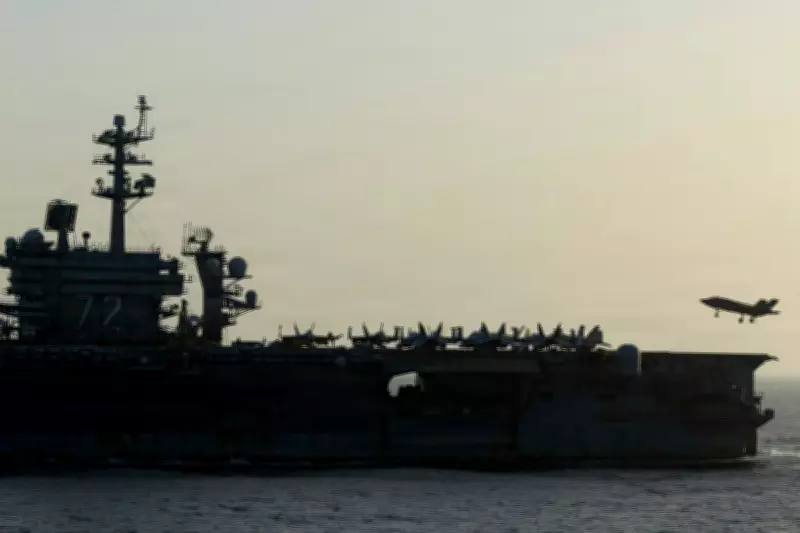
Pentagon data also reveals that the war has depleted essential weapon systems deployed to defend NATO's eastern flank against potential Russian aggression. The capacity for offensive operations in that region has been compromised due to losses of attack and surveillance drones. Operations in the Pacific have been reduced as well, with the USS Abraham Lincoln moved from the South China Sea to the Middle East before the conflict began. A third aircraft carrier, the USS George HW Bush, has also been redeployed to the region.
Officials told the publication that Patriot missiles from the THAAD system in South Korea, intended to counter North Korean missile threats, are being redirected to support the Iran war effort. White House Press Secretary Karoline Leavitt dismissed the report, stating, "The entire premise of this story is false. The United States of America has the most powerful military in the world, fully loaded with more than enough weapons and munitions, in stockpiles here at home and all around the globe, to effectively defend the homeland and achieve any military operation directed by the commander in chief." The Independent has contacted the White House and the Department of Defense for comment.