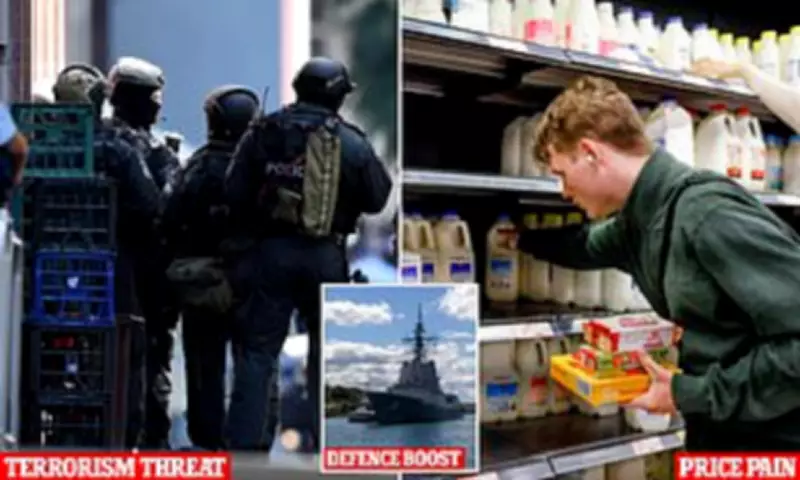
A leading economist has issued a stark warning that the ongoing US-Iran conflict could entrench elevated prices for Australian households for decades, while simultaneously fostering a new generation of terrorists. AMP's chief economist, Shane Oliver, asserts that the war is triggering a far-reaching chain reaction with profound long-term consequences for Australia, extending well beyond the immediate battlefield.
Inflationary Pressures and Economic Shock
The disruption to global oil supplies is poised to intensify this month, as the final vessels to navigate the Strait of Hormuz reach their destinations, leaving Asian refineries at risk of crude shortages. Oliver emphasised that this supply shock, following the 2022 inflation surge and US tariff impacts, threatens to drive prices higher again.
"This runs the risk of a further boost to inflation expectations and loss of faith in central banks' ability to get inflation back to target," Oliver cautioned. Most economists anticipate the Reserve Bank of Australia will raise rates to 4.35 percent in May, with Westpac forecasting additional hikes in June and August.

Geopolitical Reshaping and Defence Priorities
Beyond immediate economic effects, the conflict is set to redefine government spending for years. Increased defence expenditure is an inevitable outcome of heightened geopolitical risks, fuelled by contradictory attacks from the US on allies like NATO countries, Japan, and Australia.
Defence Minister Richard Marles is set to release the latest National Defence Strategy, committing at least $12 billion to large uncrewed systems such as Ghost Bat and Ghost Shark, alongside cheaper drones. "Expanding our fleet of autonomous and uncrewed systems across all domains will not only help the ADF keep our nation safe, but will boost Australia's sovereign defence industry," Marles stated.
Nine Long-Term Consequences for Australia
- Higher prices and persistent inflation
- Increased geopolitical risk
- A new generation of terrorists
- Increased defence spending
- Increased investment in oil and gas infrastructure
- Heightened focus on renewables and nuclear energy
- Greater pressure to onshore supply chains
- A reminder of a more crisis-prone world
- Bigger government and rising public debt
Energy Security and Supply Chain Vulnerabilities
The conflict underscores the fragility of the global energy system, prompting Australia to boost spending on oil and gas infrastructure to enhance domestic reserves. Oliver noted that Iran's control of the Strait of Hormuz, while predictable, highlights global dependency on a volatile region.
This crisis is accelerating demand for renewables and nuclear energy, as these sources are less susceptible to Middle Eastern political instability. Electric vehicle sales in Australia, now around 15 percent of new car purchases, reflect this shift.
Broader Implications and Global Instability
Oliver warned that bigger government and increased public debt are inevitable, driven by higher defence costs and onshoring pressures. The war represents the fifth major global shock in two decades, following the GFC, Eurozone debt crises, pandemic, and 2022 inflation shock, indicating a trend toward more frequent, non-traditional crises.
"The Israel/Gaza war and now the Iran War risk driving a renewed rise in terrorism," Oliver said. While economies can withstand limited terror attacks, widespread damage would alter this dynamic.
Instability is exacerbated by shifts in US global power under Trump, which Oliver describes as a destabilising force that undermines the rules-based order and erodes American credibility. "It's hard to see this not being interpreted by other powerful countries as a green light to do whatever they want in their region and beyond," he concluded, warning that such conflicts could escalate into broader global confrontations.