Carnival Cruise Ship Faces Investigation Over Crew Exploitation Claims in Darwin
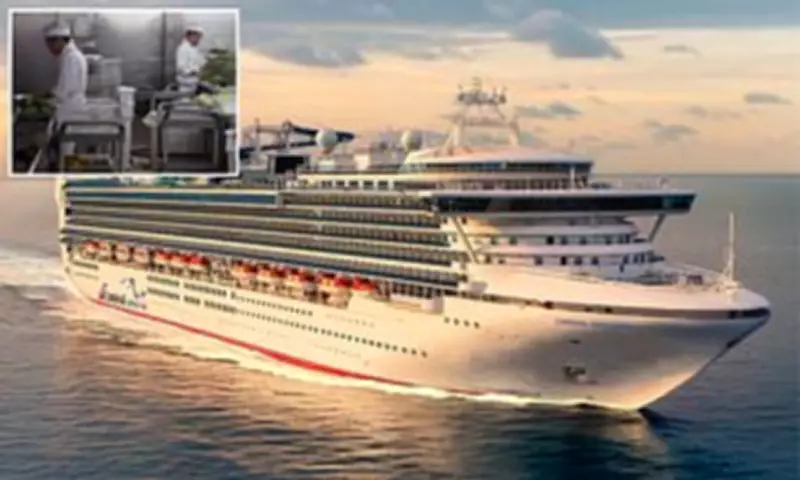
Federal maritime agents have boarded a Carnival cruise ship docked in Darwin, Australia, following serious allegations that foreign crew members are being subjected to exploitative working conditions, including overcrowded and unsanitary living quarters and wages as low as $2.50 per hour.
AMSA Inspection Launched Following Union Reports
Australian Maritime Safety Authority inspectors boarded the Carnival Encounter on Monday morning to investigate multiple reports of widespread skin infections among crew, unsafe drinking water, and allegations that staff were pressured to continue working while seriously ill. The authority is assessing potential breaches of the Maritime Labour Convention and the Navigation Act, with enforcement action to follow if required.
The allegations were initially raised by the Maritime Union of Australia, which claims crew from some of the world's poorest nations are being housed below deck in cramped cabins with poor amenities, despite the vessel operating almost exclusively in Australian waters.

Union Accuses Carnival of Exploiting Legal Loopholes
MUA NT branch secretary Andy Burford has accused Carnival of exploiting legal loopholes that exempt foreign crew from Australian workplace laws while generating billions in global profits. 'This is exactly what happens when you allow foreign-owned and controlled companies to sail the Australian coast, using Australian ports, carrying Australian passengers paying Australian fares, but who are completely immune from Australian law,' he stated.
'Workers are being paid as little as $600-a-month and subjected to conditions no worker should accept,' Burford added.
Systemic Issues Across the Cruise Industry
Assistant national secretary Jamie Newlyn described the issues under investigation as 'systemic across the cruise industry' and reflective of the 'daily living and working environment' for staff who keep vessels operating. 'These are the real conditions behind the scenes,' he emphasized. 'This is the daily living and working environment of the people who keep these ships operating, serve passengers around the clock, and generate enormous profits for cruise company owners.'
Sydney branch organiser Shane Reside claimed Carnival's business model relies on 'complete domination' of a vulnerable, low-paid workforce 'literally trapped at sea.' 'They're paid as little as $600-a-month and sometimes required to work in excess of 10 hours a day for in excess of 30 consecutive days,' he reported. 'I don't think that any holiday is worth workers facing the kinds of exploitation that we've seen on these vessels.'
Health and Safety Concerns for Crew and Passengers
The Carnival Encounter is one of three Carnival Cruise Line vessels whose home port is in Australia but is staffed predominantly by foreign workers. While guests enjoy lavish amenities upstairs, staff are frequently housed out of sight in overcrowded cabins with inadequate facilities and forced to work even while sick.
AMSA is specifically investigating reports that staff suffering from gastro and other infectious illnesses are pressured to continue working, despite the well-established risk of sick crew contributing to passenger outbreaks on cruise vessels.
Contrasting Statements from Authorities and Carnival
An AMSA spokesperson stated that crew welfare is taken 'very seriously' and that the authority investigates all complaints received. However, a Carnival spokeswoman claimed AMSA found no deficiencies during its inspection of Carnival Encounter in Darwin on Monday.
'As we stated emphatically at the time, Carnival has nothing to hide,' the spokeswoman said. 'The outcome of AMSA's inspection - with no follow-up action required - reinforces that fact. In contrast, the Maritime Union of Australia continues to use our crew as props in an ongoing attempt to increase its membership.'
The investigation continues as authorities examine whether the cruise industry's reliance on foreign labor has created systemic exploitation that compromises both worker rights and passenger safety.