Neom's $500bn Vision Crumbles as Saudi Arabia Scales Back 'Impossible' City
Nearly a decade after its grand unveiling, Saudi Arabia's ambitious $500bn Neom project is facing a dramatic reality check. Crown Prince Mohammed bin Salman's vision of a futuristic utopia on the Red Sea coast, designed to redefine human living and working, is being significantly scaled back after years of delays, ballooning costs, and widespread skepticism from experts.
The Grand Vision That Captivated the World
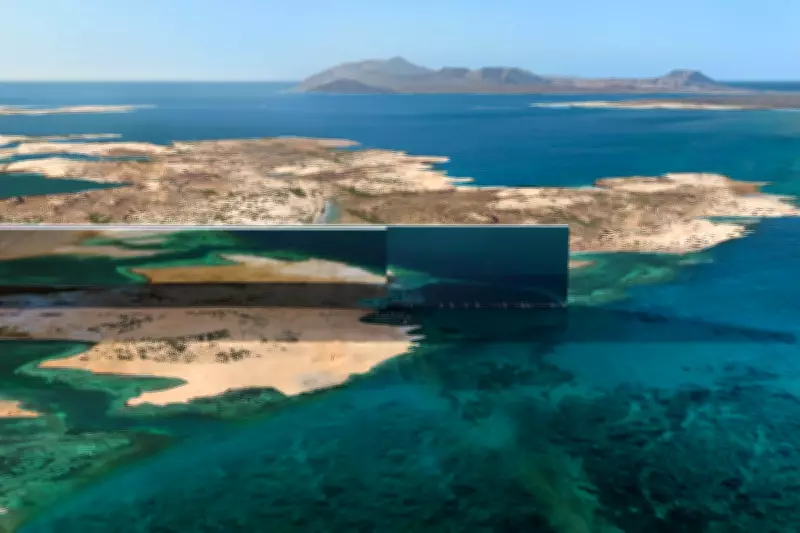
In 2017, a 32-year-old Crown Prince Mohammed bin Salman laid out what was hailed as the most ambitious urban vision in human history. Freshly established as Saudi Arabia's de facto ruler, he promised Neom would transform the kingdom from an oil-dependent economy into a global innovation hub. The project's centrepiece was The Line: a 170-kilometre linear megacity consisting of two gleaming 500-metre-high skyscrapers cutting through the desert, housing nine million people, operating without roads or cars, and running entirely on renewable energy.
"There won't be a single supermarket," Prince Mohammed told Bloomberg at the time. "Zero. Nobody will go and buy things for their home. Everything will come to your house using technology." The broader Neom project included plans for a mountain ski resort, several coastal resorts, and an industrial zone, with over £363 billion earmarked for construction along the Red Sea coast.

Architectural and Economic Realities Bite
However, less than ten years on, the Saudi government appears to have admitted defeat. Following a series of delays and escalating costs, reports indicate the project will be "far smaller" than originally designed. Architectural experts argue this outcome was inevitable, with many describing Neom as fundamentally flawed from its inception.
"It's an excellent example of a type of architecture where you propose something provocative to get a reaction," says Professor James Campbell, an architect and architectural historian at the University of Cambridge. "It's always been an advertising gimmick for Saudi Arabia. It's ignored all the engineering problems. It's just a big shiny wall."
Professor Campbell claims the majority of the architectural community shares this view, with many frustrated the plan wasn't dismissed earlier. He acknowledges that, in theory, building The Line might be physically possible, but insists it makes no sense from urban planning or financial perspectives. "As a building it makes no sense, and as a city it makes no sense - the perfect shape for a city is a tight circle," he states, adding the project is "economically not feasible."
Admissions of Overspending and Rushed Ambition
Riyadh has not denied the immense overspending. "We spent too much," one Saudi official admitted at an investment forum last November. "We rushed at 100 miles an hour. We are now running deficits. We need to reprioritise." This admission reflects the painful reality behind the visionary rhetoric.
The project's evolution reveals growing ambition. Originally proposed by Los Angeles architecture firm Morphosis as a 2-kilometre-wide strip running from sea to mountains, Prince Mohammed reportedly pushed for a more radical design. "I told the team, 'how about if we take that two kilo[metres] and we flip it to two towers? Is that going to work, or is it going to be massive?'" he said in a Discovery Channel documentary. The revised brief envisaged a 200-metre-wide city, but the fundamental challenges remained.
Team Changes and Growing Concerns
Several major architecture firms initially joined the Neom team, including Morphosis (founded by star architect Thom Mayne), Adjaye Associates, Peter Cook, and OMA. However, many have since departed as concerns grew around budget constraints and alleged human rights abuses on site. The project is now led by companies including Delugan Meissl Associate Architects, Gensler, and Mott MacDonald, though their roles following the scaling back remain unclear.
Despite repeated attempts to contact publicly-listed companies involved in Neom, as well as Neom itself, responses have not been forthcoming, adding to the project's opacity.

A Lesson in Overambition and Future Realism
Throughout the project's lifespan, Prince Mohammed remained dismissive of doubters, claiming Neom would add $100 billion to Saudi GDP by 2030. Yet experts like Dr Neil Quilliam, associate fellow in the Middle East and North Africa programme at Chatham House, argue the crown prince was "overly ambitious right from the outset."
Dr Quilliam suggests officials in Riyadh got "caught up in the enthusiasm of the changes that were taking place" but would have privately doubted its achievability. "At that particular time there was a buy-in to Saudi Arabia suddenly having this energy, this power and this will to do whatever it wanted, to really set a new agenda," he explains. "It wanted to demonstrate there was a clear willingness and desire to demonstrate that the country was shifting and changing. In Neom, it was sort of laying that out."
Consequently, the significant down-scaling will likely be met with a "sense of embarrassment," Dr Quilliam says. He believes Prince Mohammed has undergone a series of "painful learning processes" during his time in power and will emerge with a stronger sense of "realism." Future projects on Neom's scale are now much less likely, marking a sobering shift from visionary dreams to practical constraints.
For now, the desert will remain without its promised gleaming towers, as Saudi Arabia's $500bn gamble faces a humbling recalibration.