Iran Issues New Strait of Hormuz Warning as Tanker Traffic Grinds to a Halt
Iran has declared the Strait of Hormuz closed and threatened to set fire to any ships attempting passage, as the widening conflict in the region brings tanker traffic through this crucial waterway to a complete standstill. This dramatic escalation has caused oil prices to surge, with experts warning that a prolonged closure could push crude prices "well into triple digits."
Critical Global Chokepoint for Oil Trade
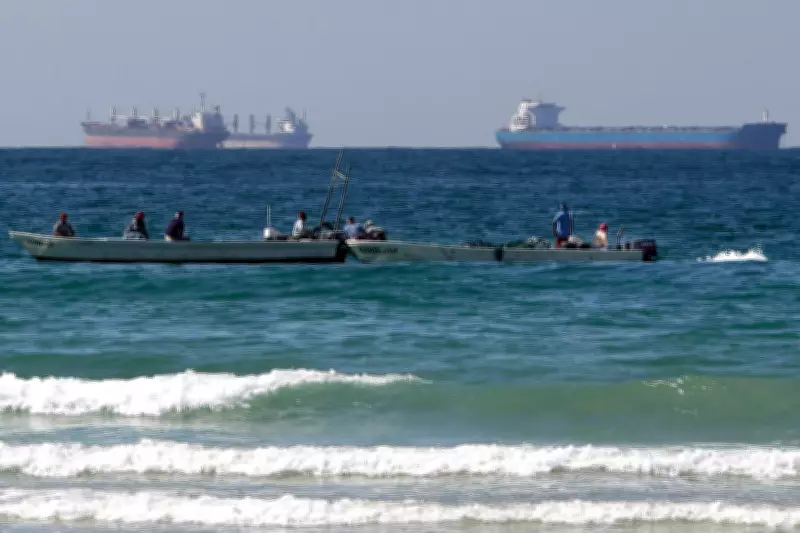
The Strait of Hormuz represents the narrow mouth of the Persian Gulf, through which approximately one-fifth of the world's oil supply passes daily. This bending waterway, measuring about 33 kilometers (21 miles) at its narrowest point, connects the Persian Gulf to the Gulf of Oman and serves as the primary route for supertankers carrying oil and gas from major producers including Saudi Arabia, Kuwait, Iraq, Qatar, Bahrain, the United Arab Emirates, and Iran itself.
"The scale of what is at stake cannot be overstated," emphasized Hakan Kaya, senior portfolio manager at investment management firm Neuberger Berman. "While a partial slowdown lasting a week or two might be absorbed by oil companies, a full or near-full closure persisting for a month or more would have catastrophic consequences."

Immediate Impact on Global Shipping and Energy Markets
Iranian Brigadier General Ebrahim Jabbari, an adviser to the paramilitary Revolutionary Guard, made the closure declaration explicit: "The Strait of Hormuz is closed. Any ships that pass through it will be set on fire." This follows recent Iranian attacks on several vessels in the strait and temporary shutdowns for military drills in mid-February, which previously caused oil prices to jump approximately 6%.
The immediate consequences have been severe:
- Global shipping companies including Maersk, Hapag-Lloyd, CMA-CGM, and MSC have suspended all vessel crossings through the Strait of Hormuz
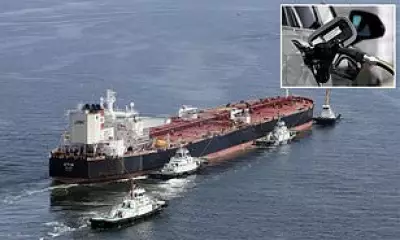
- Data from analytics firm Kplr indicates approximately 70 laden oil tankers and 75 clean tankers are currently waiting in the Mideast Gulf
- Another 60 tankers are positioned just outside the Gulf, east of the strait, in a holding pattern
- This represents roughly twice the usual number of vessels awaiting passage
Tom Goldsby, logistics chairman in the Supply Chain Management Department at the University of Tennessee, explained the practical reality: "No one wants to navigate it, and there's no insurer willing to stand behind any transport going through there right now. Those ships stuck in the Gulf aren't going anywhere, and replacement vessels are either anchored or redirecting elsewhere."
Historical Context and Economic Implications
The Strait of Hormuz has long been vital for global trade, historically facilitating the movement of ceramics, ivory, silk, and textiles from China through the region. In the modern era, it has become indispensable for energy transportation, with the vast majority of oil passing through destined for Asian markets, including China—Iran's only remaining oil customer.
While alternative pipelines exist in Saudi Arabia and the UAE, the U.S. Energy Information Administration notes that "most volumes that transit the strait have no alternative means of exiting the region." Past threats to this route have consistently spiked global energy prices, including during the Israel-Iran conflict in June.
Hakan Kaya provided specific economic projections: "A full closure lasting a month or more would push crude oil prices, currently trading around $80, well into triple digits and send European natural gas prices toward or above the crisis levels witnessed in 2022."
This represents the most serious threat to the strait since the 1980s Iran-Iraq war, when both sides attacked tankers and used naval mines to completely shut down traffic at various points. Notably, Iran had refrained from implementing such closure threats even during last year's 12-day war when Israel and the U.S. bombarded Iranian nuclear and military sites.
The current situation leaves global energy markets in a precarious position, with the world's most important oil chokepoint effectively closed and no immediate resolution in sight as tensions continue to escalate.