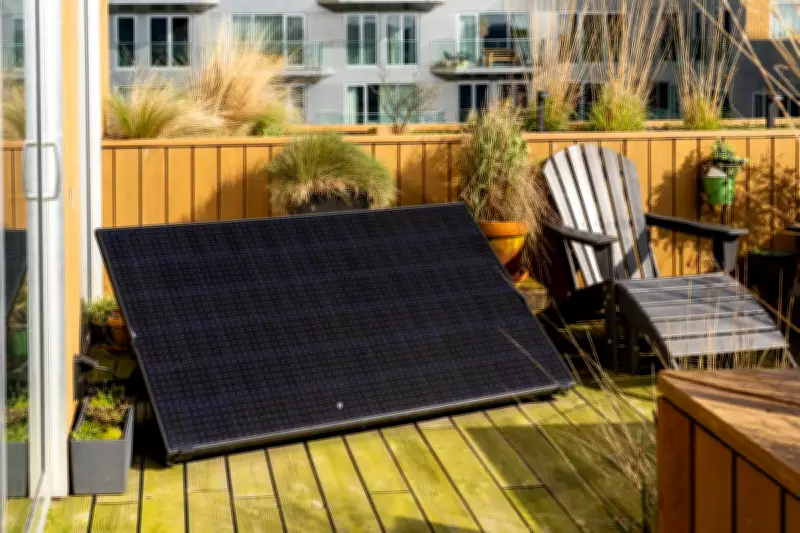
For millions of households across the United Kingdom, the decision to adopt solar energy is often hindered by factors such as homeownership, roof suitability, upfront costs, and the commitment required for a full installation. Traditional rooftop solar systems have long been marketed as a home improvement for those who own their property, possess a suitable roof, have disposable income, and are confident in undertaking a professional installation. However, plug-in solar panels present an alternative solution that could democratise access to solar energy.
These systems are smaller, cheaper, and significantly less powerful than conventional rooftop arrays, yet they may bring solar power within reach of individuals who have historically been excluded from the energy transition. This includes renters, flat owners, households without adequate roof space, and those unable to afford a comprehensive solar panel system.
Government Announcement and Market Availability
In March 2026, the UK government announced that plug-in solar panels would be available for purchase "within months" as part of a broader initiative to expand clean home energy and reduce dependence on fossil fuel markets. The government emphasised that these panels would be more affordable than traditional rooftop systems and would not require professional installation, thereby making them a more accessible option for flat owners and renters.

Given their lower output capacity, many consumers are questioning whether plug-in solar panels are a worthwhile investment. The answer largely depends on individual expectations. If the goal is to power an entire home, these panels are unlikely to meet that need. However, for those seeking a relatively low-cost method to offset daytime electricity usage, plug-in solar panels could represent one of the most innovative home-energy products to emerge in recent years.
What Are Plug-in Solar Panels?
Plug-in solar panels are compact photovoltaic systems designed to connect to a home through a standard domestic socket, bypassing the need for professional wiring. A typical kit includes one or two solar panels, a microinverter, and mounting equipment. The panels generate direct current electricity, which the microinverter converts into alternating current for use within the home's electrical system.
These systems are also referred to as balcony solar panels, plug-and-play solar panels, mini solar systems, or balcony power plants. The concept is already popular in parts of Europe, particularly among residents of flats or rented homes.
Unlike full rooftop solar installations, plug-in panels are not intended to generate a substantial portion of a household's annual electricity. Instead, they aim to offset some of the electricity consumed during daylight hours, such as powering a refrigerator, router, laptop, television, washing machine, or other appliances in use when the panels are generating electricity.
Why Are Plug-in Solar Panels Coming to the UK Now?
The adoption of plug-in solar in the UK has lagged behind some European countries due to safety and wiring regulations. The Energy Saving Trust previously noted that plug-in solar panels were not permitted in the UK under existing safety rules, although the government's solar roadmap indicated a forthcoming safety review. That stance is now evolving.
In March 2026, the government confirmed that plug-in solar panels would be available in shops within months, framing the move as part of a broader effort to make clean home energy more accessible. This initiative coincides with changes aimed at increasing solar installations on new homes in England.
The retail angle has also brought the concept to mainstream attention. Lidl is expected to sell plug-in solar panels for approximately £400, granting the product the kind of visibility typically reserved for air fryers and garden tools. However, the more significant development lies not in where the panels are sold, but in whom they might serve.
Rooftop solar can be highly effective, but it is also expensive and property-dependent. The average cost of a home rooftop system is around £6,500 to install, a significant upfront expense for many households. Plug-in panels are not a direct substitute for such systems, but they could provide a smaller, cheaper entry point into home energy generation.

Cost of Plug-in Solar Panels
Early UK reports suggest that plug-in solar kits could cost between £400 and £500, depending on the number of panels, their output, the inverter, mounting hardware, and the retailer. Lidl plans to sell a £400 system in the UK, while other market estimates indicate similar starter-kit pricing.
This makes them considerably cheaper than a rooftop solar installation. However, it is essential to compare like with like. A full rooftop system is professionally installed, significantly larger, fixed to the property, and capable of generating far more electricity annually.
A plug-in solar kit is more affordable because it is smaller and simpler. Its value lies in accessibility, not in replacing a full solar array.
Electricity Generation Capacity
The output of a plug-in solar panel depends on its size, sunlight exposure, angle, shading, location, and positioning. A south-facing, unshaded panel will generally perform better than one on a shaded balcony or a wall that receives sunlight only part of the day.
A single plug-in panel might generate a few hundred kilowatt-hours of electricity per year under favourable conditions, while a two-panel system could produce more. However, this output remains much smaller than that of a typical rooftop solar array.
This distinction is crucial. A plug-in panel may help cover some background daytime electricity use, but it will not run an entire home, charge an electric vehicle at a meaningful scale, or provide the same annual generation as a 3kW, 4kW, or 5kW rooftop system. The best way to view plug-in solar is as a modest bill-trimming device rather than a replacement power source.
Potential Savings
Savings will vary widely based on electricity costs, the amount of power generated, whether the electricity is used as it is produced, and whether any excess can be exported or is wasted. Early estimates suggest annual savings of around £70 to £110 may be possible, depending on system size and usage patterns. These figures should be treated as indicative rather than guaranteed.
The key factor is self-consumption. The more electricity used at the time it is generated, the more valuable the system becomes. If the panel generates power while no one is home and there is no export arrangement, some of the benefit will be lost.
Financial Viability
On simple payback terms, the numbers could be attractive for the right household. For example, if a plug-in solar kit costs £500 and saves £80 per year, it would take just over six years to pay for itself. If it costs £400 and saves £100 per year, the payback period could be closer to four years.
However, these are simple calculations, not guarantees. They do not account for panel degradation, product lifespan, warranty terms, installation accessories, changes in electricity prices, or whether the household actually uses the power when it is generated. They also depend on the system being safely and legally installed. A cheap kit is only a good deal if it is compliant, properly mounted, and suitable for the property.
For many households, the financial case will be modest rather than dramatic. Plug-in solar panels are unlikely to slash bills significantly, but they can shave a small amount off over time, and these small amounts accumulate.
Comparison with Rooftop Solar Panels
For homeowners with a suitable roof and the financial capacity to invest, traditional rooftop solar remains the stronger option. It can generate much more electricity, deliver larger savings, and be paired with a battery to increase self-consumption.
Plug-in solar panels offer a different value proposition: they are cheaper, smaller, more portable, and potentially suitable for individuals who cannot install rooftop panels at all.
- Upfront cost: Lower, potentially around £400-£500 for plug-in; much higher, averaging £6,500 for rooftop.
- Installation: Designed to be simple for plug-in, subject to UK safety rules; professionally installed for rooftop.
- Output: Low to modest for plug-in; much higher for rooftop.
- Best suited to: Renters, flats, balconies, small outdoor spaces for plug-in; homeowners with suitable roofs for rooftop.
- Savings: Modest for plug-in; potentially significant for rooftop.
- Portability: Potentially movable for plug-in; fixed to the property for rooftop.
- Battery pairing: Less established for plug-in; common option for rooftop.
- Impact on bills: Can trim daytime electricity use for plug-in; can cover a larger share of household electricity for rooftop.
This comparison should not be viewed as "which is better?" but rather as "which is possible?" For a homeowner with an unshaded south-facing roof, plug-in solar may seem limited. For a renter with a sunny balcony, it could be the first realistic solar option available.
Who Should Consider Plug-in Solar Panels?
Plug-in solar panels may be worth considering if you:
- Rent your home and cannot install rooftop solar.
- Live in a flat with a suitable balcony or outdoor space.
- Own a home but lack a suitable roof.
- Want a lower-cost way to try solar power.
- Use electricity during the day.
- Have an unshaded, sunny space for a panel.
- Want a portable system you can take when you move.
They could be particularly useful for people who work from home, retirees, households with regular daytime energy use, or anyone who can shift appliance use into daylight hours. For instance, running a washing machine, dishwasher, or charging devices during sunny periods can help increase the proportion of solar electricity used in the home.
Who Should Avoid Plug-in Solar Panels?
Plug-in solar panels may not be worth it if you:
- Have no suitable outdoor space.
- Live in a heavily shaded property.
- Cannot obtain landlord or freeholder permission.
- Expect them to power your whole home.
- Rarely use electricity during daylight hours.
- Already have the option of installing a full rooftop system.
- Are considering a cheap imported kit that may not meet UK rules.
They are also unlikely to be the best choice for households seeking maximum bill savings. In such cases, a properly specified rooftop solar system, potentially with battery storage, is likely to deliver far greater returns.
Safety and Legal Considerations
This is an area where buyers must exercise caution. Although plug-in solar panels may seem straightforward, they still interact with a home's electrical system, making safety standards critical.
Consumers should wait for UK-compliant products and avoid purchasing grey-market kits designed for other countries unless they clearly meet UK safety and connection requirements. The government has stated that plug-in solar will be made available under new arrangements, but buyers should still verify the latest rules before connecting anything to their home.
Property issues also arise. Renters may need landlord permission, and flat owners may require freeholder or managing agent approval. Anyone installing panels on a balcony, wall, fence, or shed should ensure the mounting system is secure and suitable for wind, rain, and the weight of the kit.
Home insurance is another consideration. Before purchasing, it is worth checking whether installing a plug-in solar system affects your policy or needs to be declared.
What to Check Before Buying
Before buying a plug-in solar panel, ask:
- Is the kit compliant with UK safety rules?
- Is it designed for a standard UK domestic socket?
- What is the panel's rated output?
- What annual generation estimate is realistic for your location?
- Does it include a certified microinverter?
- How will the panel be mounted safely?
- Is the mounting suitable for wind and weather?
- Do you need landlord, freeholder, or managing agent permission?
- Will your home insurer need to know?
- What happens to electricity you do not use?
- What warranty is included?
- Can you take the system with you if you move?
The cheapest kit will not always be the best value. A safer, better-supported product with clear instructions, a good warranty, and proper mounting hardware may be worth paying more for.
The Bottom Line: Are Plug-in Solar Panels Worth It?
Plug-in solar panels are worth considering if you have a sunny outdoor space, use electricity during the day, and want a lower-cost way to generate some of your own power. However, they are not a replacement for rooftop solar. They will not run your whole home, eliminate your electricity bill, or deliver the same savings as a full solar panel system. For many households, the financial benefit will be modest.
But judged on accessibility, they are much more interesting. A £400 to £500 plug-in kit could give renters, flat owners, and lower-budget households a way into solar generation for the first time. In a market where full rooftop systems still require thousands of pounds of upfront investment, this makes plug-in solar a very intriguing option. The best case for plug-in solar is not that it outperforms rooftop solar, but that it opens the door to people who were never in the rooftop solar market in the first place.