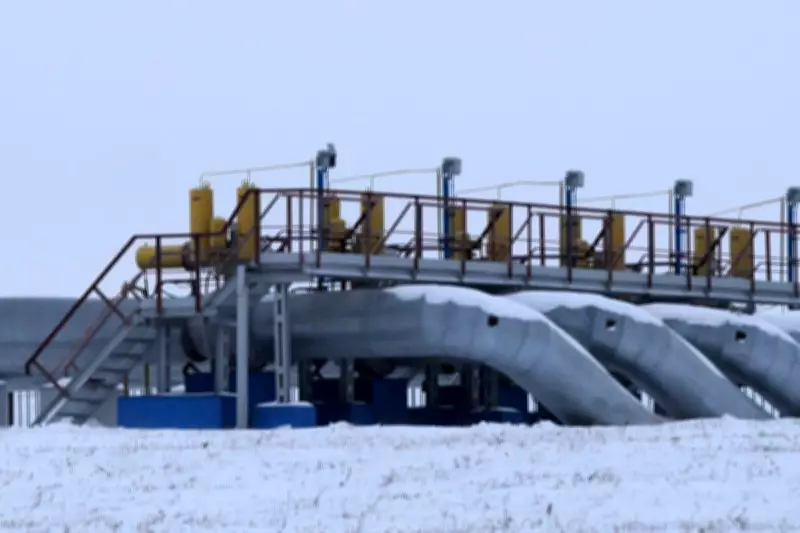
The Russian government is poised to convene imminently to deliberate on the potential cessation of gas exports to European nations, as announced by Deputy Prime Minister Alexander Novak on Thursday. This development follows a stark warning from President Vladimir Putin, who declared on Wednesday that Russia could sever supplies "right now" amidst a dramatic surge in global energy prices, which he attributed to the escalating Iran crisis.
Putin Links Decision to EU's Gas Ban Ambitions
President Putin explicitly connected this prospective move, which he emphasised has "not been taken yet," to the European Union's persistent efforts to prohibit purchases of Russian gas and liquefied natural gas. In a detailed statement, Putin criticised what he termed Europe's "misguided policies," suggesting that halting exports might prove more advantageous for Russia by allowing it to pivot towards emerging markets.
Novak Confirms Upcoming High-Level Meeting
Deputy Prime Minister Novak, who serves as Putin's principal advisor on energy matters, informed reporters that a meeting will be held shortly, as directed by the President, to examine the current energy landscape with major Russian companies. "We will discuss this with our energy companies soon and see how to deploy Russian resources most profitably," Novak stated, highlighting the focus on optimising transport routes and strategic supply chains.

Sharp Decline in Russian Gas Sales to Europe
Since 2022, Russian gas sales to Europe have plummeted significantly due to extensive sanctions imposed in response to the full-scale invasion of Ukraine. According to Eurostat data, Russia's share of EU imports of pipeline gas collapsed from approximately 40 percent in 2021 to a mere 6 percent by 2025. For combined pipeline gas and LNG, Russia accounted for around 13 percent of total EU gas imports in 2025, with LNG imports specifically dropping to 16 percent from 21 percent over the same period.
Russia Remains Key LNG Supplier Despite Sanctions
Despite these reductions, Russia persists as the second-largest supplier of liquefied natural gas to the European Union. Additionally, it continues to export gas via the Black Sea TurkStream pipeline to nations such as Hungary, Slovakia, and non-EU member Serbia. Novak noted that Russian gas still constitutes more than 12 percent of Europe's overall supply, underscoring its lingering influence in the regional energy market.
Energy Prices Soar Amid Middle East Conflict
Oil and gas prices have skyrocketed following recent military actions, including US and Israeli attacks on Iran and Tehran's retaliatory strikes on Gulf Arab neighbours. This conflict has severely disrupted shipping through the critical Strait of Hormuz, forcing the shutdown of Qatar's LNG production and Saudi Arabia's largest oil refinery, thereby exacerbating global supply constraints.
Putin's Rationale for Potential Supply Cut
In an interview with Russian state television's top Kremlin correspondent Pavel Zarubin, Putin elaborated on the rationale behind considering an immediate halt to gas exports. He argued that oil prices are rising due to "aggression against Iran" and Western restrictions on Russian oil, while European gas prices are climbing because customers are willing to pay higher premiums amid Middle East turmoil and the Strait of Hormuz closure.
When questioned about EU plans to impose a total ban on Russian pipeline gas imports by late 2027 and to prohibit new short-term Russian LNG contracts from late April 2026, Putin suggested it might be more beneficial for Russia to cease sales promptly. "Now other markets are opening up. And perhaps it would be more profitable for us to stop supplying the European market right now. To move into those markets that are opening up and establish ourselves there," Putin explained, according to a Kremlin-released transcript.
He clarified that this is "not a decision, it is, in this case, what is called thinking out loud," but affirmed he would instruct the government to collaborate with energy companies on evaluating the issue thoroughly. This stance directly links the potential policy shift to Europe's sanctions, framing it as a strategic response to external pressures rather than an impulsive action.