Six Months After Deadly Blast, Pennsylvania Steel Town Hopes for Revival Amid Legacy of Pollution
Six months have passed since a devastating explosion at the U.S. Steel Clairton Coke Works claimed two lives, shaking the foundations of a Pennsylvania mill town already burdened by decades of industrial decay. Clairton, nestled in the Monongahela River Valley south of Pittsburgh, now stands at a crossroads, with residents torn between cautious optimism and deep-seated disappointment over its future.
A Global Deal and Local Anxieties
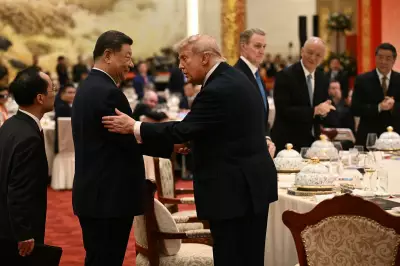
The sale of United States Steel to Japan's Nippon Steel for $15 billion last June drew international attention, with President Donald Trump heralding a new chapter for this American industrial icon. The acquisition included a pledge of $11 billion in upgrades to domestic steelmaking, with $2.4 billion potentially revitalizing Southwestern Pennsylvania's Mon Valley. Yet, uncertainty lingers over whether any funds will reach the Clairton Coke Works, the largest facility of its kind in the Western Hemisphere, which has operated since 1916 amidst persistent pollution and community strife.
For lifelong resident Dorcas Rumble, faith in Nippon Steel offers a glimmer of hope. "I have faith. I know Nippon Steel is going to pull us through here, get us back up and moving," she says. In contrast, Carla Beard-Owens, who cares for a granddaughter with severe asthma and battles her own health issues, expresses weary skepticism. "I had confidence years ago that they would change, get better air and help clean it up. And it's still the same as it was when I was growing up," she remarks, adding that she'd "rather see it than believe it" when it comes to Nippon ushering in change.

The Explosion's Aftermath and Political Shift
The August explosion heightened stakes in Clairton, a city long plagued by violence, poverty, and air pollution ranked among the nation's worst. The coke works contributes roughly two-thirds of Allegheny County's industrial particulate air pollution and frequently violates environmental laws. In response, Clairtonians ousted 16-year incumbent mayor Rich Lattanzi in November, electing former U.S. Steel foreman Jim Cerqua, whose campaign mantra, "It is broke! We are going to fix it!" resonated with voters seeking transformation.
Cerqua, sworn in amid a room of hopeful residents, acknowledges the challenges ahead. Balancing the budget and leveraging scarce resources are top priorities, alongside plans for an advisory council, demolition of crumbling infrastructure, and redevelopment projects. He envisions a mental health and recreation center with facilities for seniors and vocational training for youth. "People voted for change. We're gonna work on bringing change," Cerqua asserts, emphasizing that U.S. Steel must play a crucial role in Clairton's revival, given it contributes about one-third of city taxes. "If U.S. Steel would have not done the merger and pulled out, my town would be in trouble," he notes.
Community Voices: Health, Economy, and Identity
The relationship between Clairton and its mill is deeply conflicted, providing jobs and collective identity for generations while also fostering illness and economic collapse. Dorcas Rumble, a 61-year-old community health worker, recalls a bustling past with multiple theaters, grocery stores, and banks, now replaced by shuttered storefronts. She organizes food drives and health clinics, stating, "They need everything." Rumble ties the city's fate directly to the mill: "It's all tied to the mill. Everything's tied to the mill. That's our only resource. Hopefully now with Nippon coming, it'll start booming again."
Miriam Maletta, Rumble's sister and a salon owner since 1984, has witnessed Clairton's decline firsthand. Diagnosed with stage 4 lymphoma in 2016, which she attributes to mill pollution, Maletta struggles to keep her business afloat. "I need help bad," she says, calling on U.S. Steel to support local businesses. She dreams of a revitalized Clairton with rooftop gardens, fresh food access, and weekend activities for children, where the mill serves as a "common denominator" for progress, provided regulations improve. "I don't want you here if you're not going to help the community, if you aren't going to care about our health," she insists.

Health Crisis and Environmental Impact
Carla Beard-Owens's testimony before Allegheny County Council in November highlighted the human cost of industrial pollution. She detailed her granddaughter Nasyiah's asthma and lead poisoning, her own battles with thyroid and cervical cancers, COPD, and heart disease, and the loss of loved ones to cancer. "I take medicine all day long, every day," she says, connected to a breathing machine at night. Clairton's childhood asthma rate is 22.4%, triple the national average, with 60% of affected children having poor control, according to researcher Dr. Deborah Gentile.
Coke oven emissions, classified as a known human carcinogen by the EPA, contribute to Clairton's lifetime cancer risk being 2.3 times the acceptable limit. The council's approval of a fee increase for industrial polluters like U.S. Steel, aimed at bolstering the underfunded Allegheny County Health Department, offered a small victory for Beard-Owens and advocates.
Steelworker Perspectives and Future Prospects
Brian Pavlack, a steelworker and former Trump supporter, points to Nippon's investment as a beacon of hope. "The future is looking pretty bright in the Mon Valley," he says, noting that U.S. Steel threatened to leave the region without the merger. Nippon and U.S. Steel have announced a $2.4 billion investment in the Mon Valley Works, including $1.1 billion for a new hot strip mill and slag recycler at the Edgar Thomson Works in Braddock. However, no public funds have been earmarked for the Clairton Coke Works, and U.S. Steel has also invested $3 billion in non-unionized Arkansas, raising concerns about local commitment.
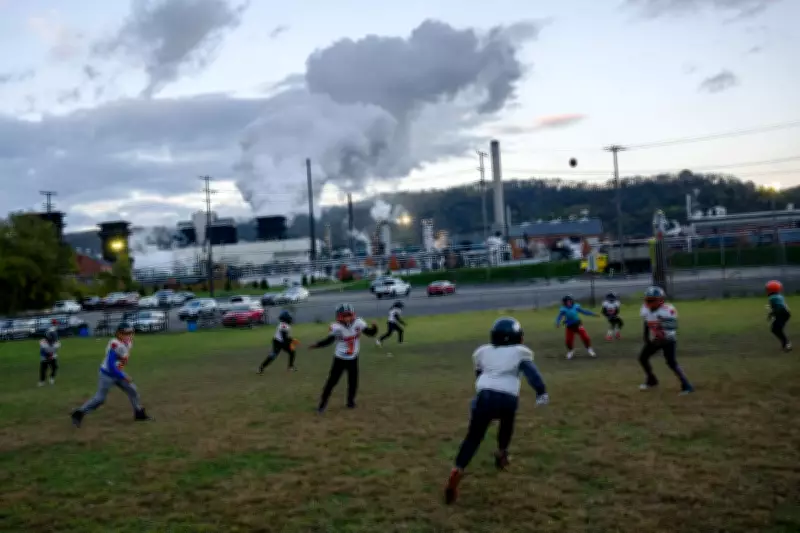
U.S. Steel states that safety is a "core value" and has contributed over $5 million in five years to health, safety, and community initiatives in Clairton, including $500,000 for a new high school football stadium. The company maintains community advisory panels to address concerns.
Exodus and Resilience
Despite hopes, some residents, like Ronald Mitchell and his family, plan to leave Clairton for North Carolina, seeking relief from health worries. They refused a settlement from a class-action lawsuit over pollution, deeming it insufficient. "Our lives don't have a price," says Shandrea Mitchell. Meanwhile, Jackie Wade, a longtime resident, describes Clairton's decline as "like death row" but finds solace in community efforts, such as her son's championship football coaching. "Football is the only light we have," she remarks, though she admits, "Anybody that has good sense, they move."
As the Rev. Deryck Tines prayed for change on New Year's Eve, Clairton's clergy gathered to envision a rebound. "I pray that our city begins to rebound," Tines preached, calling for new businesses, ideas, and vision. Six months after the explosion, Clairton remains a symbol of America's industrial past, grappling with pollution and poverty, yet clinging to the possibility that new ownership and leadership might forge a sustainable future, balancing economic necessity with environmental and health imperatives.