

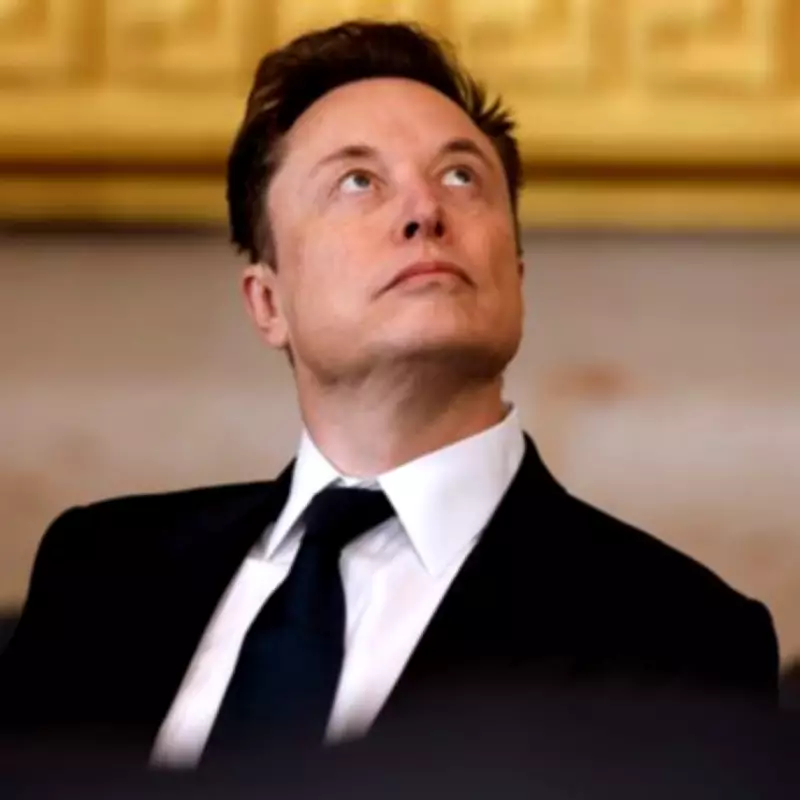
In a dramatic strategic reversal, Elon Musk has announced Tesla will significantly scale back its electric vehicle manufacturing operations following a substantial decline in company profits throughout 2025. The world's wealthiest individual revealed that the automotive giant will now prioritise its artificial intelligence and robotics ventures, marking a fundamental shift away from its core EV business.
Financial Pressures Trigger Strategic Pivot
The decision comes after Tesla experienced its first significant financial downturn, with profits plummeting by sixty-one percent during the final quarter of 2025. Overall annual revenue decreased by three percent, creating substantial pressure on the company's leadership to reconsider its operational focus. This financial setback occurred during a year when Musk became increasingly involved with Donald Trump's controversial second administration, with analysts suggesting his political engagements may have contributed to the company's declining performance.
Manufacturing Plants to Produce Robots Instead of Cars
The strategic shift means Tesla will cease production of its Model S and Model X vehicles, repurposing its California manufacturing facility to assemble Optimus humanoid robots instead. This transition represents a fundamental reimagining of Tesla's industrial capabilities, moving from automotive production to advanced robotics manufacturing.

Simultaneously, Tesla has committed to a massive two-billion-dollar investment in Musk's artificial intelligence venture, xAI. During a recent funding call, Musk explained that this redirection was largely investor-driven, stating: "A lot of investors asked us to do this. They say we should invest in xAI, so we're just doing what shareholders asked us to do pretty much."
Master Plan Part IV Outlines New Direction
The company detailed its new strategic direction in a shareholder letter outlining "Master Plan Part IV," which explicitly states Tesla's intention to "bring AI into the physical world." The document explains: "As set forth in Master Plan Part IV, Tesla is building products and services that bring AI into the physical world. Meanwhile, xAI is developing leading digital AI products and services, such as its large language model (Grok)."
Musk further justified the substantial investment during the funding call, remarking: "If there are things xAI can help accelerate our progress, then why should we not do that? And that is the reason why we've gone ahead with such an investment. Because this is part of the strategic initiative."
Global Context and Regulatory Challenges
This strategic pivot occurs against a backdrop of significant industry changes and regulatory scrutiny. China has emerged as the world's dominant electric vehicle manufacturer, with BYD surpassing Tesla in production volume. Meanwhile, the European Union has launched an investigation into Musk's AI platform Grok over concerns that the tool was allegedly used to create sexualised images from photographs of real people.
The EU Commission is examining whether these "manipulated sexually explicit images" were displayed to European users, potentially violating the Digital Services Act. Should a breach be confirmed, Musk's social media platform X could face penalties equivalent to six percent of its global annual turnover.
Tesla's dramatic strategic shift represents one of the most significant corporate realignments in recent automotive history, fundamentally transforming the company from an electric vehicle pioneer to an artificial intelligence and robotics enterprise. The success of this ambitious pivot will depend on Tesla's ability to navigate both technological challenges and increasing regulatory scrutiny across multiple jurisdictions.






