New research has exposed a massive failure in Britain's anti-money laundering regime, with the real owners of nearly 45,000 properties worth approximately £190 billion being concealed from public view. Experts believe this represents a widespread violation of regulations introduced following Russia's invasion of Ukraine.
The Legal Framework and Its Flaws
The Economic Crime Act, which became law in March 2022, required foreign owners of UK real estate to identify their 'beneficial owners' by January 31, 2023. This term specifically refers to individuals who own or control overseas companies that hold property within Britain. The legislation aimed to prevent money laundering and the parking of illicit gains by forcing transparency in property ownership.
Despite the threat of substantial fines and criminal prosecution for non-compliance, evidence suggests the law is being systematically flouted. Tax Policy Associates conducted detailed analysis of 97,978 properties registered to offshore companies in England and Wales, cross-referencing these with Companies House disclosures.

Shocking Scale of Non-Compliance
The think tank discovered it was impossible to determine the beneficial owner for 43,401 properties, representing approximately 44 percent of those examined. Property owners employed various methods to obscure ownership, including complete non-registration, claims of having no beneficial owner, or listing other offshore companies or trusts as owners instead of individuals.
Dan Neidle, a former tax lawyer who leads the research organization, stated: "Some of this will be accidental, but the evidence suggests that a significant proportion is intentional. Some people are just not registering. Others are registering offshore companies as beneficial owners, rather than the individuals who really control the property."
Neidle further revealed that over one-fifth of all properties examined are held by trusts that fail to declare their true owners, potentially facilitating money laundering, sanctions evasion, or tax avoidance on capital gains.
Geographic Distribution of Hidden Ownership
London emerges as the epicenter of this transparency failure, with the capital accounting for £107 billion of the £188 billion in property across England and Wales where owners remain improperly declared. Many of these are residential properties owned through trust structures.
The research identified Jersey as the most common location for overseas structures holding English and Welsh property, with 3,234 properties linked to the Channel Island showing no beneficial owner. This was followed by the British Virgin Islands (1,165 properties), Isle of Man (753 properties), and Guernsey (685 properties).
Saudi Arabia demonstrated the highest proportion of unregistered owners, with 234 out of 252 properties (92.9 percent) failing to disclose beneficial ownership.
High-Value Examples of Obscured Ownership
The research highlighted several multi-million pound properties with complex ownership structures:
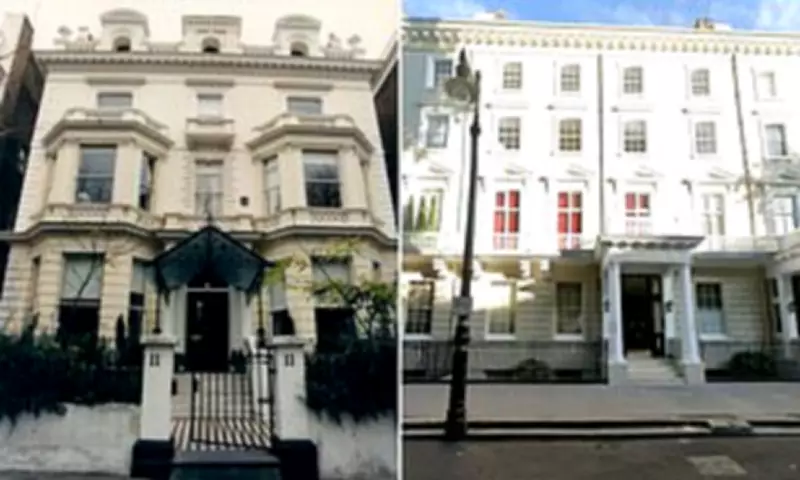
- Richard Branson's former Holland Park residence, acquired for £53 million in 2016 by a British Virgin Islands company
- A second Holland Park property purchased for £21 million in 2016 by a Bahamas company, with beneficiary listed as a Cayman Islands trustee
- An apartment on Horse Guards Avenue sold to a Cypriot company for £21 million in 2023, with beneficiaries being two individuals representing an unknown person
- A Mayfair apartment bought for £20 million in 2021 by an Isle of Man company, with beneficiary listed as an Isle of Man trustee company
- A Belgravia property acquired for £16 million in 2017 by a BVI company, with registered beneficiary being a Singapore corporate trustee
It is important to note there is no suggestion of wrongdoing relating to any specific properties mentioned.
Government Response and Enforcement Mechanisms
A government spokesperson responded: "We will look at this report carefully as part of our commitment to fighting illegal financial activity through the Register of Overseas Entities."

Companies House possesses enforcement powers including issuing warning notices and imposing financial penalties on non-compliant overseas entities. These entities are prevented from selling, leasing, or raising finance against their UK properties until they meet registration requirements.
Neidle emphasized the broader implications: "It's very important we get to grips with this, from a tax evasion perspective as well as the more obvious sanctions-busting and money-laundering ones." The findings suggest significant challenges remain in implementing Britain's anti-money laundering framework effectively.