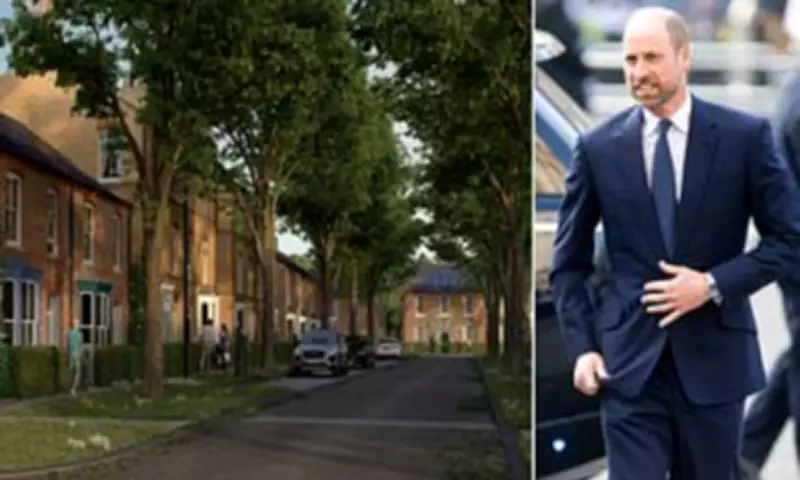
Prince William's Duchy of Cornwall Estate Gains Approval for 2,500-Home Development
Plans for a major 2,500-home development on Prince William's Duchy of Cornwall estate have cleared their first significant hurdle, with Swale Borough Council approving the initial phase despite substantial local opposition. The decision, made on Tuesday by a majority vote of 11 out of 16 councillors, greenlights the construction of 261 homes, 35 percent of which will be designated as affordable housing, along with a local centre and green spaces.
Controversial Approval Amidst Strong Objections
The approval comes after 467 formal objections were submitted against the development, branded by critics as an 'eyesore' and a 'Trojan Horse' for further urban expansion. The proposed South East Faversham garden neighbourhood will occupy 340 acres of farmland near Brenley Corner, Kent, situated between the M2 and A2 motorways. Construction is anticipated to commence in 2027 or 2028, according to Duchy representatives.
Objectors raised multiple concerns, including potential harm to local wildlife, anticipated traffic chaos, insufficient infrastructure, and the loss of high-quality agricultural land. Speaking against the plans during the council meeting, Boughton Under Blean Parish Council member Sarah Moakes warned that the development fails to integrate with the rural setting, stating, 'The Duchy is a Trojan horse, ushering in another 3,000 houses plus industrial development, a vast urban sprawl as far as the Thanet Way.'

Jonnie Reeves of Selling Parish Council echoed these sentiments, calling the project 'an eyesore' and 'too big', while predicting it would cause 'massive traffic congestion'.
Support for Sustainable Community and Social Housing
In contrast, twelve letters of support were submitted, praising the design's high standards and highlighting the development's potential to create a new sustainable community. Harold Goodwin, chair of the Faversham Community Land Trust, urged councillors to back Prince William's initiative, describing the social housing provision as 'superior' to other developments.
'We hope that these councillors will stand up to support Prince William in seeking to provide social housing, setting an example for other developers across the country,' Goodwin stated. He added that it 'could be unacceptable if Swale frustrated the Duchy's plans for social housing.'
Roger Hepher, the Duchy of Cornwall's planning adviser, emphasized the council's pressing need for housing, noting that Swale was 'a long way short' of having a five-year housing land supply and that delivering affordable housing had been 'very difficult'. He asserted that this development would address both issues promptly, with a large proportion of social rented housing ready for development in the near term.
Comprehensive Development Plans and Future Phases
The overall neighbourhood plans extend beyond housing to include:
- A new primary school
- A health centre
- Improved transport links for buses, cycling, and walking
- Renewable energy installations
Based on current proposals, more than 890 of the 2,500 planned homes would be classified as affordable housing, comprising a mix of shared ownership, social rent, and affordable rent options. Outline permission will be granted for the remainder of the project, subject to future applications as conditions are met.
Historical Context and Financial Implications
This development has been in planning for years, originating when King Charles III, as then-Prince of Wales, headed the Duchy. The estate, which includes other housing projects such as Poundbury in Dorset and Nansledan in Cornwall, is a portfolio of land, property, and investments valued at over £1 billion. Prince William inherited stewardship upon his father's accession to the throne.

The estate provides William with an annual income exceeding £20 million from generated profits, specifically £22.9 million for the 2024-25 financial year. This funds his family, household staff, and official charitable work. While the estate claims a Crown exemption from income and corporation tax, William voluntarily pays income tax on revenue after deducting official expenditures, though the exact amount remains undisclosed.
Council Assessment and Developer Commitment
A 225-page report prepared for the council meeting described the scheme's benefits as 'substantial and wide-ranging', particularly in providing affordable homes, directing development to sustainable locations, and securing well-designed places. The report concluded that identified harms, while significant, would not outweigh these benefits.
Following the approval, Sam Kirkness, executive director for development at the Duchy of Cornwall, stated, 'This decision brings us closer to unlocking vital new housing to respond directly to Faversham's acute housing needs, as well as providing the infrastructure, green spaces and community facilities that local people in Faversham deserve.' He highlighted the Duchy's track record in creating successful neighbourhoods and pledged that this development would be among the most sustainable and environmentally friendly in the UK.