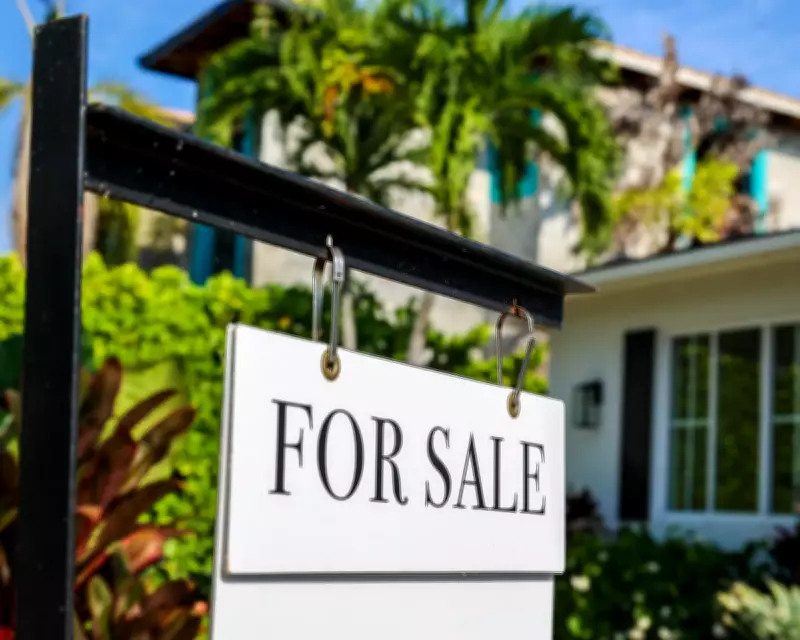
Florida's Real Estate 'Gold Rush' Attracts Super-Rich as Costs Drive Others Out
To the casual observer, south Florida's real estate market appears flourishing, with a 'gold rush' in Miami as ultra-wealthy buyers eagerly purchase mega-mansions and luxury condos upon listing. This influx, partly driven by affluent New Yorkers seeking refuge from urban changes, injects billions into the state's economy. However, beneath this boom lies a troubling parallel reality where rising costs threaten to displace long-term residents.
Poll Reveals Widespread Desire to Leave Due to Affordability Issues
A recent poll by Florida Atlantic University (FAU) indicates that at least half of Florida's residents are contemplating leaving the state, primarily due to the escalating cost of living. Notably, 80% of those considering an exit cite housing affordability as a key concern. While experts like Eric Levy, a senior business economist at FAU, view this as evidence of the enduring American Dream—with families planning to improve their circumstances—the data underscores significant economic pressures.
Florida now ranks among the top 10 most expensive states to live in, largely due to above-average housing costs. In the Miami-Fort Lauderdale metropolitan area, new condos can command tens of millions of dollars, contributing to a 'house poor' phenomenon. A Consumer Affairs report highlights that three cities in this region are among the top six nationwide where households spend 32% or more of their income on housing, compared to the national average of 24%.

Migration Trends Highlight Growing Disparities
Between 2014 and 2024, Miami's millionaire population surged by 94%, yet Miami-Dade County experienced a net migration deficit of over 130,000 people from 2020 to 2023, largely attributed to soaring housing costs. Some former residents report that high prices and congested traffic drove them away. Monica Escaleras, chair of FAU's economics department, remarked, 'The Florida promise of sun, growth and upward mobility remains alive, but it is getting expensive to hold on to.'
Levy noted that the 'grass is greener' sentiment isn't unique to Florida, but the wealth disparity between incoming and outgoing residents is striking. He posed, 'It's certainly thought provoking that if a lot of wealthy people are moving in, are they going to displace the lower income and middle income folks?' While FAU's data doesn't confirm displacement, the survey revealed a shocking number of people considering departure.
Broader Impacts on Essential Services and Migration
The affordability crisis extends beyond housing, affecting essential services like healthcare. Pediatricians are becoming scarce in Florida, partly due to the state's unorthodox vaccine policies but also because high housing costs deter medical professionals with substantial student debt from practicing there. Instead, many opt for states with lower living expenses.
Migration patterns have also shifted. A 2025 Atlas Van Lines study showed an almost equal split between arrivals and departures, while earlier data indicated 1,200 people moving to Florida daily between 2023 and 2024. More recent estimates suggest a sharp slowdown to about 500 daily arrivals, signaling a cooling trend.
Efforts to Address Affordability and Livability
Municipalities and private sector partners are prioritizing the retention of workers in hospitals, schools, retail, and other crucial industries through affordable housing projects. In Miami's Wynwood neighborhood, Sebastian Lüdke, CEO of Germany's ALP.X Group, is co-developing Cloud One Residences—85 loft-style apartments paired with a hotel and retail hub. While not classified as affordable housing, the project aims to enhance the community by offering units starting around $400,000 to $500,000, potentially accessible to local buyers.

Lüdke emphasized developers' moral obligation to communities, stating, 'The entire aspect of affordability in the city is an important one, and it goes beyond affordability and into livability.' He highlighted the need for investments in education, infrastructure, affordable housing, public transport, and healthcare to support Miami's evolution into a major city alongside New York and Los Angeles. 'With the growth that Miami has seen, and with the challenges Miami has with traffic, education, the availability of housing, this really needs to be a core focus,' he added.
As Florida grapples with its dual reality of luxury booms and affordability crises, the balance between attracting wealth and sustaining livability remains a critical challenge for policymakers and developers alike.