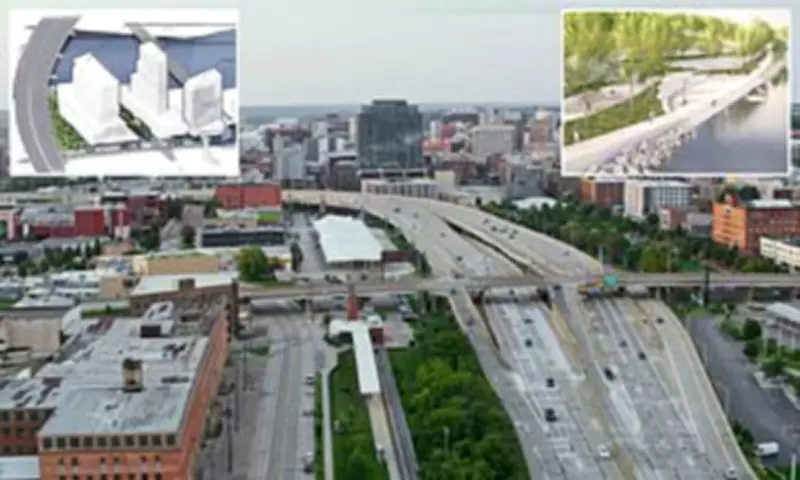
Grand Rapids, Michigan, a city once starkly labelled among America's most declining urban centres, is poised for a dramatic renaissance through an ambitious $800 million riverfront redevelopment project. This transformative initiative seeks to inject new vitality into a community that has faced significant demographic and economic challenges over the past decade.
From 'Dying City' to Development Hub
In 2011, Newsweek controversially ranked Grand Rapids as the tenth-most-dying city in the United States, citing a steep population decline and a dwindling number of residents under eighteen. Former mayor George Heartwell vehemently defended the city at the time, asserting, 'We're a city that's young, that's vibrant, that's alive, that's growing. It's a fun place to be.' Despite this spirited defence, recent years have continued to present struggles. US Census data for 2024 reveals that 16.9 percent of households in Grand Rapids live in poverty, and the median household income of $69,108 falls notably below the national median of $83,730.
A Skyline-Defining Vision
The Grand Riverfront development, spanning seven acres along the waterway, represents a monumental effort to reverse these trends. The project will feature a mix of apartments, retail shops, restaurants, and a boutique luxury hotel, fundamentally altering the city's core. Mike Smallegan, a realtor with Smallegan Real Estate and a lifelong resident, told the Daily Mail, 'This is the kind of development that changes how people see an area.' He elaborated that it elevates the riverfront from an 'up-and-coming' locale to a genuine destination, likely spurring further investment and increasing surrounding property values.

State-Backed Transformation Plan
In December, Fulmar Development Partners received approval from the Michigan Strategic Fund for a $560 million transformational brownfield plan, a crucial component of the broader $800 million endeavour. The development will include:
- Nearly 70,000 square feet of public space, featuring an enhanced riverwalk and scenic lookout points.
- Three mixed-use towers dedicated to offices, a hotel, and residential units.
- A residential skyscraper offering approximately 700 rental apartments.
- Over 2,500 new parking spaces to support the increased activity.
JR Berger, the project's lead developer, described the construction as a 'cornerstone' for Grand Rapids. In a press release, he stated, 'This tool unlocks our ability to transform a riverfront parking lot into a vibrant ecosystem that connects neighbourhoods and further energises the downtown Grand Rapids riverfront.'
Local Enthusiasm and Economic Prospects
Mayor David LaGrand expressed profound excitement about the state's financial backing, remarking to WoodTV, 'It was really great to see the state-wide funds being used in the city of Grand Rapids. We're the biggest successful city in the state and it was great to see evidence of that.' Local residents have also voiced support on social media, with one commenting, 'I gotta say, I’m so pleased with the amount and type of work being done to improve the city. Lots of things that drive cultural interest in a city.'
Smallegan highlighted the project's potential to attract new residents, particularly those seeking an urban lifestyle without the exorbitant costs associated with major metropolises like Chicago. 'Projects like this absolutely draw attention from outside the state,' he noted. 'They make Grand Rapids easier to picture for someone who’s never lived here but wants an urban lifestyle with a lower cost of living.' He identified college graduates as a key demographic in the downtown rental market, many of whom may settle long-term, alongside smaller families prioritising location over yard space.
Lifestyle and Market Impact
The development promises to enhance the city's cultural and recreational offerings significantly. Residents will be within walking distance of top bars and restaurants, events at Amway Stadium, and concerts at the new Acrisure Amphitheater, scheduled to open on May 15 with a headline performance by Lionel Richie. Nearby neighbourhoods such as Heartside, Roosevelt Park, and Blacks Hills will benefit from improved access to these amenities.

Regarding the real estate market, Smallegan indicated that condominium or townhome prices near the river typically start in the mid-$300,000 range and can reach around $700,000. 'New river-facing construction will likely push those numbers higher,' he observed. 'The riverfront is one of the most competitive parts of our market. You’re paying a premium for walkability, views, and lifestyle, and there’s limited supply along the river, which keeps prices strong.'
This comprehensive riverfront project not only aims to redefine Grand Rapids' skyline but also to foster a renewed sense of community and economic prosperity, marking a pivotal chapter in the city's ongoing narrative of resilience and revitalisation.