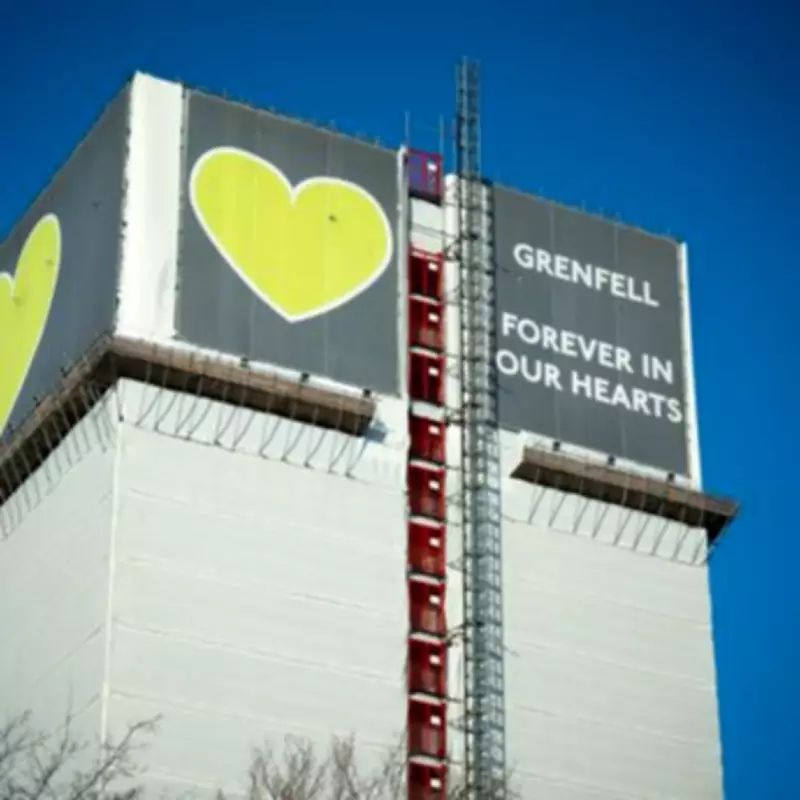
More than 275,000 individuals could be residing in properties equipped with hazardous cladding, according to recent estimates, as a survivor of the devastating Grenfell Tower fire has issued a stark warning that the Labour administration is neglecting the memory of those who perished in the 2017 catastrophe.
Survivor's Plea for Urgent Action
Edward Daffarn, who miraculously escaped from his 16th-floor apartment during the inferno, has labelled the ongoing situation a profound scandal. He emphasised that countless residents remain trapped in flats constructed with the same flammable materials that contributed to the West London tower block disaster.
In an exclusive interview with The Mirror, Mr Daffarn expressed his deep disappointment, stating, "We've been failed by the Conservatives and now it looks like we're being failed by the Labour government. It hurts me to say that, but there seems to be no urgency. It's too meaningless and too casual and it's just so disrespectful to the 72 lives that were lost."

Government Monitoring and Remediation Efforts
Official statistics released last month reveal that the government is currently monitoring 229,000 homes in buildings exceeding 11 metres in height that are fitted with unsafe cladding. Among these, approximately 97,000 have not yet commenced remediation work, while 41,000 are undergoing ongoing repairs.
This data indicates that 138,000 homes are situated in buildings where remediation has either not started or remains incomplete. With the average household size in the UK estimated at 2.35 residents by the Office for National Statistics, this suggests that at least 276,000 people are living in properties with dangerous cladding. Some broader estimates even propose that up to three million individuals could be affected by this pervasive issue.
Political Criticism and Legislative Delays
Mr Daffarn specifically criticised Housing Secretary Steve Reed for prioritising the construction of 1.5 million new homes, urging him instead to address the existing safety deficiencies within the housing sector. Reports indicate that the government's proposed Remediation Bill, designed to accelerate the removal of unsafe cladding, is facing potential delays.
While government sources maintain hope that the legislation will be introduced by May, campaigners remain sceptical. Giles Grover, representing the End Our Cladding Scandal campaign, told The Mirror, "It just feels like piecemeal, tinkering around the edges."
Labour's Promises and Funding Initiatives
Labour's election manifesto pledged "decisive action to improve building safety, including through regulation." At the close of 2024, the Ministry of Housing committed to remediating all buildings 18 metres or taller by 2029. Subsequently, Chancellor Rachel Reeves announced additional funding to expedite remediation efforts, including a £1 billion allocation to accelerate work on social housing.
An anonymous Labour MP commented to The Mirror, "Eight and a half years after Grenfell, to not even have a plan in place for lots of dangerous buildings, it’s just extraordinary."
Government Response and Ongoing Challenges
A spokesperson for the Housing Ministry stated, "We are working tirelessly to remediate unsafe buildings as we committed to in our acceleration plan, with over £1 billion already provided to urgently fix social housing."
Despite these assurances, Mr Daffarn reiterated his concerns, adding, "The fact that people are still living in buildings with the same cladding as Grenfell is an absolute scandal. It's a stain on this government that people are still not living in safe buildings. They need to go faster."
The situation highlights a critical public safety issue, with thousands of residents facing exorbitant insurance costs and an inability to sell their properties due to unresolved cladding dangers, underscoring the urgent need for accelerated governmental action.