

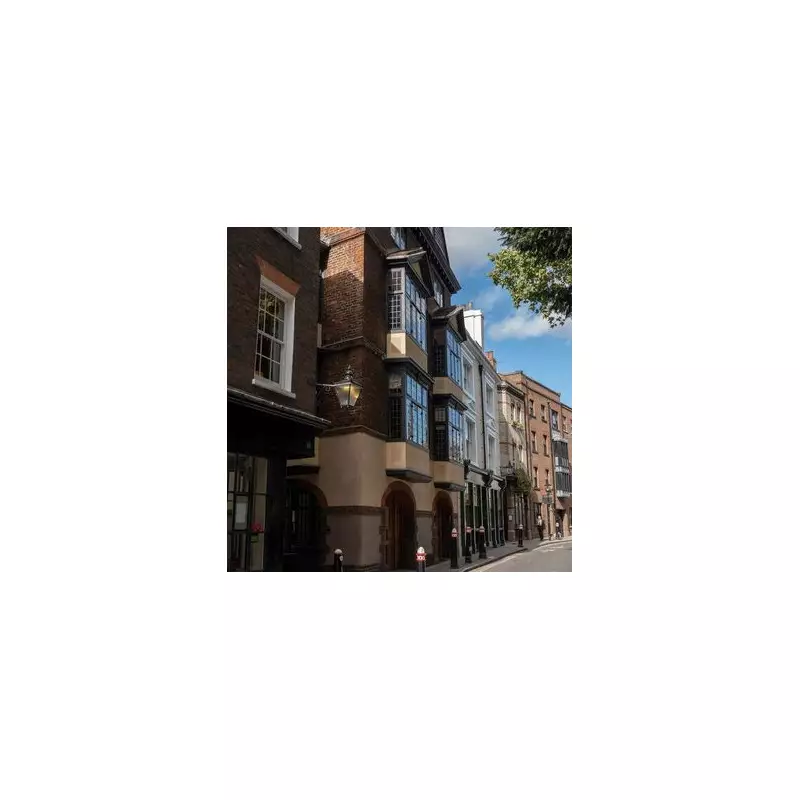
In the heart of the City of London, nestled on a quiet street near Smithfield Market, stands a building with a story of survival like no other. 41-42 Cloth Fair, built between 1597 and 1614, is officially recognised as London's oldest surviving house. This four-bedroom townhouse has endured centuries of turmoil, from the flames of the Great Fire to the bombs of the Blitz, remaining a private home to this day.
A Fortuitous Wall and a Fiery Escape
The house's most famous escape came in 1666 during the Great Fire of London. The inferno destroyed over 70,000 homes across the capital, reducing vast swathes of the medieval city to ash. Yet, this particular property on Cloth Fair was miraculously spared. Historical accounts report that a tall brick wall surrounding the building acted as a firebreak, shielding it from the ravaging flames that consumed its neighbours.
This was not its first brush with disaster. Decades earlier, during the Second English Civil War, many city properties were deliberately destroyed. The house, however, emerged unscathed. Its builder, the Royalist Henry Rich, was not so lucky; he was captured, tried, and beheaded at the Palace of Westminster.

Centuries of Change and a 20th-Century Reprieve
The building's life began with its first occupant, William Chapman, who turned the ground floor into an ale house. Over the following centuries, it adapted to the times, serving as premises for a wool draper, a tobacconist, and later a cutlery factory until the 1920s.
The 20th century brought a new threat: demolition. In 1929, proposals were tabled to raze the house, alongside other historic buildings, as part of a city sanitation improvement scheme. It was even declared structurally dangerous. Yet, the demolition orders were never carried out. The house's resilience continued during the Second World War, surviving the Blitz undamaged while 1.7 million other London buildings were hit.
A Living Museum and Its Famous Guests
In 1995, new owners undertook extensive renovations, earning a City Heritage Award. The house is a treasure trove of history, with one unique feature being a collection of signatures scratched into its leaded windows with a diamond pen. This improvised guestbook includes the autographs of notable visitors such as Winston Churchill, the Queen Mother, poet John Betjeman, and author J.B. Priestley.
Located near the site of a medieval priory, the property has also sparked rumours of skeletons buried within its ancient foundations. Whether myth or reality, these possible remains have rested undisturbed under a home that has proven, time and again, to be virtually indestructible. It stands not just as London's oldest house, but as a silent witness to the city's ever-changing story.






