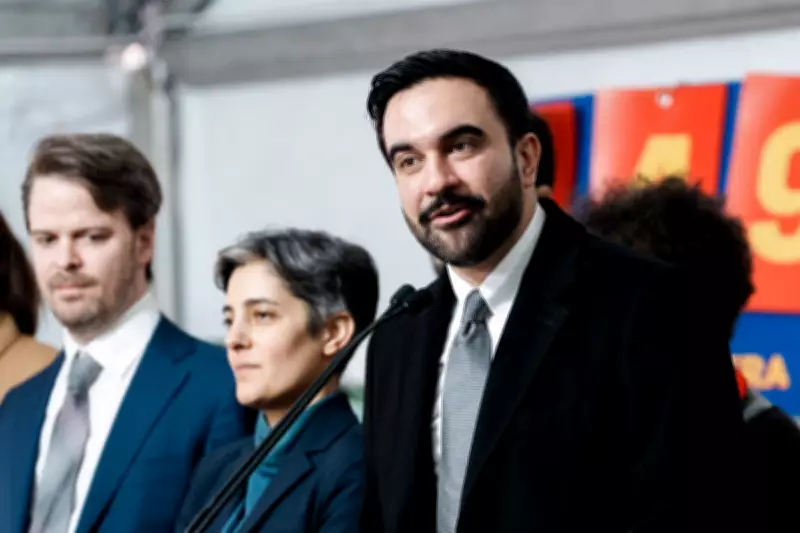
Mayor Mamdani's Housing Voucher Appeal Sparks Outcry Amid Budget Crisis
New York City Mayor Zohran Mamdani has ignited controversy by appealing a court order mandating the expansion of the City Fighting Homelessness and Eviction Prevention Supplement (CityFHEPS) housing voucher program. This move directly contradicts his campaign promise to implement the expansion, drawing sharp criticism from homeless advocates who describe it as a betrayal of trust.
Campaign Pledge Versus Fiscal Reality
During his election campaign, Mamdani pledged to drop legal challenges and ensure the voucher program's expansion proceeded as scheduled. However, upon taking office in January, he inherited a staggering $5.4 billion budget deficit, which he cited as the primary reason for his reversal. At a press conference on the 25 March deadline, Mamdani explained that the fiscal situation was worse than anticipated, with an expansion projected to cost over $4 billion in the coming years.
"I am deeply committed to ending the homelessness crisis in the city," Mamdani stated. "I'm appreciative of the fact that this commitment is shared by many New Yorkers, elected officials, and beyond, and also, I'm committed to doing so in a manner that is sustainable for both the medium and the long term." His administration has vowed to continue negotiations with the city council on a settlement to the lawsuit.

Advocates Decry Broken Promises
Homeless advocates have expressed profound disappointment, arguing that the voucher program is essential for addressing what they term a homelessness crisis. Christine Quinn, president and CEO of WIN, the city's largest shelter provider, condemned the decision. "It's a classic example of a political promise made and a promise broken and really a betrayal of the homeless and unhoused community in New York who took him at his word," she said.
The CityFHEPS program, launched in 2018, has assisted more than 123,000 people in securing permanent housing, according to a January report from the state comptroller. However, its costs have skyrocketed from $176 million in 2019 to a projected $1.2 billion in fiscal year 2025, prompting concerns over sustainability.
Legal and Political Battles Over Vouchers
The conflict over housing vouchers has deep roots. In 2023, the city council approved a legislative package to ease access by increasing income eligibility and removing shelter residency requirements. Then-Mayor Eric Adams vetoed the bills, citing potential billions in taxpayer costs and overreach of council authority. The council overrode the veto, but Adams refused implementation, leading to a lawsuit.
A lower court sided with Adams, but a New York state appeals court ruled in July 2025 that the city must expand the program. The court later granted leave to appeal, which Mamdani's administration has now pursued, using the same legal justification as Adams.
Expert Insights on Housing and Poverty
Housing policy experts emphasize the effectiveness of rental vouchers in alleviating poverty. A 2023 Harvard Joint Center for Housing Studies report found that less than 1% of families exiting New York homeless shelters with a subsidy re-enter within a year, compared to 15% without subsidies. "For low-income households, this kind of benefit can really be a lifeline," said Vincent Reina, a professor at the University of Pennsylvania.
Reina noted that New York's high housing costs require significant public funding to bridge affordability gaps. "That doesn't mean you should not do it, right? But it does mean that there are budgetary implications," he added. Quinn argued that vouchers save money long-term by reducing shelter reliance, though Reina acknowledged immediate budget constraints.
Economist Daniel Teles of the Urban Institute pointed out that vouchers address demand but not supply issues. "There are more people who want to live in the city than there are units," he said, noting that CityFHEPS "shrinks the need" but doesn't solve underlying housing shortages.

Affordable Housing Efforts and Encampment Policies
Despite the voucher controversy, Mamdani has prioritized affordable housing initiatives, including seeking $21 billion in federal grants to build 12,000 units in Queens. Quinn praised these efforts, saying, "The mayor is doing flawless work as it relates to negotiating with Donald Trump. If he can get us more resources from Washington, all the better."
However, Mamdani has also faced criticism for reversing policies on homeless encampments. After pausing police-led sweeps on his fifth day in office, he reinstated them a month later, now led by Department of Homeless Services staff with daily outreach. David Giffen of the Coalition for the Homeless expressed disappointment, vowing to continue pushing for supportive measures.
Administration's Stance and Future Negotiations
A spokesperson for Mamdani highlighted the inherited fiscal crisis, stating, "Mayor Mamdani has made it clear that we need to tax the rich and end the drain so that we can build more affordable housing, keep New Yorkers stably housed and tackle the affordability crisis." The spokesperson criticized the city council speaker for lacking a reasonable proposal and argued that dropping the appeal would hinder settlement talks.
Quinn revealed that lawsuit parties are prepared to negotiate, urging the administration to engage. As debates over housing, homelessness, and budget priorities intensify, Mamdani's decisions will likely shape his political support and the city's approach to its most vulnerable residents.