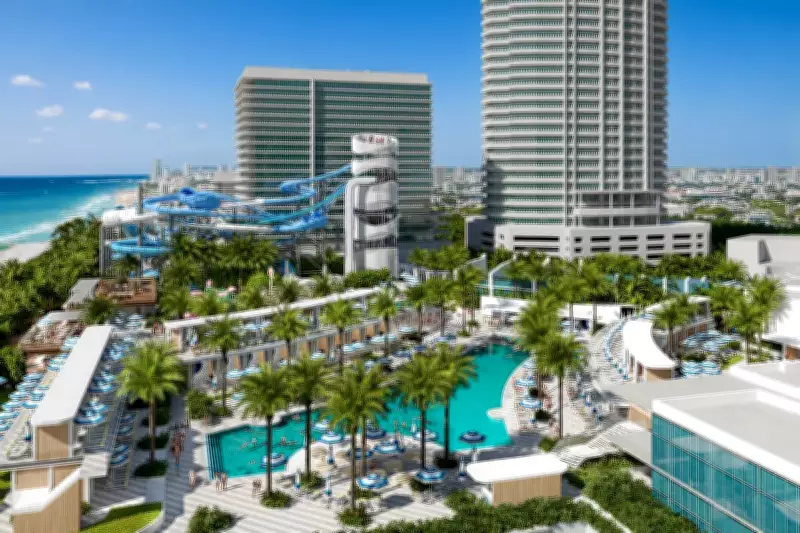
Miami Beach Commissioners Threaten Legal Action Over State Water Park Bill
A proposed water park at the iconic Fontainebleau Hotel in Miami has ignited a fierce political battle, with Miami Beach commissioners now threatening legal action against the state to safeguard local control over the project. The dispute comes as Miami officials continue their multi-year crackdown on unruly Spring Break crowds, adding another layer of tension to the city's development landscape.
State Bill Sparks Local Outcry
City leaders spent hours during a Wednesday meeting debating whether to challenge House Bill 399, a state-level measure currently awaiting Governor Ron DeSantis' signature. This bill would permit the water park to proceed without requiring public input, effectively bypassing local government authority. Legal experts characterize the legislation as a broad land-use preemption measure, while city officials argue it strips municipalities of their power to oversee development decisions, completely excluding residents from the approval process.
Critics have labeled the bill an overreach, asserting that decisions impacting neighborhoods, environmental quality, and overall livability should be determined locally rather than dictated by lawmakers in Tallahassee. Residents have raised specific concerns regarding noise pollution, increased traffic congestion, and potential environmental harm from the project, which could feature up to 11 water slides, including one reaching a towering height of 99 feet.

Commissioners Weigh Legal Options and Negotiations
Miami Beach Commissioner David Suarez expressed apprehension about challenging the state, noting, "This governor has a reputation for retaliatory political engagements. I think we're going down a dangerous rabbit hole here on challenging this." Despite these concerns, commissioners agreed to allow the city attorney to explore potential legal avenues while simultaneously engaging the Fontainebleau in discussions.
Miami Beach City Attorney Ricardo Dopico stated on Wednesday, "If the direction of this body authorizes litigation, I would feel comfortable taking action. If the direction is come back and get further direction, then I would need further direction." The commission subsequently voted to have the mayor, city attorney, city manager, and representatives from the Mid Beach Neighborhood Association meet with the Fontainebleau to negotiate terms for the proposed water park.
Broader Implications for Local Governance
Commissioner Suarez revealed on Thursday that he had spoken with the Fontainebleau's lobbyist, who agreed to collaborate with the city toward a mutually acceptable resolution. "That's how this should work—through conversation and compromise, not conflict. Our focus should always be on solving problems, not escalating them," Suarez emphasized.
However, he also highlighted a larger systemic issue: "When developers feel like it's easier to go to Tallahassee than to work through Miami Beach's approval process, that should be a wake-up call for all of us. We need to ask ourselves why. If we want to truly protect local control, we also have to make sure our processes are fair, efficient, and predictable. Otherwise, we risk creating a system where only the most well-connected applicants can navigate it, and that's not good for residents or for the long-term future of our city."
Fontainebleau's Transformation and Spring Break Crackdown
The planned Fontainebleau water park would transform the luxury hotel into a family-friendly, all-ages resort, introducing new pools, water features, slides, dining options, and upgraded entertainment. This shift marks a notable departure from the celebrity-driven nightlife scene for which the Fontainebleau has long been renowned. The hotel has hosted events ranging from Victoria's Secret fashion shows to performances by stars like Cardi B on New Year's Eve 2024, and has welcomed icons such as Frank Sinatra and Lucille Ball. Its on-site nightclub, LIV, remains one of the nation's premier party destinations, famous for attracting high-spending crowds.

In recent years, Miami Beach has intensified efforts to curb Spring Break festivities, aiming to reduce rowdy crowds and unsafe behaviors that once drew massive numbers of partygoers. The city has implemented measures including curfews, parking and vehicle access restrictions, DUI checkpoints, and advertising campaigns warning that wild, unregulated partying is no longer welcome. The water park controversy thus unfolds against this backdrop of ongoing regulatory tightening.
The Independent has reached out to representatives for Governor DeSantis, the Miami Beach Attorney's Office, the Mid Beach Neighborhood Association, and the Fontainebleau for comment on the escalating dispute.