Prince William's Major Housing Estate Approved Despite Hundreds of Objections
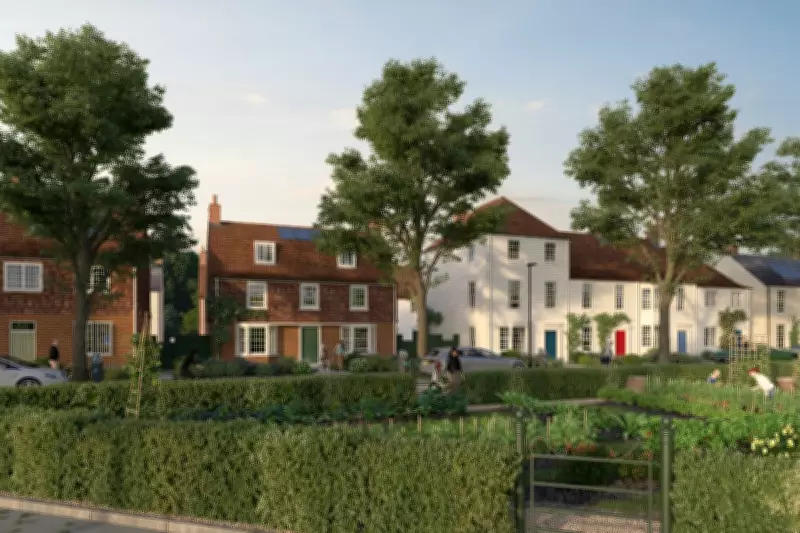
Plans for the initial phase of a substantial 2,500-home development on Kent farmland owned by Prince William have been granted approval, despite facing nearly five hundred local objections that described the project as an "eyesore" and a "Trojan Horse." The Duchy of Cornwall, which manages the Prince of Wales's estate, submitted proposals in 2024 to Swale Borough Council for a new "garden" neighbourhood called South East Faversham, located on the town's periphery.
Council Vote and Development Details
Councillors voted 11 in favour to five against on Tuesday evening, approving the first stage of the bid. This initial phase encompasses 261 homes, with 35 per cent designated as affordable housing, alongside a local centre and green spaces. Construction is anticipated to commence in 2027/28, according to the Duchy of Cornwall. The neighbourhood plans envision a total of 2,500 homes, with over 890 designated as "affordable" – a mix of shared ownership, social rent, and affordable rent.
Objections and Support for the Scheme
Prior to the planning committee meeting, 467 objections were lodged against the scheme. Concerns raised included increased traffic, the loss of high-quality agricultural land, potential harm to wildlife, heritage, and the area's character, as well as insufficient infrastructure. Speaking against the proposal, Sarah Moakes, a member of Boughton Under Blean Parish Council, said that the response was "hardly a ringing endorsement" and cautioned that the site would not integrate well with the surrounding rural landscape.

She added: "The Duchy is a Trojan horse, ushering in another 3,000 houses plus industrial development, a vast urban sprawl as far as the Thanet Way." Jonnie Reeves of Selling Parish Council told the committee: "This is an eyesore. It is too big. It is out of scale. It will cause massive traffic congestion." In contrast, twelve letters supported the application, citing its high design standards and potential to create a sustainable new community.
Advocacy for Social Housing and Planning Justifications
Harold Goodwin, the chair of Faversham Community Land Trust, urged councillors to back Prince William's plans for social housing, which he described as "superior" to other developments. He said: "We hope that these councillors will stand up to support Prince William in seeking to provide social housing, setting an example for other developers across the country. (It) could be unacceptable if Swale frustrated the Duchy's plans for social housing."
Roger Hepher, the Duchy of Cornwall's planning adviser, said that the council was "a long way short" of its five-year housing land supply target and that affordable housing delivery had been "very difficult." Mr Hepher stated: "This development would address both of those issues with the first phase, a large proportion of which would be social rented housing being ready for development in short order."
Broader Scheme and Duchy's Track Record
The wider scheme also includes a new primary school, a health centre, enhanced transport links for buses, cycling, and walking, and renewable energy solutions. The Duchy of Cornwall has a history of developing housing projects, including Poundbury in Dorset and Nansledan in Cornwall. Prince William inherited the Duchy of Cornwall estate, a portfolio of land, property, and investments valued at over £1 billion, upon his father's ascension to the throne.
Documents released before the meeting concluded: "The benefits of the scheme are, when taken together, substantial and wide ranging. In particular, the scheme performs well in respect of providing affordable homes, in addition to directing development to sustainable locations and securing well-designed places, which the NPPF (National Planning Policy Framework) requires particular regard to be given to. The harm that has been identified is significant but would not outweigh the benefits, let alone significantly and demonstrably outweigh them."

Post-Approval Statements and Future Vision
Following the approval, Sam Kirkness, executive director for development at the Duchy of Cornwall, said: "This decision brings us closer to unlocking vital new housing to respond directly to Faversham's acute housing needs, as well as providing the infrastructure, green spaces and community facilities that local people in Faversham deserve. The Duchy of Cornwall has a fantastic track record of creating successful neighbourhoods that knit seamlessly into existing towns. We are using this experience to design a new neighbourhood for Faversham that would be among the most sustainable and environmentally friendly in the UK."
The Duchy's earnest objective for this scheme is to bring about a new community that's loved by the residents of Faversham, because it is sensitively designed to respond to local needs and provides much wider benefits to the town, as emphasised by planning advisers. This approval marks a significant step in addressing housing shortages while balancing development with community concerns and environmental considerations.