Property Expert Warns Next Six Weeks Are Critical for Australian Housing Market
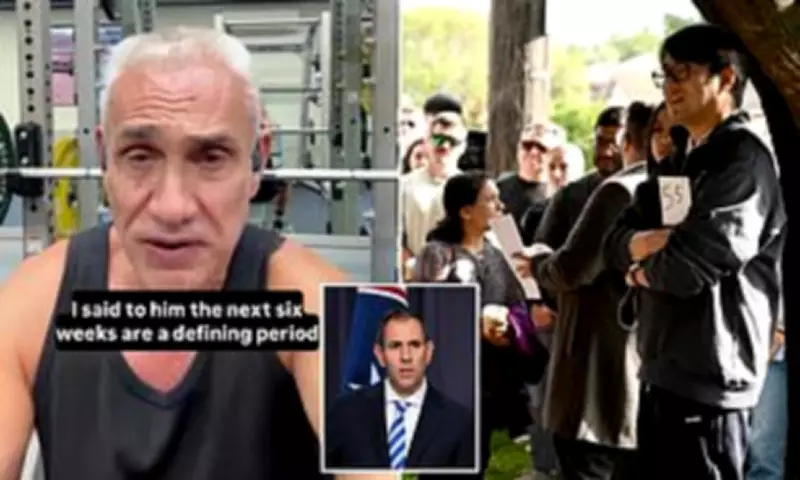
A prominent property expert has issued a stark warning that the upcoming six-week period will prove decisive for Australia's housing market, as escalating conflict in the Middle East places severe strain on the national economy. Tom Panos, one of the country's leading auctioneers, emphasised that this timeframe represents far more than just another news cycle, describing it instead as a defining moment for homeowners, buyers, and sellers alike.
Multiple Economic Pressures Converge
Panos highlighted a perfect storm of factors converging within this critical window, many of which lie completely beyond the control of market participants. The federal budget is scheduled to land in six weeks, while an interest rate decision from the Reserve Bank of Australia is expected in approximately five weeks, a move that could impact every household across the nation. Compounding these domestic pressures is the ongoing war in the Middle East, which shows signs of escalation rather than de-escalation.
The conflict has led to the closure of the vital Strait of Hormuz, disrupting global oil supplies and pushing diesel prices above $3 per litre. This has triggered shortages at hundreds of petrol stations throughout Australia, adding to inflationary pressures. The Reserve Bank increased the cash rate by 0.25 percentage points in March, bringing it to 4.1 per cent. Financial institution Westpac forecasts another three rate hikes this year, with rates potentially not beginning to fall until 2028.

Consumer Confidence at Historic Lows
'We've got shaking confidence,' Mr Panos stated bluntly. 'Here's the truth no one wants to say out loud: consumer sentiment is smashed. We're talking about levels we haven't seen in decades.' He pointed to findings published by ANZ-Roy Morgan on March 31, which revealed consumer confidence had fallen by 4.3 points to a mere 58.8. This marked the second consecutive record low for the index since its inception in 1972 and the first time it has ever dropped below the 60-point threshold.
'When confidence drops, you know what happens? People do stop spending. People do stop moving, and people stop making decisions,' Panos explained. 'Interest rates don't just fall because we want them to. This is chronic. They stick around, not for months, but potentially for years. That's why we need this war to end.'
The Uncomfortable Truth and a Call for Leadership
The auctioneer identified an 'uncomfortable truth' within the current crisis. 'There's only one lever right now that could change everything quickly, and it's not the RBA, and it's not the budget, it's not policy,' he asserted. 'It's the decision to end the war. Because war is not just conflict, it's an economic model. While it continues, uncertainty continues, inflation lingers, confidence collapses.'
Panos framed the next six weeks as not only crucial for the economy but also as a test of Australian leadership and communication. He shared a direct message for Canberra, expressing hope that Treasurer Jim Chalmers is 'thinking hard and fast' ahead of the budget delivery on May 12. The Albanese government has consistently called for a de-escalation of the conflict.
Attorney-General Michelle Rowland echoed this sentiment, stating on television, 'I think all of your viewers would agree that this war cannot end soon enough.' Treasurer Chalmers himself acknowledged over the Easter weekend that Australians are economically suffering due to a war they did not choose, stating, 'From an economic point of view, the end of the war can’t come soon enough because it's punishing Australians for a series of decisions that they didn’t take.'
Budget Focus and Market Forecasts
Chalmers shed some light on the upcoming budget's key focuses, confirming there would be spending cuts and tax reform, while emphasising the need to 'lift the speed limit on the economy' to foster growth with lower inflation following the oil shock. However, he remained tight-lipped on specific policies regarding superannuation or capital gains tax reform.

The financial implications are stark. Analysis by Canstar shows that if the cash rate rises by 0.25 percentage points in May, June, and August, monthly repayments on a $600,000 loan with 25 years remaining would increase by approximately $276. Including hikes already implemented this year, total monthly repayments could surge by $457 by August.
Market forecasts paint a concerning picture. SQM Research has downgraded its 2026 outlook, indicating that Sydney and Melbourne's property markets are now officially declining due to the war's impact. It forecasts Sydney home prices could fall by up to six per cent, with Melbourne following suit with anticipated drops of up to four per cent.
Recent index results highlighted the current median house values across major cities:
- Sydney: roughly $1.2 million
- Melbourne: about $820,000
- Brisbane: approximately $1.1 million
- Adelaide: $937,000
- Perth: $1 million
- Hobart: $730,000
- Canberra: $890,000
- Darwin: $610,000
As these economic and geopolitical forces collide, the next six weeks are poised to be a watershed moment for Australia's property landscape, testing the resilience of the market and the decisiveness of its leaders.