Squatter's Rights Activist and Property Investor Clash in Heated Housing Debate
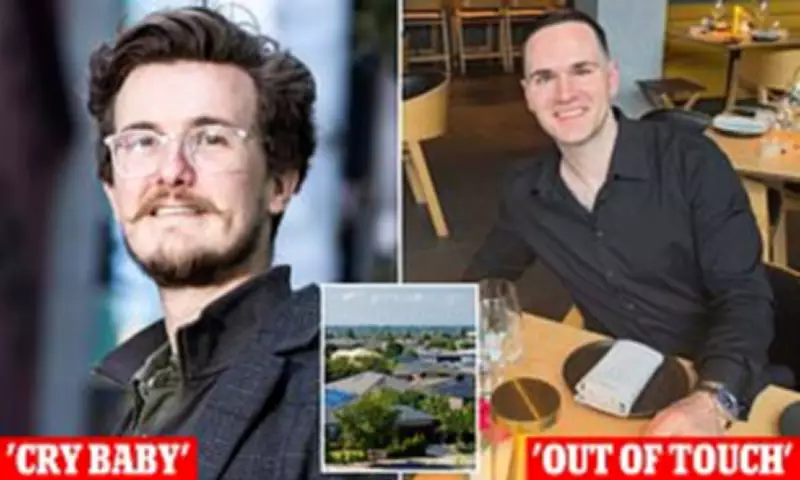
A controversial squatter's rights activist has fiercely responded after being labelled a 'cry baby' by a property investor, following a tense clash over the housing crisis in Australia. The dispute unfolded during a debate on the SBS program The Feed last Wednesday, where panellists were asked to discuss the provocative statement: 'Housing shouldn't be treated as an investment'.
Morally Reprehensible vs. Sacrifice and Success
Socialist activist Jordan van den Lamb argued passionately that investing in property is 'morally reprehensible', asserting that no one should profit from a basic human need like shelter. In contrast, fellow panellist Eddie Dilleen, a buyer's agent who owns 180 properties, later told Daily Mail that individuals like Mr van den Lamb are 'cry babies' unwilling to make the necessary sacrifices to enter the property market.
'There was just so much complaining (by Mr van den Lamb),' Mr Dilleen remarked. 'They have all these ideas of how we should move to a communist kind of society where everyone gets given everything.'

Activist Fires Back at 'Out of Touch' Claims
On Thursday, Mr van den Lamb hit back, describing Mr Dilleen as 'out of touch'. 'I asked him what he has to say to someone sleeping rough and he couldn't imagine what that meant,' Mr van den Lamb told Daily Mail. He emphasised that it is insensitive to dismiss advocates for universal housing as mere complainers.
Mr van den Lamb, who holds a mortgage on a studio apartment shared with his wife, accused investors like Mr Dilleen of driving up housing costs across Australia. 'He's exploiting at least 180 people and he's the one telling me to stop being mean to him,' he stated. 'He's increasing housing costs for the rest of society by expanding his property empire so I think we're allowed to be a little mean to him.'
Divergent Views on Property Market Entry
Mr Dilleen contended that many Australians struggle to break into the property market due to an unwillingness to lower their living standards temporarily. He suggested that saving for a deposit requires sacrifices, such as cutting back on luxuries like designer bags and holidays. 'If you want to get out of renting, then you need to sacrifice for at least a couple of years,' he advised, proposing that renters could save $30,000 for a five per cent deposit on a $600,000 unit.
In response, Mr van den Lamb retorted: 'It's a guy who owns 180 properties who is telling someone sleeping rough to lower their living standards. How are you supposed to do that if you're sleeping rough?'
Advocacy for Public Housing Expansion
The housing activist, known for advocating squatting in empty homes, called for a massive expansion of public housing to assist struggling Australians. He urged the government to build more public houses directly, rather than contracting private developers, and proposed turning every empty property into public housing. 'We don't need investment in something that people need to survive,' he argued, suggesting that selling spare properties could drastically reduce house prices.
Supporting this view, a June report by UNSW Sydney's Dr Chris Martin highlighted a critical shortage in social housing. The report revealed that while over 423,000 vulnerable households receive assistance, waitlists grew by more than 26,000 households between 2016 and 2022, as entries into social housing declined by 6,400. 'It is abundantly clear we need more social housing,' Dr Martin stated.
Government Response and Future Directions
Minister for Housing and Homelessness Clare O'Neil acknowledged the need for increased public housing, criticising the previous government's neglect. 'The Albanese Government is taking an entirely different approach, delivering 55,000 new social and affordable homes over the coming years,' she told Daily Mail, alongside measures to boost rental assistance and strengthen tenant rights.

Mr van den Lamb further proposed establishing a state bank to offer discounted loans, addressing the widening gap between rising house prices and stagnant real wages. 'Look at how much quicker house prices are rising while real wages are declining. House prices are increasing exponentially,' he warned, underscoring the urgency of reform in Australia's housing sector.