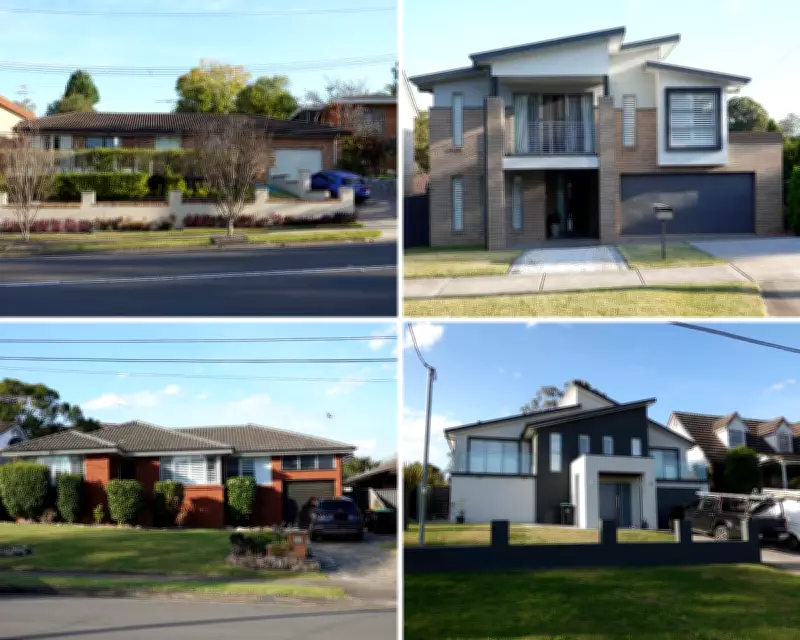
New research has uncovered a dramatic transformation in Sydney's suburban landscape, where front gardens are rapidly disappearing as driveways expand to accommodate modern lifestyles. A study examining residential redevelopment in the city's suburban ring has found that the average front garden size has declined by a staggering 46% in areas where older, low-density homes have been replaced by larger, contemporary houses.
The Shrinking Green Space Phenomenon
The research paper, which is scheduled for publication in the Cities journal in the coming months, analysed a sample of 375 homes across Sydney's northern and greater western suburbs. Using aerial imagery analysis across 13 suburbs within Ryde City Council and Parramatta City Council areas, the study quantified the changes in garden area and driveway expansion between 2018/19 and after 2023.
Driveways Dominate the Landscape
While front gardens have diminished significantly, the footprint of driveways and other artificial surfaces has increased by 57% to an average of 46 square metres. This expansion reflects growing car ownership and households with multiple vehicles, creating what researchers describe as "hard infrastructure" that increasingly dominates the suburban landscape.

Dr Peter Davies, the lead author and a professor of sustainability at Macquarie University, expressed surprise at the scale of change. "I sort of knew they [driveways] were getting bigger. I didn't realise how much bigger," he said. The research examined the impact of incremental development that often occurs "below the political radar," gradually altering suburban character without attracting significant policy attention.
Environmental Consequences and Planning Gaps
The study reveals that tree canopy coverage was reduced by 62% as older houses were demolished and rebuilt. This loss of private green space contributes to higher urban heat, reduced biodiversity, and fewer connections with nature for residents. The paper lays bare significant gaps in the planning system regarding minimum private green space standards.
Davies noted that successive governments have been reluctant to "over-regulate the mum and dad developer" who undertake knock down-rebuild projects. "There's a soft approach to this sort of landscaping canopy... there is no prescription through state instruments that says you need to have a minimum area of garden or area of canopy trees because it's really important for the community," he explained.
The Parking Pressure
The expansion of driveways is partly driven by practical considerations. "There is a need to put these cars somewhere. Councils don't like people parking on the street so they then require bigger driveways," Davies said. This creates a tension between housing density, transportation needs, and environmental considerations that current planning frameworks struggle to balance effectively.
Future Implications and Policy Challenges
New South Wales faces significant housing challenges, needing to build 377,000 new homes by 2029 under the national housing accord. However, the state's environmental planning policy currently has no mandate on private tree canopy, creating what researchers describe as a policy vacuum.
Davies warned about the cumulative impact of these changes: "What it starts to represent is in 30 years time we'll suddenly wake up and go 'where have all our front gardens gone?'" He added that the character transformation is becoming visible in backyards too, as houses are built further back on properties.
While NSW has set a target of 40% canopy coverage across greater Sydney by 2035, Davies emphasized that current discretionary planning instruments are insufficient. "What we know is if you just leave it to existing planning instruments that are discretionary... you're just going to go backwards," he said. "It doesn't take many years to suddenly wake up and go half of these houses are now new... and the character of my neighbourhood has changed."
The research highlights how seemingly small, individual development decisions collectively reshape urban environments, with significant implications for sustainability, community wellbeing, and the distinctive character of Sydney's suburbs.