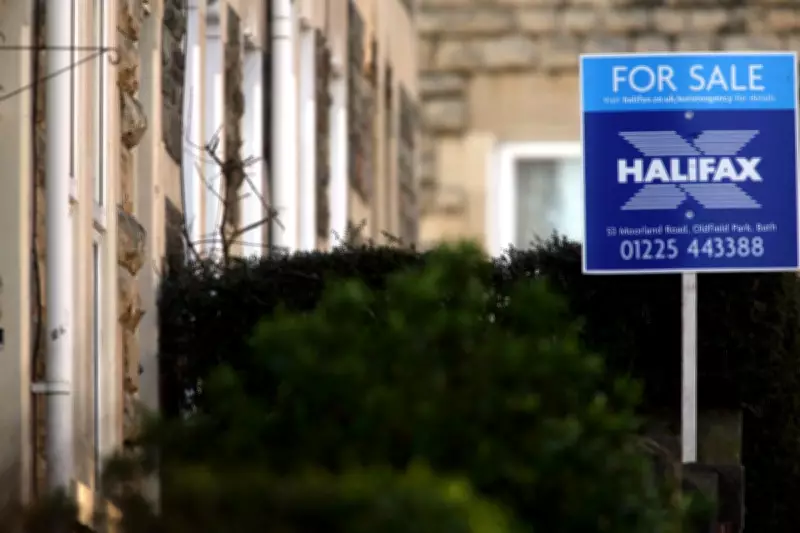
UK House Prices Experience First Monthly Decline of 2026
According to the latest Halifax house price index, the average UK house price fell by 0.5% in March, marking the first monthly decline of 2026. This dip follows increases of 0.8% in January and 0.3% in February, indicating a shift in market momentum as uncertainty takes hold.
Market Uncertainty Linked to Middle East Conflict
Halifax has pointed to the ongoing conflict in the Middle East as a primary source of uncertainty affecting the housing market. Amanda Bryden, head of mortgages at Halifax, explained that concerns about higher energy prices have pushed up inflation expectations, leading to a rise in mortgage rates. This has reduced confidence that interest rates will be cut this year, dampening the initial market momentum seen at the start of the year.
The average UK house price stood at £299,677 in March, with annual growth softening to 0.8%, down from 1.2% the previous month. Bryden noted that while the recent increase in UK mortgage rates has been more modest than the sharp rises seen during the 2022 mini-budget, many households are protected by fixed deals. She suggested that house prices may prove resilient, even if uncertainty weighs on market activity in the near term.

Regional Variations in House Price Growth
The report highlights significant regional disparities in house price performance. Northern Ireland continues to lead UK annual house price growth, with average prices up by 8.7% over the past year to reach £224,809. Scotland also recorded strong growth, with average house prices rising by 4.4% annually to £222,716.
Wales saw a more modest average house price increase of 1.6% on an annual basis, taking the typical home value to £230,909. In England, stronger price growth remains concentrated in northern regions, with the North East showing a 5% annual increase to £184,119 and the North West recording 3.1% growth to £247,442.
Other regions experienced declines or minimal growth, including London where prices fell by 1.2% to £536,751, and the South East where prices dropped by 1.9% to £383,573.
Expert Analysis and Market Outlook
Tom Bill, head of UK residential research at Knight Frank, commented on the situation, stating: "What goes up must come down, but for mortgage rates the drop will be more gradual than the sharp increase triggered by the Middle East conflict, even if the two-week ceasefire deal holds." He emphasized that factors including longer-term inflationary impact mean mortgage rates won't snap back to where they were in February, which will keep demand and house prices in check this year.
Karen Noye, a mortgage expert at wealth manager Quilter, noted that changes in mortgage costs do not feed through to house prices immediately, so any meaningful shift in price momentum linked to recent borrowing cost increases is likely to emerge from this point onwards. She advised that for households with mortgages due to mature later this year, securing a rate early can provide certainty in an unpredictable market.
Nathan Emerson, chief executive officer of Propertymark, observed that while the year started with positivity in terms of viewings and consumer affordability sentiment, numerous sub-4% mortgage deals have been withdrawn in recent weeks as the wider economy adjusts to potential uncertainties.
Despite these challenges, some industry professionals remain cautiously optimistic. Amy Reynolds, head of sales at London-based estate agency Antony Roberts, stated that "the underlying market remains robust," with serious buyers still active and sales being agreed at levels typical for this time of year. Iain McKenzie, chief executive officer of The Guild of Property Professionals, added that sales agreed remain relatively stable.
Regional House Price Data Summary
Here are the average house prices and annual changes according to Halifax's regional data:

- East Midlands: £333,455 (-0.6%)
- Eastern England: £246,636 (0.5%)
- London: £536,751 (-1.2%)
- North East: £184,119 (5.0%)
- North West: £247,442 (3.1%)
- Northern Ireland: £224,809 (8.7%)
- Scotland: £222,716 (4.4%)
- South East: £383,573 (-1.9%)
- South West: £301,859 (-0.6%)
- Wales: £230,909 (1.6%)
- West Midlands: £265,126 (1.7%)
- Yorkshire and the Humber: £217,704 (1.2%)