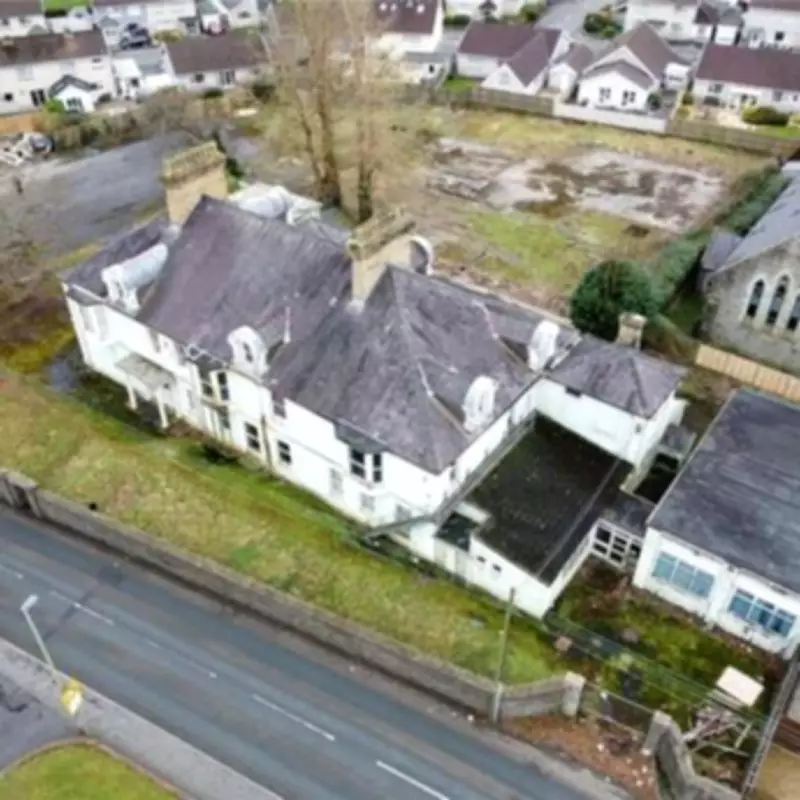
Historic Victorian Mansion in Carmarthen Approved for Major Residential Redevelopment
A rare and significant development opportunity has emerged in Carmarthen, with a Grade II listed Victorian mansion set to be transformed into a collection of new homes. Lime Grove House, a substantial Italianate-style property built around 1855, has received full planning permission for conversion into 14 residential units on its 1.15-acre grounds.
Planning Permission Details and Development Scope
The approved plans, granted under application reference PL/05392 on October 28, 2024, outline a comprehensive redevelopment scheme. The project involves converting the former office accommodation within the main house into nine flats, while simultaneously constructing three detached houses and two detached bungalows on the surrounding land. Additionally, Listed Building Consent was secured on March 11, 2024, under reference PL/05410, ensuring the historical integrity of the property is maintained throughout the transformation.
The development must commence within a five-year period from the consent date, and notably, there are no section 106 obligations or community infrastructure levy requirements attached to the project. The estate agent marketing the property has confirmed that the site is not located within a conservation area, potentially simplifying certain aspects of the development process.

Architectural Significance and Historical Background
Lime Grove House represents an important piece of Carmarthen's architectural heritage. Originally appearing as a smaller villa on the 1837 Tithe map, the property was substantially redesigned around 1855 by local architect William Wesley Jenkins, who favored the Italianate style for country estates during that period. The house features distinctive buff brick chimney stacks with square crested pots, solid masonry walls, and slate roofs, covering a net internal area of 668 square meters.
The property's history includes ownership by William Morgan Griffiths, a local solicitor who added a rear extension in 1884 while redesigning the front elevation and replacing the original staircase. Subsequent owner Henry Brunel White resided there until 1941. The Church of Wales purchased the property in 1937, converting it into the Diocesan High School for Girls, complete with additional classroom buildings at the rear. After the school's closure in 1964, the building served as flats and later office space before becoming vacant around 2014.
Current Condition and Development Potential
The mansion has remained unoccupied and deteriorating for approximately twelve years, presenting both challenges and opportunities for prospective developers. The main building requires significant restoration work, while the grounds offer ample space for the planned new construction. The estate agent has indicated that alternative uses for the site could also be considered, subject to obtaining necessary permissions, with possibilities including boutique hotel conversion or establishment of a GP surgery facility.
The property is being marketed with a guide price of £795,000, and comprehensive planning and legal documentation is available upon request. Interested parties are advised to conduct their own enquiries with Carmarthenshire County Council's Planning Department to fully understand the development parameters and requirements.
Location Advantages and Market Context
Strategically positioned approximately half a mile northwest of Carmarthen's vibrant market town center, the development site benefits from proximity to urban amenities while maintaining a residential neighborhood setting. The transformation of this historic property represents not only a commercial development opportunity but also a chance to preserve and repurpose an important architectural landmark that has played multiple roles in the community's history over nearly two centuries.