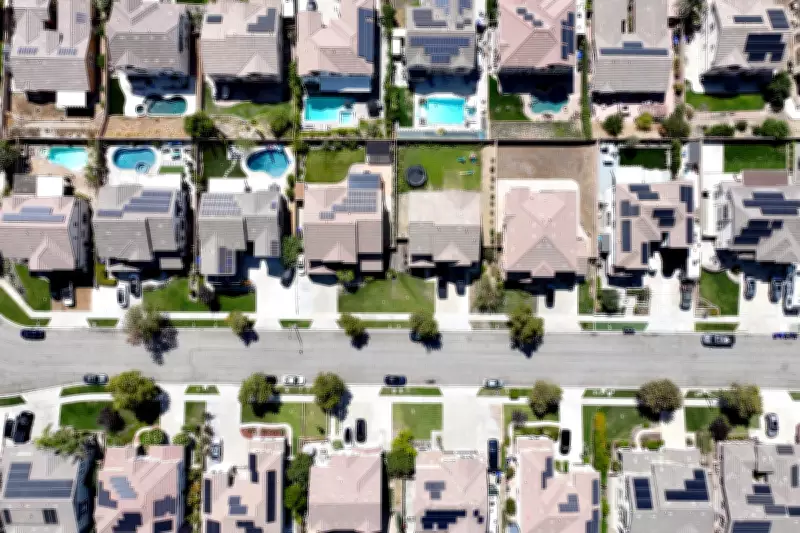
As Americans face mounting difficulties in accessing the property ladder, retail giant Walmart has begun listing portable tiny houses on its website for under $30,000. This move highlights a growing trend towards compact living solutions amid a severe housing affordability crisis.
The Rise of Tiny Homes in a Challenging Market
Tiny homes have experienced a dramatic increase in popularity in recent years, with their appeal partly driven by widespread concerns about the traditional housing market. A 2024 survey conducted by IPX 1031 revealed that 65 percent of Americans would consider purchasing a tiny home specifically "because of the current housing market." Furthermore, an overwhelming 86 percent believe these compact dwellings represent a "good option for first-time homebuyers."
Walmart's Affordable Housing Options
Walmart's online platform features a variety of tiny home models, including a "13x20ft Expandable Prefab Tiny House" sold and shipped by the company DuraYu. This 276 square foot unit is priced at $23,920 and comes equipped with a bedroom and a "complete bathroom." The listing emphasizes its practical design, noting that "the foldable, portable design allows quick installation, relocation, and reuse across multiple sites."

Another offering is the DuraYu "19x20ft Expandable Prefab Tiny Home," available for $27,200. This larger 409 square foot model includes a "fully functional living space," along with a bedroom, bathroom, and an "L-shaped kitchen cabinet." Additionally, Walmart lists a $29,999 "Two-Story Tiny House" sold by the company THLAND, providing further options for budget-conscious consumers.
Widespread Concern Over Housing Costs
Housing affordability remains a top concern for a significant portion of the American population. According to a Pew Research Center survey from January, about 62 percent of U.S. adults are "very concerned" about housing costs. A separate poll commissioned by Redfin found that 64 percent of single Americans are struggling to afford their rent or mortgage payments.
Moreover, a Washington Post/ABC News/Ipsos survey conducted last month indicated that approximately 65 percent of U.S. renters—including some individuals earning more than $100,000 annually—believe they will not be able to afford a home they desire in the foreseeable future.
Broader Economic Anxieties
The housing crisis is part of a larger pattern of economic anxiety affecting average Americans. A New York Times/Siena poll from January revealed that 65 percent of U.S. voters feel a middle-class lifestyle is "out of reach for most people," while 77 percent believe such a lifestyle is harder to achieve now than it was a generation ago.
Further underscoring these concerns, a January survey by The Harris Poll, conducted on behalf of the American Institute of CPAs, found that 50 percent of respondents who set financial goals for 2026 are worried that the rising cost of living could prevent them from reaching those targets.
The availability of tiny homes through major retailers like Walmart underscores a significant shift in how Americans are approaching homeownership. As traditional housing becomes increasingly unattainable, these compact and affordable alternatives are gaining traction as viable solutions for those priced out of the conventional market.