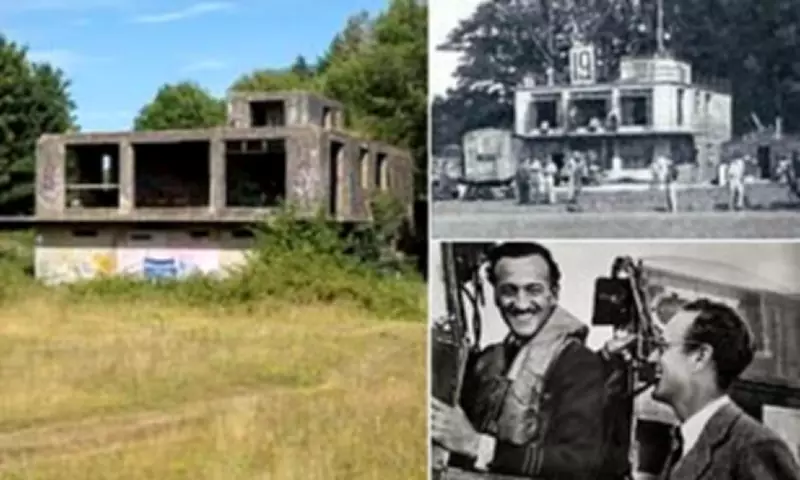
Historic WWII RAF Control Tower Set for Transformation into Holiday Let
A significant piece of British wartime heritage, the Royal Air Force control tower at RAF Ibsley in Ringwood, Hampshire, is poised for a remarkable revival. This iconic structure, which played a crucial role during World War Two, will be converted into an Airbnb-style rental property following the withdrawal of objections by government adviser Natural England.
From Wartime Operations to Modern Accommodation
During the Second World War, RAF Ibsley served as a vital operational base, functioning as a control tower for Spitfire squadrons and hosting American Air Force bombers deployed across Europe. The airfield gained additional fame as the filming location for the 1941 patriotic movie The First of the Few, starring Leslie Howard and David Niven. However, after the war ended and the base closed in 1947, the control tower fell into severe disrepair, with its walls becoming covered in graffiti and gradually crumbling over decades.
Local campaigners have long fought to preserve this historic landmark, but their efforts were repeatedly hindered by Natural England's objections, which cited ecological concerns. After extensive ecology reviews, the advisory body has now withdrawn its opposition, clearing the path for the building's restoration and conversion.

Restoration Plans and Public Support
The Landmark Trust, a dedicated preservation group, has taken on the ambitious project to restore RAF Ibsley to "its 1940s glory." Their plans involve transforming the derelict control tower into a self-catering holiday let capable of accommodating up to eight guests. New Forest District Council has already approved the application for this conversion.
Income generated from the holiday rental will be directed towards maintaining the building for future generations, ensuring its long-term preservation. The Landmark Trust has emphasised that the 1940s layout and wartime decorative schemes will be meticulously respected during the renovation. Additionally, the Trust plans to organise special events offering free public access and provide online interpretation materials to share the rich history of the Watch Office.
Historical Significance and Emotional Appeal
In a letter to New Forest District Council in 2024, the Landmark Trust highlighted the profound historical importance of the site. They noted that the watch office was constructed during a period when Britain stood almost alone against Nazi Germany, serving as a monument to the immense human sacrifices of the Second World War. Many young airmen flew perilous sorties from this base during the Battle of Britain, with some never returning.
The Trust's campaign to save the building has garnered substantial public backing, sparking 130 letters of support and raising approximately £800,000 in donations. The strength of public sentiment underscores the building's significance as a tangible link to Britain's wartime past.
With the threat of collapse or demolition looming, this restoration project represents a vital opportunity to preserve a unique piece of architectural and historical heritage for generations to come.