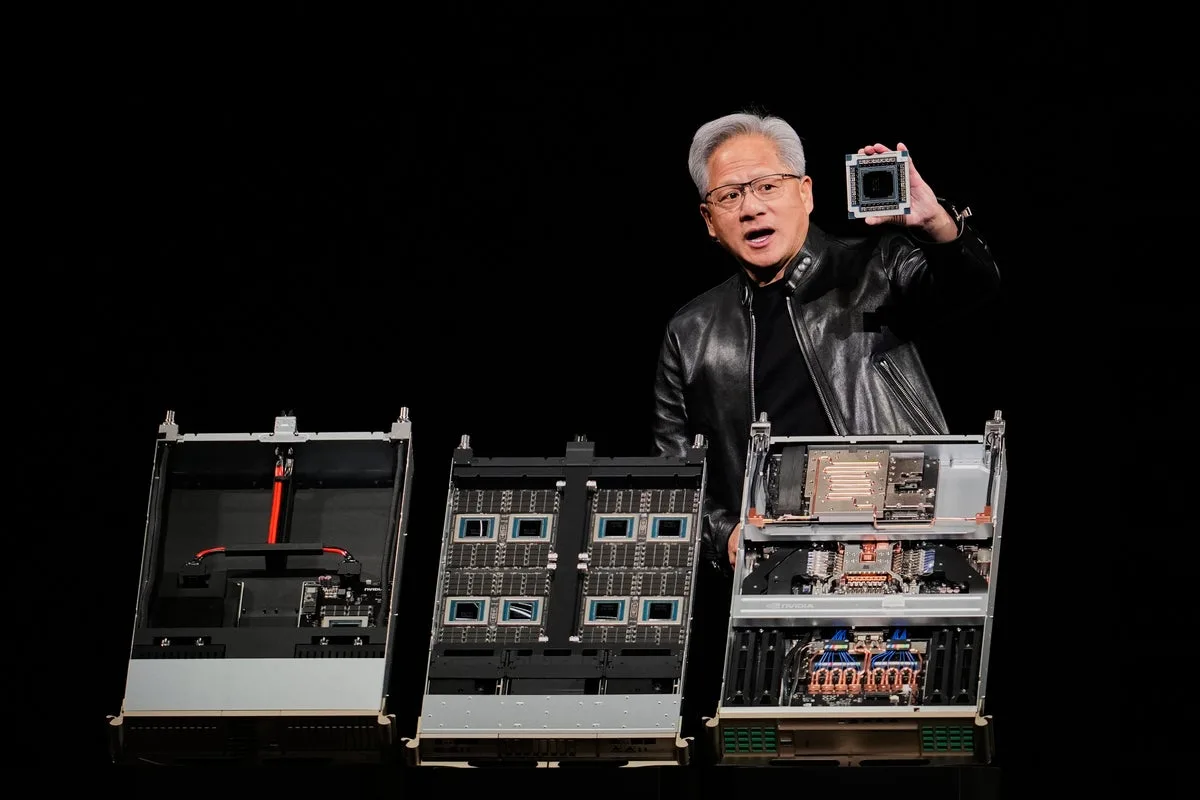
Nvidia CEO Jensen Huang has unveiled his strategic vision for sustaining the company's leadership in the artificial intelligence boom, forecasting a staggering $1 trillion backlog in orders within the coming year. During a keynote address in San Jose, California, Huang elaborated on the emerging "inference inflection" as the next critical phase in AI development.
The Inference Inflection Point
Sporting his iconic black leather jacket, Huang captivated a packed arena for over two hours, detailing how Nvidia's processors have become indispensable components in AI infrastructure. He emphasized that the company is now at the dawn of a new platform transformation, comparable to the PC and internet revolutions. "We reinvented computing," Huang proclaimed, asserting that the AI buildup remains in its infancy despite rapid advancements.
Financial Projections and Market Dynamics
To underscore his confidence, Huang predicted that Nvidia will grapple with a $1 trillion order backlog for its chips by year-end, doubling his previous estimate. This projection follows Nvidia's meteoric revenue growth from $27 billion in 2022 to $216 billion last year, propelling its market value to $4.5 trillion. However, the company's stock has cooled since briefly surpassing a $5 trillion valuation last October, amid concerns that AI hype may be overblown.
Wedbush Securities analyst Dan Ives described the current climate as "a white-knuckle period for the technology industry." Even after Nvidia's late-February quarterly report exceeded analyst forecasts with a rosy outlook, its stock price remains 6% below pre-announcement levels. Analysts anticipate revenue surpassing $330 billion in the upcoming year, but Nvidia faces mounting competition from tech giants like Google and Meta Platforms developing their own AI processors.
Strategic Moves and Challenges
Nvidia's growth is constrained by U.S. security and trade barriers limiting advanced chip sales in China. Despite this, Huang envisions maintaining Nvidia's instrumental AI role by feeding demand for chips powering chatbots like ChatGPT and Gemini, while expanding into the inference processor market. Inference chips enable trained AI tools to efficiently produce responses—whether writing documents or creating images—using knowledge acquired during training.
"The inference inflection has arrived," Huang declared. To navigate this transition, Nvidia secured a multi-billion dollar licensing deal with market specialist Groq, hiring the startup's top engineers. Ives believes Nvidia won't cede market share to competitors, projecting its market value could eclipse $6 trillion within the next year.
Industry Implications and Future Outlook
Huang's announcement signals a pivotal shift in AI technology deployment, with inference processing poised to drive the next wave of innovation. As Nvidia leverages its dominant market position, the company must balance explosive growth expectations with geopolitical and competitive pressures. The $1 trillion order backlog projection highlights both the immense demand for AI capabilities and the challenges of scaling production to meet global needs.
This inference-focused strategy represents Nvidia's bid to stay ahead in an increasingly crowded field, ensuring its chips remain central to AI's evolution across industries.