Nvidia's Ambitious Space AI Project Unveiled
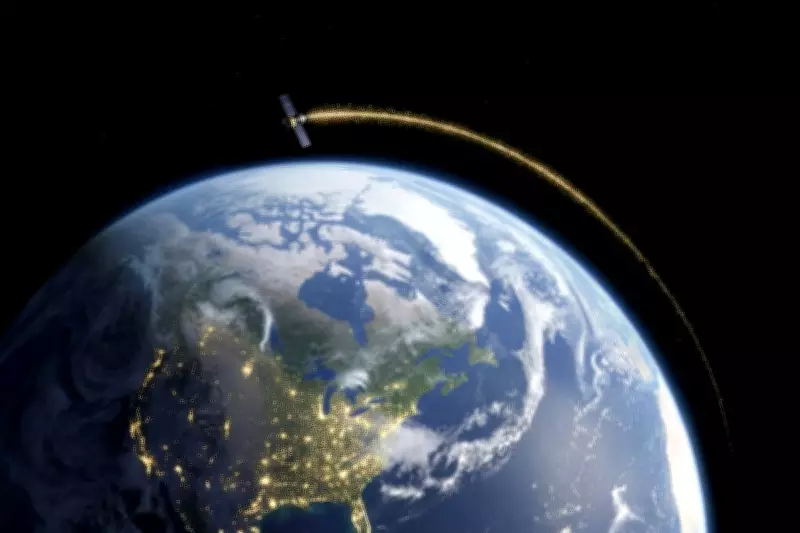
In a groundbreaking announcement, leading artificial intelligence chip manufacturer Nvidia has revealed plans to construct and deploy artificial intelligence data centres in space. The California-based technology giant aims to leverage its new Space-1 Vera Rubin Module to establish orbital computing infrastructure that will provide advanced AI analysis capabilities for satellite constellations and space exploration missions.
The Vision of Space-Based Intelligence
Nvidia CEO Jensen Huang declared during the company's annual GTC conference in San Jose that this initiative represents a monumental leap forward in computing technology. "Space computing, the final frontier, has arrived," Huang proclaimed. "As we deploy satellite constellations and explore deeper into space, intelligence must live wherever data is generated. This project will take intelligence where it's never gone before through space-based AI infrastructure."
Huang elaborated that AI processing across both space and ground systems would enable real-time sensing, decision-making, and autonomous operations, fundamentally transforming how orbital data centres function and how spacecraft navigate through the cosmos.

The Competitive Space Computing Landscape
Orbital data centres have emerged as a new competitive arena in the modern space race, with industry giants including SpaceX and Microsoft also exploring plans to establish operations in low Earth orbit. Nvidia's approach distinguishes itself through its focus on AI-specific infrastructure designed to process data at its source in space.
The benefits of space-based computing are substantial and multifaceted:
- Abundant renewable energy: Solar panels in space can achieve up to eight times greater efficiency than terrestrial counterparts, providing essentially free and unlimited power
- Reduced latency: Laser links between orbital hubs can transmit data globally at significantly faster speeds than ground-based cable systems
- Proximity to data sources: Processing satellite data where it's collected reduces dependency on downlink capabilities and enables immediate analysis
Partnerships and Technical Specifications
Nvidia has partnered with several specialized companies to realize its space computing vision. Baiju Bhatt, founder and CEO of Aetherflux, explained: "Nvidia Space-1 Vera Rubin Module delivers high-performance, energy-efficient AI at the edge in orbit, powered by solar energy. This enables autonomous operations and mission-critical services, and unlocks scalable, space-based AI infrastructure beyond Earth."
Another key collaborator is Starcloud, which is developing purpose-designed orbital data centres to deliver cloud and AI infrastructure directly in space. Starcloud CEO Philip Johnston emphasized the significance of this partnership: "With Nvidia, we can bring true hyperscale-class AI computing to orbit – processing data at the source, reducing downlink dependency and enabling customers to run training and inference workloads in space for the first time. This is a critical step toward making space a seamless extension of the global cloud."
Overcoming Technical Challenges
During his keynote address, Huang acknowledged that several significant technical obstacles must be addressed before orbital data centres become operational reality. "We have to figure out how to cool these systems out in space, but we've got lots of great engineers working on it," he stated.
Additional challenges include:
- Protecting computer servers and processors from intense radiation exposure in low Earth orbit
- Developing reliable maintenance and repair protocols for hardware operating in space
- Ensuring seamless integration between space-based and terrestrial computing systems
- Creating fail-safe mechanisms for mission-critical operations in an environment with limited physical access
The Nvidia Space-1 Vera Rubin Module represents the company's initial solution to these challenges, designed specifically for the harsh conditions of space while maintaining the computational power necessary for advanced AI applications.

The Future of Space Computing
This announcement positions Nvidia at the forefront of what industry analysts are calling "the next computing revolution" – the migration of critical digital infrastructure beyond Earth's atmosphere. As satellite constellations continue to proliferate and space exploration advances, the demand for in-orbit processing capabilities is expected to grow exponentially.
The successful implementation of space-based AI data centres could transform numerous sectors, including telecommunications, Earth observation, scientific research, and national security operations. By processing data where it's collected, these orbital facilities promise to reduce latency, increase bandwidth efficiency, and enable entirely new categories of space-based applications that were previously impossible due to transmission limitations.
While technical hurdles remain substantial, Nvidia's commitment to solving these challenges through engineering innovation and strategic partnerships suggests that the era of space computing may arrive sooner than many anticipated. The company's announcement marks a significant milestone in the convergence of artificial intelligence and space technology, potentially reshaping how humanity interacts with and utilizes the orbital environment.