Colosseum Unveils Striking Restoration with Ancient Travertine Marble
Rome's legendary Colosseum has revealed a breathtaking new appearance following an extensive restoration project that meticulously recreated parts of its 2,000-year-old structure using the same travertine marble employed by ancient Romans. This iconic amphitheatre, once the vibrant stage for gladiatorial battles and wild animal spectacles, continues to mesmerise global audiences, attracting an astonishing nine million visitors in 2025 alone, cementing its status as Italy's premier tourist destination.
Reviving the Ancient Piazza
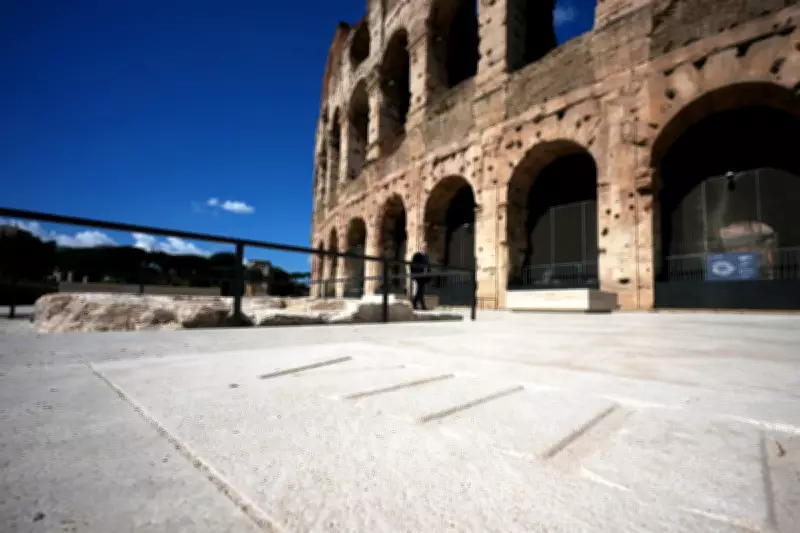
The recent restoration focused on a semicircular piazza situated just outside the main arena, where Roman spectators historically gathered beneath two magnificent arcades. These arcades, formed by marble columns reaching heights of up to 50 metres (164 feet), served as grand entrances for crowds awaiting their seats. Over centuries, earthquakes and unstable ground caused these arches to collapse, but the new project has ingeniously revived the space.
Tourists can now sit on large travertine marble slabs precisely positioned where the original columns once stood. These slabs feature reproductions of Roman numerals that indicated seat sections, offering a tangible connection to the past. Italian architect Stefano Boeri, who designed the piazza, explained, "These blocks of travertine marble are placed exactly where the original pillars were based. Our idea was to restore the public's perception of the arcades' proportions and the vaults of the arches used to enter the Colosseum's centre."

Unearthing Historical Treasures
Before the restoration, the outdoor area had become cluttered with detritus, including fragments of ruins and overgrown weeds. Restorers initiated the project by excavating one metre (approximately one yard) to uncover the original travertine paving stones that once covered the entrance. This dig yielded remarkable discoveries, such as coins, statues, animal bones, and a gold ring, providing invaluable insights into ancient Roman life.
Deeper excavations revealed the secret underground passageway used by Emperor Commodus to enter the Colosseum discreetly, avoiding the general public. This passageway, opened to visitors last year, adds another layer of historical intrigue to the site. The new travertine slabs were sourced from the same quarries that supplied ancient Rome, quarries still active today for constructing modern religious buildings, banks, museums, government structures, and private residences.
A Legacy of Craftsmanship
Fabrizio Mariotti, head of the Mariotti Carlo stonecutting firm in Tivoli, which has specialised in carving travertine for four generations, expressed profound pride in the project. "From the beginning, we understood we wanted to be involved," he said while seated on a slab. "For a family like ours, working with travertine for generations, contributing to the Colosseum—a symbol not only of Rome but of this material—is incredibly significant."
The restoration of the Colosseum's perimeter was funded through compensatory resources from a recent multi-billion euro metro project in Rome. Earlier this year, the city inaugurated two new subway stations, including one deep beneath the Colosseum, enhancing accessibility to this historic landmark. This synergy between modern infrastructure and ancient preservation underscores Rome's commitment to blending heritage with contemporary urban development.