The Independent's journalism is supported by our readers. When you purchase through links on our site, we may earn commission. A holiday in the isolated Faroe Islands presents the perfect solution to overtourism – for now. This Atlantic outpost serves as an ideal getaway for those seeking to escape the crowds, as detailed by Rich Booth on Thursday 12 March 2026.
A Delicate Balance Between Tourism and Tradition
"Please, Sir, we like to keep our grass alive. Stay on the road if you can," called a passing local from his car. A tourist had stepped onto a meadow above the tiny Faroese village of Boeur to capture the perfect shot of jagged sea stacks. The tourist quickly hopped back onto the road, sparing the meadow, and the local waved, smiled, and drove on. This moment encapsulated a five-day visit to the Faroe Islands, an archipelago adrift between Iceland, Norway, and Scotland that feels like stumbling upon an ancient secret. Despite being only a two-hour flight from London, these 18 volcanic islands remain a mystery to most in the UK.
The Threat of Growing Popularity
However, that anonymity is at risk of fading. As overtourism overwhelms Europe's mainland, this Danish outpost is bracing for a record number of visitors. For now, standing on a cliff edge with the wind howling, the Faroe Islands still feel like the end of the earth. Exploring the region without a car is nearly impossible, as the archipelago is connected by a web of 23 tunnels, four of which run beneath the sea. This engineering feat, which nearby Shetland dreams of replicating, prioritizes keeping people rooted in tradition, family, and ocean-centric daily life over easing tourism. Some islands have as few as 30 residents.

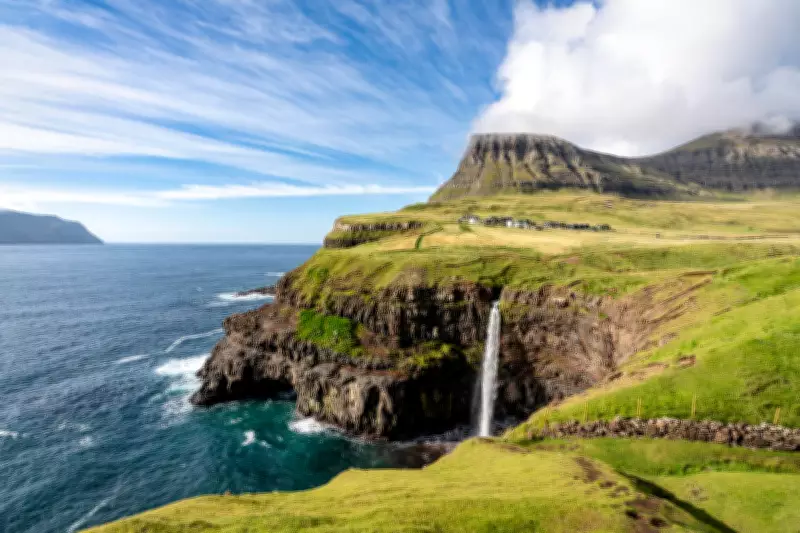
Just a short drive from Boeur lies Mulafossur waterfall, one of the Faroes' most photographed landmarks. It takes barely 20 minutes to reach from the airport, yet standing there feels like discovering a hidden gem. There are no crowds jostling for selfies, no TikTok stars seeking viral fame, and no souvenir stalls. Your only concerns are running out of camera memory and stepping in sheep droppings. Taxi driver Magnus from Torshavn highlighted the local charm, noting, "You still know everyone here. We are nowhere near overrun. We welcome visitors – it keeps me busy, but not too busy. I'm happy."
Proactive Measures Against Overtourism
Despite Magnus's confidence, the islands are not blind to the risk of too many visitors. In 2019, the government launched its "Closed for Maintenance" scheme, shutting down popular sites each April to everyone except "voluntourists" who help repair footpaths and protect fragile landscapes. How long this delicate balance holds on just 540 square miles of wild Atlantic land remains uncertain.
Life in the Faroe Islands: Tradition Meets Modernity
During a five-day stay based in the capital, Torshavn, with its population of 14,000, life reveals deep traditions rooted in fishing, farming, and controversial seasonal whale and dolphin hunts. Yet modernity trickles in. In a cosy Torshavn cafe, Alex, a cheerful Brit who moved to play professional handball, shared, "I absolutely love it. You see the same faces every day, but that's not a bad thing when everyone's so friendly." He likened handball life to "Love Island," where everyone knows each other's gossip in this small world, with the longest away day being a 45-minute drive.
Political Identity and Natural Beauty
Beyond natural beauty and a national love for handball, the Faroe Islands boast a distinctive political identity. Since 1948, it has operated as an autonomous territory within the Danish kingdom, with its own parliament, the Loegting, and language. Talk of full independence has surfaced, especially as Greenland gains attention, but locals often express contentment. One shrugged, "We're happy. Why would we want to change all of this?" For now, the islands remain a diamond of a getaway, perfect for those seeking days off the beaten path.
A Five-Day Itinerary for Exploring the Faroes
Day One: Arrive at Vagar airport. Drive to Gasadalur village to see Mulafossur waterfall, stop at Boeur, then head to Torshavn. Explore the old town, including the historic parliament over the harbour, and visit shops like Gudrun & Gudrun for local handmade clothing.

Day Two: Drive from Torshavn to Hvannasund in the north, take a ferry to Fugloy island to meet its 30 residents, have lunch at Cafe Kalalon (calling ahead is recommended), return by ferry, stop at villages, and visit Oy brewery for beers and street food.
Day Three: Drive to Funningur and Gjogv for a stroll, visit Eidi to see the Instagram-famous football pitch (now a campsite), and book a supper club with locals Oli & Anna in Velbastad to experience true Faroese life.
Day Four: Explore by car, visit a floating sauna in Runavik, and tour the Faroe Islands National Museum on Torshavn's outskirts.
Day Five: Shop in Torshavn, take a scenic drive to the airport for photo opportunities.
Travel Details and Accommodation
Rich flew to the Faroe Islands on Atlantic Airways, with London Gatwick to Vagar flights twice weekly until 31 August, prices starting from £120 one way. He stayed at the Hilton Garden Inn Faroe Islands, located five minutes from Torshavn's historic centre, port, and national museum, with prices from £97 per night including breakfast. Rich was a guest of Visit Faroe Islands.