The Artisanal Craft of Mezcal: A Journey Through Mexico's Traditional Spirit
The making of mezcal, an increasingly popular drink produced in Mexico, is a long and involved process that has been preserved for generations. This spirit, deeply rooted in Mexican culture, is not just a beverage but an integral part of daily life, used in celebrations, rituals, and as a gesture of hospitality. In Oaxaca, Mexico's largest mezcal-producing region, the tradition continues much as it has for centuries, guided by knowledge passed down within Indigenous families.
Harvesting Agave: A Demanding Task
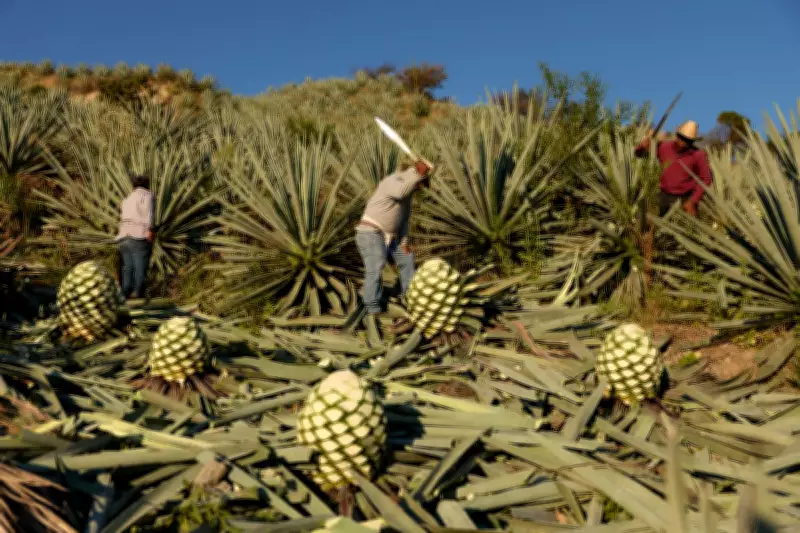
The process begins in the fields, where workers known as jimadores cut mature agave, locally called maguey, by hand, often on steep hillsides. Using machetes and sharp blades, they slice away the spiny leaves to reveal the pineapple-like core, which is then transported by trucks or donkeys to the distillery. This work is physically demanding and sometimes dangerous due to uneven terrain and the agave's pointed spines. Out of roughly 200 agave species, about 40 can be used for mezcal, with espadin being the most common due to its faster maturation.
Cooking the Agave: Imparting Smoky Flavors
Once harvested, the agave plants are buried in pits lined with hot stones and covered with soil. Firewood heats the stones beneath the ground, and the agave roasts for several days, giving mezcal its distinctive smoky flavor. Elena Aragón Hernández, a mezcal master from Santa Maria Zoquitlan, shared, "Since I was a little girl, I spent days helping my father at the distillery. Women have always been part of the process and we are now demanding our place in this industry."

Crushing the Agave: Traditional vs. Modern Methods
After cooking, the agave is crushed beneath a massive circular stone known as a tahona, often pulled by a horse in many towns to grind it into a fibrous mash. Some producers use mechanical shredders to speed up the process, but traditionalists argue that the tahona breaks fibers differently, producing a unique flavor. Luis Cruz Velasco, who learned the craft in San Luis del Rio, noted, "When I grew up, I realized making mezcal was much harder and physical than I thought. We spend all day at the palenque working from sunrise to sunset, Monday to Sunday."
Fermentation and Resource Use
The crushed agave is transferred to open wooden vats and mixed with water by hand, with fermentation taking days or weeks depending on conditions. Mezcal production requires significant water and firewood, leading some producers to adopt sustainable practices like using certified wood and installing water-reuse systems. Armando Martínez Ruiz from Soledad Salinas reported using about 30,000 liters of water and over 15 tons of firewood monthly to produce 5,000 liters of mezcal.
Distillation and Tasting: An Artisanal Approach
The fermented mash is distilled in small batches in copper stills for artisanal mezcal, while a few producers use clay pots for ancestral mezcal, a slower technique. After two rounds of distillation, the spirit is judged by sight, smell, and taste, shaped by tradition and local land. Thousands of visitors travel to Oaxaca annually to taste mezcal at mezcalerias, sipping it slowly to appreciate its varied flavors.
This story highlights the enduring craft of mezcal, blending tradition with modern challenges, and underscores its cultural importance in Mexico.