Saltwick Bay: A Coastal Treasure Trove Near Whitby
Just a stone's throw from the historic market town of Whitby lies Saltwick Bay, an enchanting coastal stretch that offers far more than typical seaside scenery. This dramatic sandy bay, accessible via a brief 1.5-mile walk from Whitby, presents visitors with a remarkable blend of natural beauty, geological wonders, and maritime history.
A Walk Through History and Landscape
The journey to Saltwick Bay itself is part of the experience. The picturesque route from Whitby meanders past the Gothic ruins of Whitby Abbey, reminiscent of Bronte-era literature, and the charming harbour entrance. After passing Whitby Holiday Park, steps descend to the beach, though visitors are advised to check tide times carefully to avoid being stranded by incoming tides blocking the return path.
Fossil Hunting Grounds of Scientific Significance
The cliffs overlooking Saltwick Bay, while prone to rock falls, reveal their true treasure beneath: a rich bed of fossils concealed among shale and shingle. This site of special scientific interest (SSSI) has yielded numerous scientific discoveries over centuries, including Ammonites nestled between smooth stones and the remarkable skeleton of a Teleosaurus Stenosaurus Bollensis unearthed in 1824. This prehistoric crocodile specimen now resides at Whitby Museum, alongside reports of dinosaur footprints spotted on the beach.

The abundance of fossils near the surface stems from the area's mining heritage. Alum quarries, first established by Thomas Challoner in the 16th century following Henry VIII's reformation, exposed these geological treasures. Britain had previously imported alum from Italy, but when supplies ceased after Henry severed ties with the Pope, domestic sources became crucial. The discovery of alum at Saltwick Bay in 1649 led to Sir Hugh Chomley opening a mine with guidance from Italian workers.
By 1673, authorization was granted for harbour construction to transport alum, and by 1770, an alum house for workers stood adjacent to the quarry. Mining ceased in 1791 when alum was replaced by aniline dyes, but remnants persist today, including a ramp extending into the sea and patches of deep red shale where shingle was extracted.
Celestial Displays and Maritime Tragedies
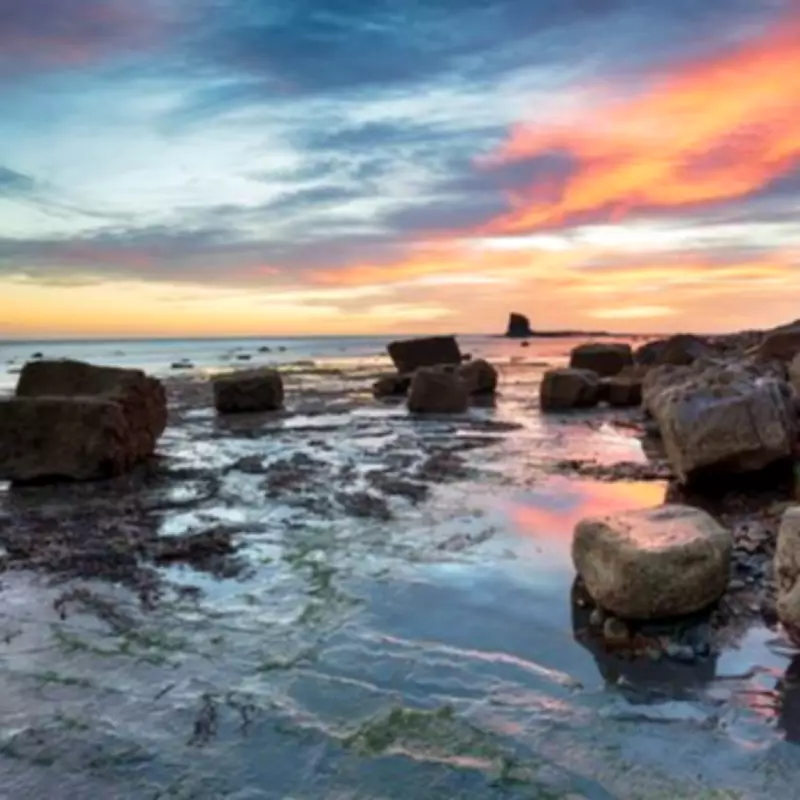
Saltwick Bay is renowned for its breathtaking sunrises and sunsets, with rock pools reflecting the golden sun's vibrant hues. From May to July, visitors might witness the rare 'double sun' phenomenon, where a second radiant orb appears over the sea.
The bay's maritime history is etched into its landscape through shipwrecks. The remains of the Admiral Von Tromp trawler stand tall on the beach, a haunting reminder of its grounding on 30 June 1976 while sailing from Scarborough Harbour to Barnacle Bay. More tragically, the HMHS Rohilla met its end here during World War I, striking rocks at Saltwick Nab on 29 October 1914 with 229 souls aboard while en route to Dunkirk.
This historic bay, just a two-hour drive from Huddersfield and five minutes from Whitby, continues to captivate visitors with its unique combination of natural beauty, geological significance, and poignant history, making it a must-visit destination on Yorkshire's dramatic northeast coastline.