The Evolution of Food Festivals in the Social Media Age
For nearly a decade, Lesley VanNess was a dedicated attendee of the South Beach Wine & Food Festival. This beachfront celebration of celebrities, beverages, and gourmet bites attracted tens of thousands who paid hundreds to thousands of dollars for access. VanNess, a 44-year-old former restaurant owner from Iowa, cherished the opportunity to mingle with culinary stars like Rachael Ray and Bobby Flay, personalities she previously knew only through Food Network programming.
"I'd see advertisements in Food Network Magazine and think, 'Oh my god! You could actually attend these events and meet celebrity chefs?'" VanNess recalled. "I was immediately hooked."
The Heyday and Subsequent Shift
This period represented the golden age of food festivals, beginning around 2010 when similar events proliferated nationwide, creating a circuit for top chefs and aspiring culinary talents. However, the landscape began to transform with the rise of social media platforms, which dismantled traditional barriers between food enthusiasts and celebrity chefs.

Attendees like VanNess discovered they could directly message chefs like Bobby Flay rather than jostling through crowded festival tents. More significantly, social media enabled food lovers to discover emerging culinary stars through online communities and hashtags like #instafood, offering new forms of social recognition and connection.
VanNess hasn't returned to South Beach since at least 2020. "I'd rather follow chefs on social media or visit their restaurants directly," she explained.
The Changing Festival Landscape
Last weekend marked the 25th anniversary of the South Beach Wine & Food Festival, establishing it alongside the New York City Wine & Food Festival and the Food & Wine Classic in Aspen as venerable institutions in the festival world. All three major events continue to thrive, but numerous smaller festivals have vanished due to multiple challenges:
- The lingering effects of the pandemic
- Declining ticket sales
- Rising food and labor costs
- Decreased chef participation
Mike Thelin, co-founder of the now-closed Feast Portland festival in Oregon, observed: "South Beach and New York fill a specific niche and could continue indefinitely. However, food events and festivals are moving in entirely new directions."
The New Localized Approach
Traditional festivals historically succeeded by providing chefs, wineries, mixologists, food producers, and influencers with platforms to reach broad audiences. In 2026, this model appears increasingly outdated.
"In 2010, culinary professionals wanted to establish their presence," Thelin noted. "Today, they no longer require that traditional festival platform."
This doesn't signal the end of food festivals but rather a significant recalibration. Large-scale "white tent affairs"—a reference to South Beach's signature structures along the Atlantic shoreline—are diminishing in prominence.
"When I visit a region, I want to experience what makes that area distinctive," Thelin emphasized. "I don't want to enter a massive, generic white tent devoid of geographical character and sample California wines while in Washington or Tennessee."
Replacing these large events are numerous small, hyper-focused festivals deeply connected to specific communities and locations. Examples include:
- AAPI Food & Wine: A three-year-old festival based in Oregon and New York City that highlights Asian American and Pacific Islander culinary contributions, attracting approximately 1,000 attendees annually.
- Southbound Food Festival: A Birmingham, Alabama celebration launched in 2022 that spans a week each autumn, incorporating not only chefs but also regional art and music scenes.
Lois Cho, co-founder of AAPI Food & Wine, explained: "The food scene has transformed dramatically. Many people didn't realize how wine could complement black bean noodles, izakaya dishes, or various Thai specialties. We're creating new narratives and communities where genuine connections can flourish."

Cho credits social media with amplifying previously overlooked culinary voices. "Many haven't recognized this shift because cookie-cutter events dominated the landscape for two decades," she added.
Nancy Hopkins, co-founder of the Southbound Food Festival, observed: "The appeal of television chefs has diminished somewhat. Exceptional culinary talent exists everywhere. People attend our event to celebrate and elevate Birmingham's unique character."
Enduring Legacy of Major Festivals
Despite these changes, established festivals like South Beach and its New York counterpart continue to draw substantial crowds. This year, tickets for nearly all 110 South Beach events—featuring over 500 chefs and food personalities—sold out completely. Over its quarter-century history, the festival has raised more than $45 million for Florida International University's Chaplin School of Hospitality and Tourism Management.
Lee Schrager, creator of both the South Beach and New York festivals, maintains that the original festival blueprint retains relevance. "There's a fundamental difference between direct messaging Bobby Flay and attending an intimate dinner he hosts for ten people that sells out in three days," Schrager noted. "Social media makes everyone accessible, but can you truly experience that personal connection?"
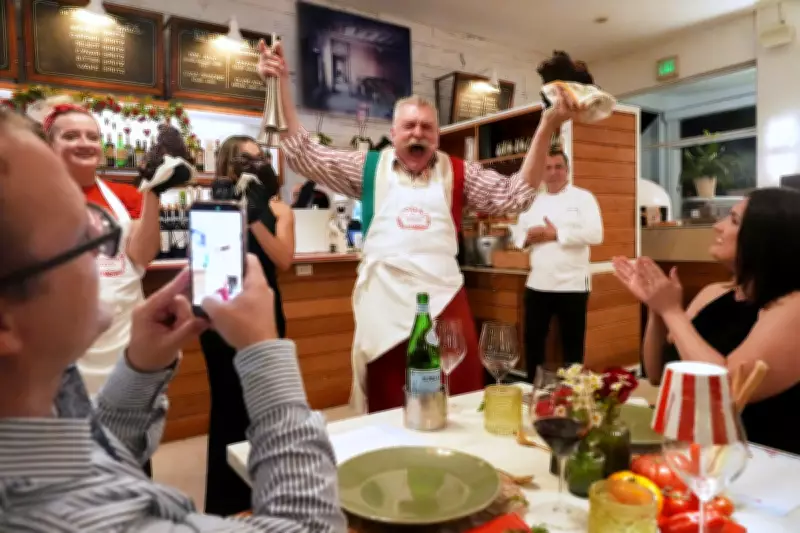
The inaugural South Beach event featured merely ten chefs and essentially functioned as a wine tasting. This year's festival attracted over 30,000 attendees, with highlights including Martha Stewart hosting a luncheon at Joe's Stone Crab, Italian celebrity butcher Dario Cecchini serving beef to enthusiastic crowds, and Rachael Ray reprising her Burger Bash featuring innovative creations like Kool-Aid pickles and foie gras on wagyu patties.
Financial Realities and Personal Connections
Schrager acknowledged that most smaller festivals cannot operate like his large-scale events, which sometimes host money-losing attractions purely for audience appeal. This year, he generated $7 million in ticket sales and $6 million in sponsorships, netting just over $1 million. "These are respectable figures in the festival industry, but they don't represent exceptional returns for profit-driven businesses," he admitted.
Rachael Ray, who has participated in nearly every South Beach and New York festival, continues her involvement out of loyalty to Schrager, who supported her early career when much of the culinary world remained skeptical. However, she also values the direct fan interaction these events facilitate.
"I genuinely enjoy conversing with people, being physically present with them, experiencing their enthusiasm and compliments," Ray shared. "Nothing replaces authentic, real-life experiences."
The food festival landscape continues to evolve, balancing traditional large-scale events with emerging localized celebrations, all while navigating the profound influence of social media on culinary culture and community engagement.