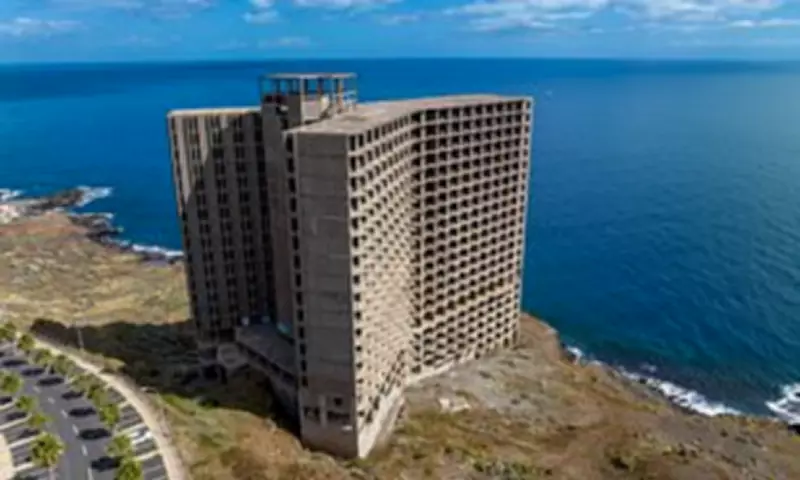
The long-derelict Hotel Añaza, a notorious 22-storey structure on the coast of Acorán in Tenerife, Spain, is finally scheduled for demolition after standing as an urban eyesore for over five decades. Local authorities have confirmed the demolition project, which is expected to cost taxpayers approximately €2.3 million (£2 million) and is planned for completion between 2026 and 2027.
The Haunting History of the 'Ghost Hotel'
Originally constructed in 1973 as a planned 741-room hotel, the Y-shaped building was abandoned just two years later when it was discovered that construction had proceeded without proper planning permission and on land not zoned for such a large development. The developer reportedly ran out of funds and fled the island, leaving behind a massive concrete shell covering more than 430,500 square feet of floor space on a 25,300-square-foot plot.
A Legacy of Tragedy and Danger
Over the years, the abandoned hotel has earned its local nickname 'Ghost Hotel' not only for its haunting appearance but for the tragic loss of five lives within its walls. Fatal incidents have included parachute jumps from the roof and falls through exposed gaps in the structure. Most recently, a 13-year-old girl died after entering the building illegally in December 2025.

Despite safety measures implemented in 2016, including a 13-foot fence and warning signs, and enhanced security requirements in 2019 with added demands for security cameras and multilingual signs, the building has continued to attract trespassers. Some have filmed daring parkour videos inside the dangerous structure, while others have met with fatal accidents. Authorities now impose fines exceeding €500 (£437) for trespassing.
The Complex Demolition Process
The demolition operation presents significant challenges due to the building's cliffside location and the presence of hazardous materials, including asbestos. A notice published in the Provincial Boletín Oficial (BOP) confirms that forced expropriation has been approved, citing a 'failure to fulfil the social function of the property' because the building remains incomplete and lacks necessary permits.
Financial Implications for Owners and Taxpayers
With the ruin valued at just €48,000 (£42,000), the demolition will be funded entirely by public money, leaving nearly 900 listed owners - many of whom are foreign nationals - without any return on their investment. A one-month window has been opened for objections or appeals regarding the expropriation decision.
Global Context of Abandoned Structures
The story of Hotel Añaza reflects a broader global phenomenon of abandoned structures with complex histories. In a related development, a YouTube content creator from the United States recently explored Japan's largest abandoned resort, Utopia Kaga in Ishikawa. This religious-themed amusement park, which opened in 1987, was abandoned and torn down in 2005 following Japan's economic collapse in the early 1990s.
The Japanese resort, once a thriving attraction featuring temple halls, roller coasters, a golden pagoda and a 240-foot statue of Kaga Daikannon, represented a 28 billion yen (£141 million) investment. Like Hotel Añaza, it was ultimately left to the elements due to prohibitively high demolition costs, though it has since been completely removed.
The impending demolition of Hotel Añaza marks the end of a half-century chapter for one of the Canary Islands' most notorious abandoned landmarks, addressing decades of safety concerns and complaints about its detrimental impact on the coastal landscape of Tenerife.