St Patrick's Day Parades Illuminate Ireland with Joy and Cultural Pride
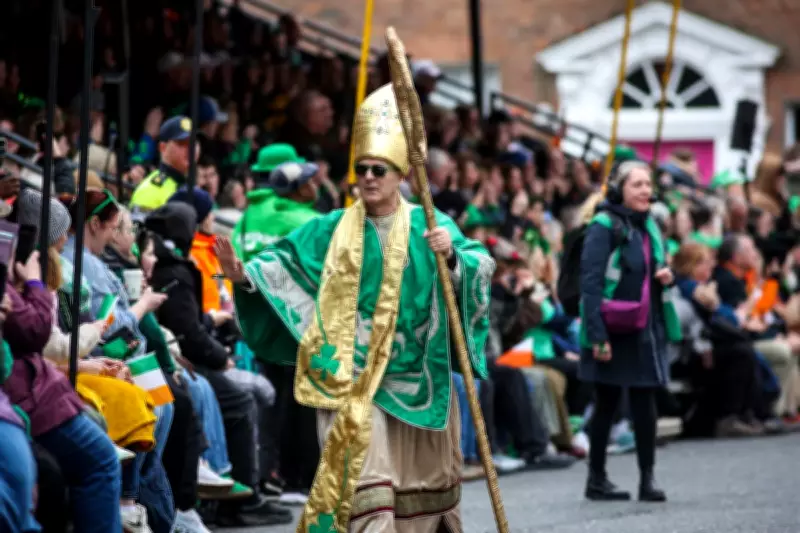
Visitors and locals alike flocked to the streets of cities such as Dublin and Belfast on Tuesday, March 17, 2026, to celebrate Ireland's national holiday, St Patrick's Day. The festivities marked a vibrant display of Irish culture, with parades held in major urban centers including Dublin, Belfast, and Cork, while smaller towns like Killarney added unique touches, such as a float honoring Oscar winner Jessie Buckley and other successful figures from County Kerry.
A Festive Atmosphere Across the Nation
Families and tourists thronged the thoroughfares, adorned in tricolour glasses, leprechaun hats, decorative green face glitter, and clusters of shamrocks. In Dublin, children and visitors gathered eagerly, with eleven-year-old Rian Doyle expressing that being Irish is about celebrating national achievements. Karen Van Brakel from Holland highlighted the Irish value of bringing people together, noting, "It doesn't matter where you come from."
Two school friends from the Philippines, Anna May and Primrose, participated in the celebrations dressed in green t-shirts and sparkly shamrock face paint. Anna May, experiencing her first St Patrick's Day parade, said, "I would like to experience the culture of Ireland, plus I think St Patrick is one of the most famous festivals." Primrose, an Irish citizen, added, "We're Catholic as well," underscoring the religious and cultural dimensions of the event.

Personal Stories and Community Spirit
Jessica McGuinness from Finglas brought her three-year-old son Jack for a Shamrock shake before securing a front spot near Parnell Street. She shared, "He loves the marching bands and the flags." Rian Doyle and his sister Kelly, aged nine, have attended the Dublin parade for several years, enjoying the fun of singing, dancing, and marching. Rian remarked, "It's a religious tradition, but also to celebrate Ireland and all we've done over the years."
Karal and Karen Van Brakel from Holland, who had planned a holiday in Dublin without realizing it was St Patrick's Day, praised Irish people for the holiday's popularity. Karen explained, "It's because they believe in something, in happiness, and also to connect each other."
Grand Parade Details and Highlights
The Dublin parade, a major highlight, featured 12 large floats and over 3,000 participants. It commenced at Parnell Square in the north, proceeded down O'Connell Street, and concluded at the Cuffe Street/Kevin Street junction in the south. Performers included groups like Macnas, Bui Bolg, Spraoi, the Inishowen Carnival Group, and The Outing Queer Arts Collective. The Rotunda Hospital, located near the start, debuted its first float designed by ArtFX.
TV presenter and podcaster Vogue Williams, serving as grand marshal, expressed her excitement, saying she couldn't sleep the night before. When asked about her pride in being Irish, she responded, "I just think we're deadly. We just are, and we annoyingly gravitate towards each other as well." She added, "Even in London, I've got my group of Irish friends; you go away, you're looking for an Irish bar. We all just love hanging out with each other, and I just think you meet an Irish person, and you're bound to have a good night." Williams humorously noted her interest in wearing the Dublin mayor's necklace, with Richard Tierney, chief executive of the St Patrick's Festival, cautioning about potential treason.
Themes and International Connections
The theme of the Dublin parade focused on celebrating people and roots, featuring marching bands from Scotland and eight U.S. states: Ohio, Arizona, Illinois, Wisconsin, Iowa, Mississippi, Indiana, and Texas. Irish premier Micheal Martin, set to meet U.S. president Donald Trump later that day, emphasized the deep links between Ireland and the U.S. during engagements in Philadelphia and Washington DC, highlighting the global resonance of St Patrick's Day.
Overall, the celebrations showcased a blend of tradition, community, and international camaraderie, reinforcing St Patrick's Day as a cornerstone of Irish identity and cultural expression.